A Reportage from Kosovo
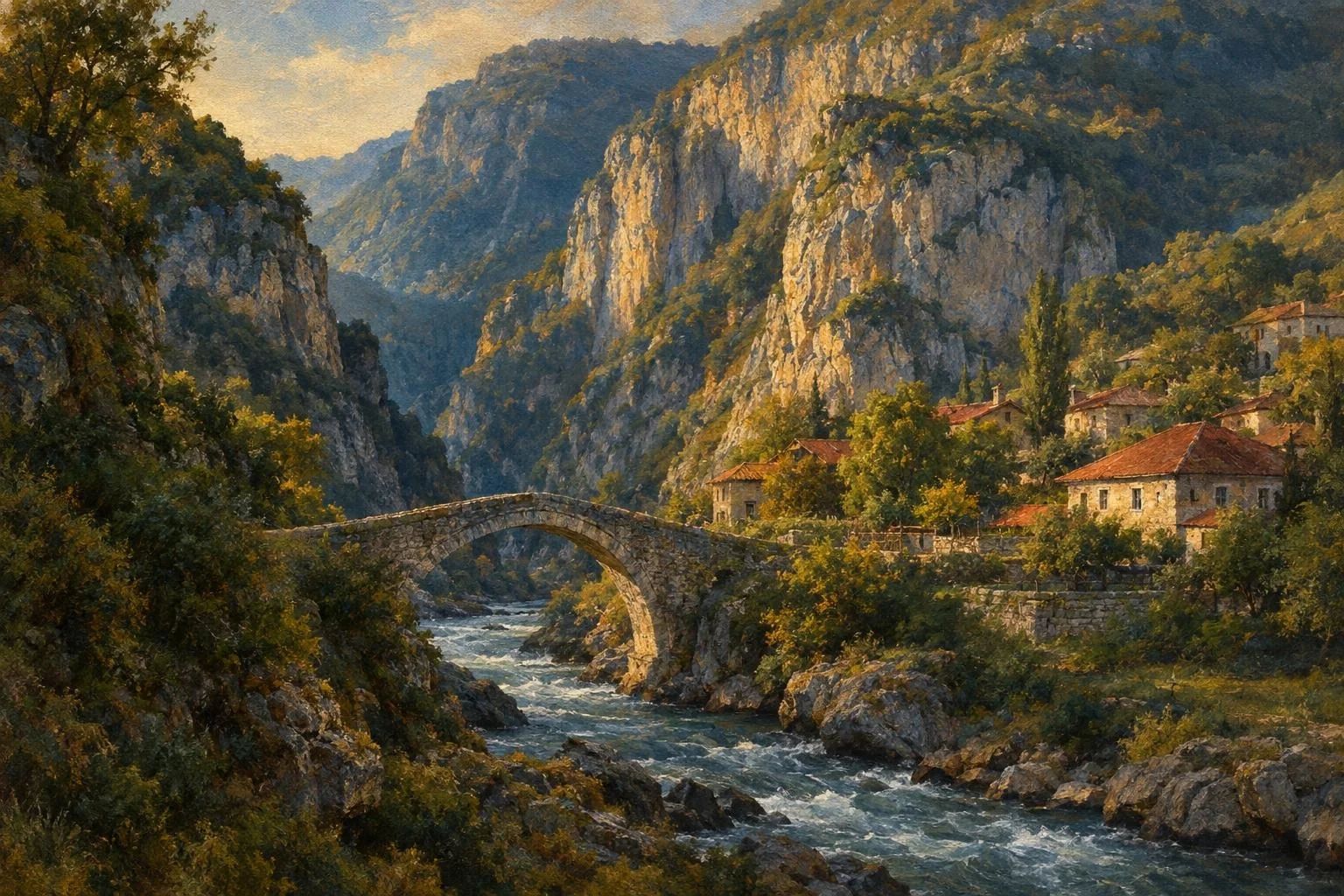
My trip to Kosovo this spring fulfilled an early dream of my youth. But after the 90s I left Albania for good and departed once and for all from the lands where I was born, as well as from the dreams of my youth. It took a full 22 years in the era of democracy before I could travel to the lands of our ancestors in ancient Dardania. The reasons were the publication of my books and those of Mrs. Enxhi Krasniqi from Peja, but also the invitation to the annual gathering in memory of the great national poet, Azem Shkreli. At this magnificent event organized in the palace of culture of the city of Peja, we also met personalities I had dreamed of since my childhood, as well as others we had been communicating with for years, and on this occasion we had the luck and opportunity to meet up close, to exchange thoughts, but also to propose future organizations. At a certain moment, having arrived late to the hall, I was told that the poet Ali Podrimja had spoken. The hall was packed, faded into darkness, while the spotlights struck the stage, where the day's celebration was unfolding and being displayed. In the background was the poet's portrait with a welcoming smile. I approached a healthy, full-figured, and tall man; I saw him as a contour of artistic inspiration. I took him by the hand and was about to speak to him. When he turned his head and came closer to me, I was both surprised and delighted. What surprised me was the presence of the wonderful actor of our dramas and films, Timo Flloko. We hugged for a moment, and I asked him, “Where is the poet Ali Podrimja sitting?” Timo, with that cheerful nature of his, pointed deep into the rows. I raised my camera, focused on him, brought him close, and snapped a few shots. This was my first meeting with him in the era of democracy, after that meeting when I was a 25-year-old and met Ali Podrimja in Tirana with our well-known poet Xhevahir Spahiu, following a publication he had done with poets from Kosovo, only to later give way to another meeting at the theater's café. The conversation with sisters Drita and Enxhi Krasniqi, as well as with the renowned poet, was pleasantly impressive, simple, and very plain. The poet, just as great poets like Ali Podrimja truly are, was fully clothed in the metaphor of humor, the beauty of his art, but also in the melody of a voice carefully tuned for a concert of friends. He asked me about his friend Iliaz Bobaj, and about the book he had translated into Greek. About my creative plans. In a highly fraternal conversation, leveling and breaking down the fence of his name with the reader, and building a bridge of friendship that great artists like Ali himself have in their soul and blood, but also in their magnificent art. Afterwards, I gifted him one of my published books with translations from the work of the great Greek poet Jani Rico, in whose house I have lived for 22 years, and which was published on the occasion of the Greek author's 100th birthday. We parted with him to meet again. But then our day was loaded with meetings. After having a coffee with the writer Sejdi Berisha, we moved somewhere else with the poet Agim Desku. Then with painters and musicians all together in one of the city's venues hosted by the city hall in honor of the poet Azem Shkreli. The afternoon was accompanied by rain, but knowing that my stay was limited, Mrs. Enxhi and Miss Drita Krasniqi accompanied me on a visit to the mouth of the Drin river. In a highly picturesque and almost fairy-tale place with modern venues, in a highly verdant and romantic landscape. The owners of the venue, seeing that we didn't have umbrellas, came outside with their umbrellas and escorted us inside. I felt good. This was a hospitality that will remain in my mind from this region, which has in its tradition the centuries-old inherited respect for the guest. In the venue where we sat, pouring down the glass windows, besides the rainwater, was also water they had piped from the free flow of the Drin and poured over the roof. The stream of water falling from above like loose, uncombed hair, had both musicality and a special beauty. Here the conversation focused on the efforts of Kosovo and Kosovars for independence. Drita, with those round cheekbones, piercing eyes, but also with her clear and very cheerful diction, turned into a guide for me, recounting events, years, history. I saw she was speaking with passion, so I asked her, “What is your job?” She cast her eyes outside, washed her answer in the crystal water of the rain, dressed it in the beautiful greenery of the mountain, and returned it to the table: “I am the Coordinator for the Protection of Human Rights in Kosovo, but also in cooperation with international organizations.” She began to talk about her work, about chilling events, about what she had seen, heard, and filmed herself with her own hands, camera, eyes, and mind. Among other things, she surprised me when she told me about thousands of files located in her office, and I asked that we go and see them, but also film them to have as documents in my writings. While I was lost in what she was telling me, in massacres and mass murders, she interrupted me: “The rain has stopped! Let's go enjoy the mouth of the Drin, and then we'll go to my office too, because I even have the key with me.” She laughed to give cheerful colors to the conversation, but also to move away from what she had told me and which had made me shudder all over. The very word 'mouth' gives the meaning of the fairy-tale beauty of this river. In the middle of the mountain gorge, like a volcano or a great fountain, the river bursts out furiously and noisily from underground. It seems that the very soul of this nation emerges from the depths and pours through the mountain gorges and the plains, to pour its suffering and joy into the great sea of the world in the Adriatic. It joins along the way with streams and springs, with other rivers, to make the most powerful, most convincing, and strongest call before the world, for independence, beauty, grace, but also a beautiful voice. With this feeling of joy and taste of nature, we set off for Drita's office inside the city of Peja.
WHERE HUMAN RIGHTS AND PAIN SPEAK
We slowly climbed the stairs and found ourselves in front of the office door. Drita put the key in the lock and turned it twice. It seemed to me that the suffering creak of the door and the squeak of its hinges were pulling us into another world. We passed from the joyful Kosovo of today into the world of yesterday's pain, which still cried out for justice, retribution, but also for peace. A gray, silk-like veil draped over the cheerful Drita of the previous hours, over her beautiful eyes covered by straight blonde hair. “Here in this office,” she told me, “live 13 thousand murdered and missing people of all ages, from all the most inhuman abuses of the beginning of this century!” In her soul I saw and understood the pain, but also the trembling of her voice. “I,” she said, “have lived with these people for years; I know them, I touch them, I speak with them just as you are speaking with me right now. I know each of their lives, their dreams, their pains, and their joys.” I shuddered at her facts. During the liberation war in Albania we had 28 thousand killed, but these figures of hers were unbelievable for a small state like Kosovo, especially in the conditions of this century where culture, science, and human understanding have reached their peaks. She opened a drawer and pulled out a large file for me; in it were photos that at first glance made me look away. Two people massacred in the most inhuman way. Her sister Enxhi felt dizzy and sat in the nearest chair. I took out my camera to make these photos part of my reportage, after that file came dozens of others, and after those, still more. It felt like we were in an endless prison of injustice, and I heard voices for justice. Voices calling out and demanding justice from the living for those who died in the most inhuman way. They called out to the Hague tribunal, as Drita told me, but these files rested there in injustice too. I understood Drita's pain and that of thousands of Kosovars, and their cries for justice, but the world also calls it premature to bring the truth to light in these times when peace is sought more than ever. “The world is silent,” Drita said, “but there can be no peace without the truth coming out for these thousands of people.” Then she told me events from the war, the efforts and dangers she and her collaborators faced. That colossal struggle to bring the documents, photographs, and events from the truth on the ground into this office, to archive them so they wouldn't be lost, and so they could speak to history for all times about all the injustices committed. For a moment I lost my patience and cast my eyes on a photo where her collaborators were pulling dozens of massacred people out of a well, photographing them, and sending them for examination. “Soon DNA will also be used to make their names known better and with exactness,” Drita added. “Since mass graves have been found and discovered in Belgrade from our area; after being executed in Peja and its surroundings, they were transported to Serbia.” It is surprising, but in every mass murder, one or two people survived, whom the killers assumed were dead, and today they live, speak, recognize, and point out the executioners by name and by finger. In a village in Gjakova, more than 80 people were killed in a single day. In fact, when I was traveling to Peja, I filmed the mass graves by the side of the road. Afterwards, Drita also told me about a rare love story among the executed, which I am thinking of soon turning into an artistic-tragic work. In the end, shaken, we got up to leave. Drita locked the door with the key, but it seemed to me that their voices and cries continued and protested inside. I paused for a moment as if to distinguish the particularity of any one of them, but they had turned into a great river that could not be dammed. It felt like they were calling out to me too: “Justice, heyyyy, you who heard our pain, write, you too demand the truth, because otherwise we will not be able to decompose either there where we are as bodies, or here where we demand our rights. Only the light of truth rests us in peace, in that peace we sought, but which you will not be able to enjoy without our resting in peace.” I turned my back to the door, set off with slow steps as if in hesitation, I was truly leaving, but I swore in silence that I would carry their word for justice far and high, there where their voice cries for justice, and the court makes decisions to bring the truth to light, and to punish the bloodthirsty, who will not escape justice, and whose macabre deeds must not be left unpunished. The Krasniqi sisters saw me and understood that I was talking to myself; they extended their hands of kindness to me, to escape for the moment from the state that had pierced all three of us. But even though I was leaving, I knew I would return to them again…
Peja... 25.5.2012