Some prizes reward a book and some preserve a name; the one Lezhë gave Zija Çela this spring does both at once.
On 7 April 2026, the Municipality of Lezhë announced that the national literary prize “At Zef Pllumi” had gone to the writer Zija Çela for his novel “Koka mbi katror”. Mayor Pjerin Ndreu congratulated the winner and promised that the municipality would keep supporting the competition in the years ahead, as an encouragement to authors and a way of preserving literary tradition. The announcement was brief, like most news from small towns. But behind it lies a story worth telling, because it brings together two long lives in Albanian letters and a question that goes beyond any ceremony: who looks after memory when the central state forgets.
The priest who lived to tell
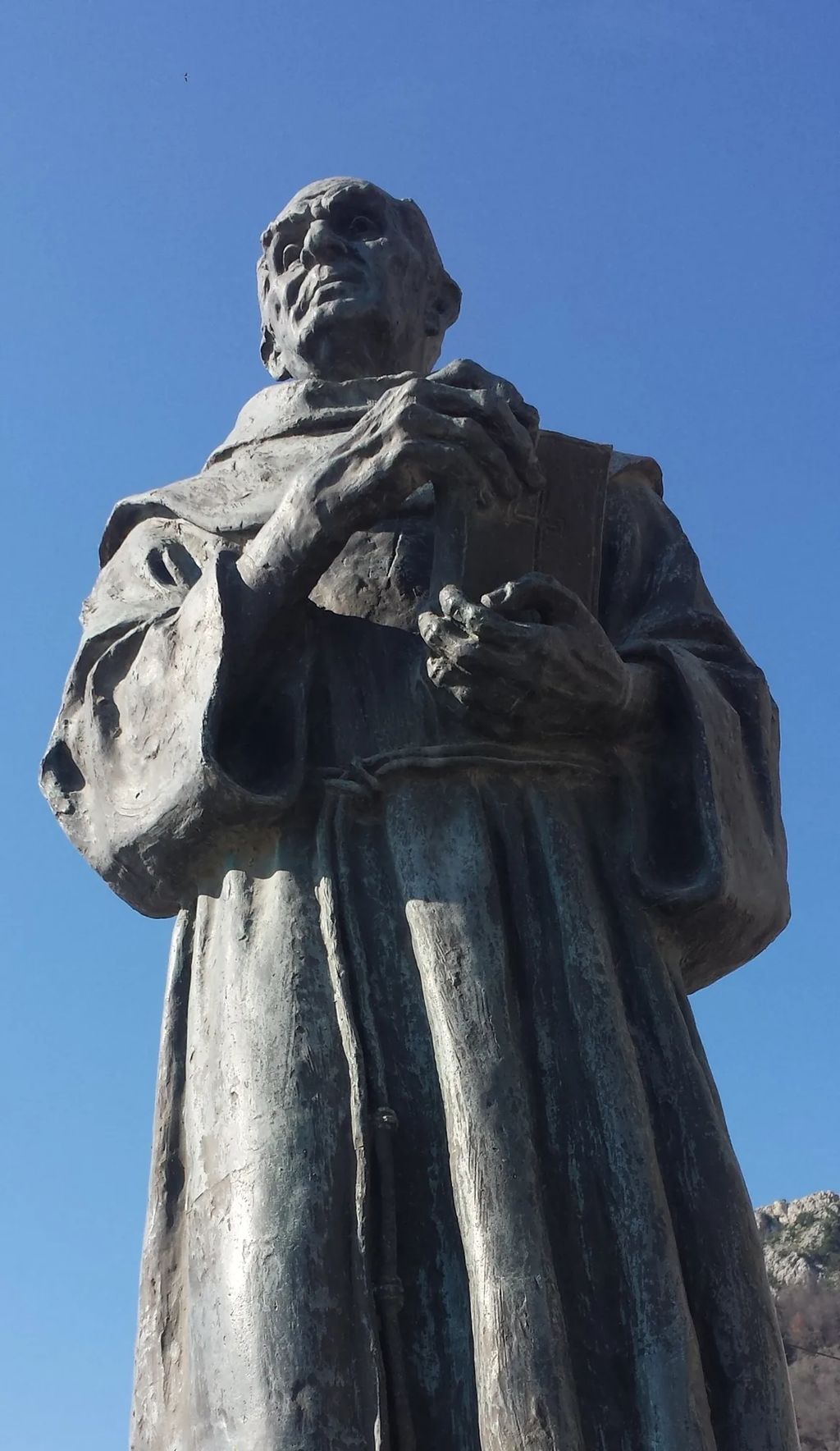
Zef Pllumi was born on 28 August 1924 in Shëngjin, on the very coast that today belongs to Lezhë. He was ordained a Franciscan priest in 1956. He had first been arrested on 14 December 1946 and served three years; in 1967 he was arrested again and released only on 11 April 1989. Twenty-six years in all in the regime's prisons and camps, among them Spaç and Reps. After his release he revived the review “Hylli i Dritës” and wrote “Rrno vetëm për me tregue” (Live to Tell), a testimony often compared to the gulag archipelago. He died in Rome on 25 September 2007, a year after the President of the Republic had awarded him the order “Honour of the Nation”.
The title of his book has become almost a motto of Albanian memory after 1990. It says that survival has meaning when it becomes a story. It is no accident, then, that a literary prize bears his name: the name itself is a programme for literature.
A prize with local roots
The prize was first created in 2012 by the former Commune of Shëngjin, on the initiative of Preç Zogaj and Agron Gjekmarkaj. After a four-year interruption, the Municipality of Lezhë revived it, presenting it as a minimal tribute to a great figure of the nation. At that revival, a jury of Alfred Lela, Jonila Godole and Father Vitor Dema awarded prizes by genre: Belina Budini for journalism, Vera Bekteshi for memoir with her book “Vila me tri porta” and Sabri Hamiti for monograph. These categories show the nature of the prize at its origins: it was built around testimony, remembrance and scholarship, the genres that serve historical truth.
This year the prize went to a novel. This turn towards fiction does not take it away from Pllumi's spirit; on the contrary, it is a reminder that imaginative literature was, in Albania, one of the few possible ways of telling the truth.
Zija Çela, a writer of patience
Zija Çela was born in Shkodër on 25 March 1946. After studying literature at the University of Tirana, he worked as a teacher in the mountain villages of Kukës, then as an editor at the review “Nëntori” and, from 1984 to 1990, as editor-in-chief of the newspaper “Drita”. With the arrival of pluralism he ran the publishing house “Letrat”, which began its work with Kadare's “The Monster”, a novel previously banned by the regime. Critics have read his novel “Mali i tejdukshëm” as a break with the method of socialist realism, while the triptych “Gjaku i dallëndyshes”, “Gjysma e Xhokondës” and “Banketi i hijeve” placed him among the most important prose writers of his generation. “Për dashurinë shkruhet pas vdekjes”, dedicated to his son, the translator Dritan Çela, is one of the most painful elegies in Albanian prose. In 2016 he was awarded the order “Honour of the Nation”.
The municipality's announcement says little about “Koka mbi katror” itself, and the novel deserves a reading of its own, not a summary drawn from a press note. But choosing an author who has spent his life looking for the forms of truth within literature suits a prize named after a witness.
Memory outside the capital
In a 2020 essay on literary prizes, Preç Zogaj, one of this prize's founders, observed that the Ministry of Culture's prizes had changed names so often that their authority had weakened. The paradox is that an initiative born in a coastal commune has shown, despite its interruptions, more constancy in name and in spirit. That does not make the Lezhë prize greater than the national ones. It does, however, make its purpose clearer.
Local prizes rarely have large budgets or international echo. Their strength lies elsewhere: they tie books to a particular place, to a grave, a street, a name the inhabitants know. In a country where the memory of the dictatorship is still divided by generation and conviction, a town that every year speaks the name of Father Zef Pllumi aloud does something no law can replace.
Sources
- Çmimi letrar “At Zef Pllumi”, 2026, Bashkia Lezhë (2026-04-07)
- Bashkia Lezhë rikthen çmimin “At Zef Pllumi”, Bashkia Lezhë
- Zef Pllumi, Wikipedia
- Zija Çela, Wikipedia (shqip)
- Për poetin laureat dhe çmimet letrare (Preç Zogaj), Telegrafi / Panorama