A city can build a new theatre in a few years; a memory demolished in a single morning takes far longer to rebuild.
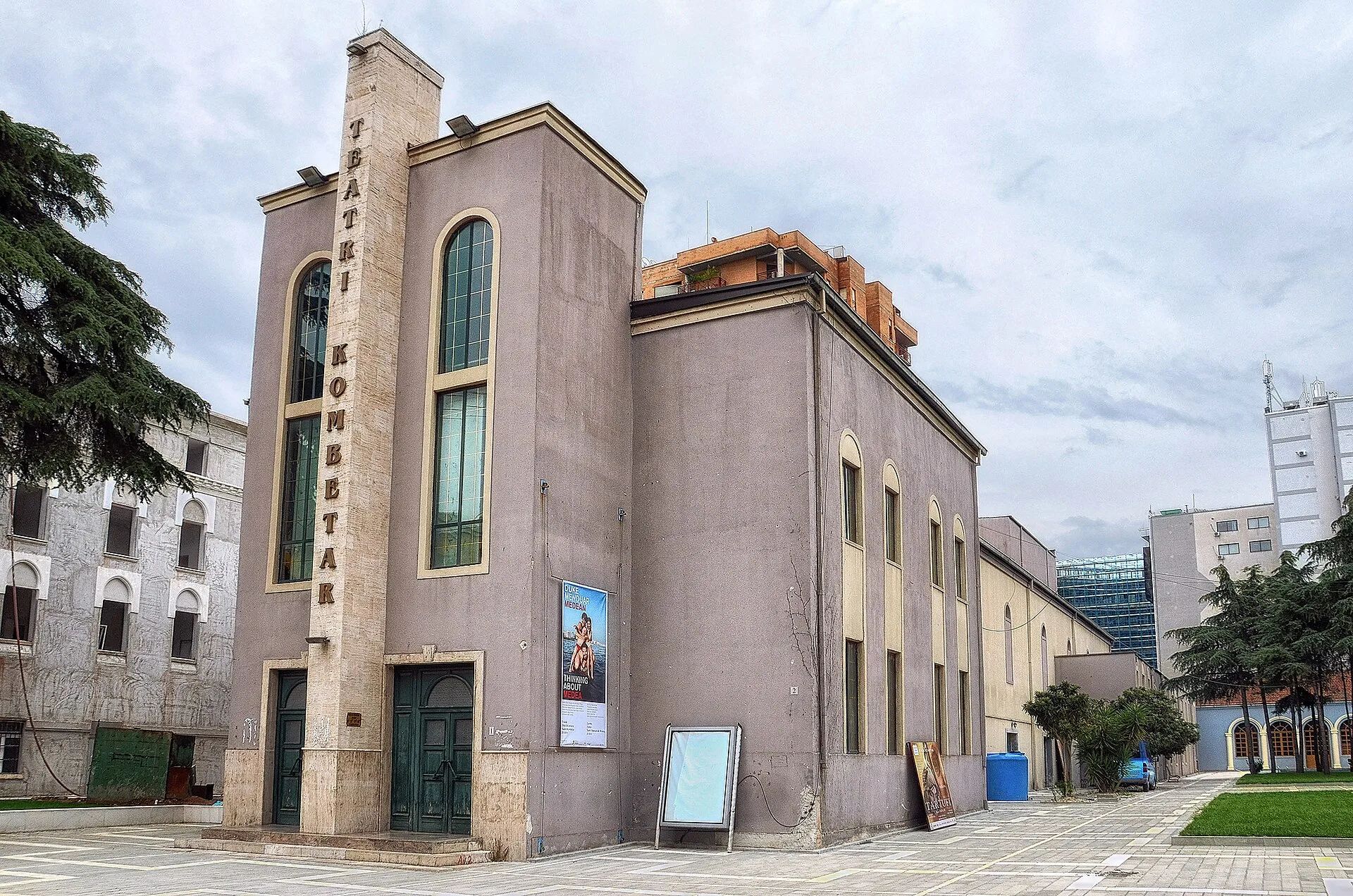
In the early hours of 17 May 2020, amid hundreds of police officers, the National Theatre building in central Tirana was demolished. It was the end of a confrontation that had lasted more than two years between the government, the municipality and the artists and activists of the Alliance for the Protection of the Theatre. Only a few weeks earlier, the European organisation Europa Nostra had placed the theatre on its list of the seven most endangered heritage sites on the continent, as a distinctive example of 1930s Italian modern architecture.
The building, opened in 1939 as the Italian-Albanian cultural and sports centre “Circolo Scanderbeg”, had been built with materials and techniques considered innovative at the time, among them “Populit” panels made of mineralised wood fibre and concrete. For more than eight decades it had kept its cultural function. After the demolition, the Ombudsman highlighted the violence used by the police, while the Supreme State Audit, three months later, listed a series of legal violations and recommended rebuilding the theatre on the same site and with the same architectural appearance. That recommendation was not followed.
A calendar of promises
Immediately after the demolition, a new, modern building was promised, designed by the Danish studio Bjarke Ingels Group. Tirana's mayor, Erion Veliaj, declared in May 2020 that the new theatre would be finished before 2023. The building permit was approved in June 2021, the tender was launched in October 2022 and excavation of the foundations began in December that year, with a contractual deadline of 27 months. In December 2023 the deadline moved to 2026; in January 2024, Veliaj spoke of 2025 again.
On 27 February 2025, Prime Minister Edi Rama inspected the site and was told that the building's shell would be closed by the end of October that year. Deputy Mayor Anuela Ristani explained that the stage machinery and technological equipment would come later, in another phase of the contract. Rama presented the project as the most beautiful national theatre in the region and asked those who had been hurt by the loss of the old building for a little more patience.
In May 2026, on the sixth anniversary of the demolition, an overview by Citizens.al found that the theatre was still under construction and that there was no concrete date for when it would serve artists and cultural life. Since leaving the old building, the National Theatre company moved to a temporary space, ArTurbina, far from the square where its home once stood.
The tower that would not be
Part of the public's distrust stems from the project's history. In 2018 the government proposed building the new theatre through a public-private partnership with the company “Fusha”, which also provided for the urban development of the surrounding area. The special law on the theatre was twice returned to parliament by the then President, Ilir Meta. That same year, Veliaj publicly guaranteed that the new theatre would have no tower on top. In February 2020, the municipality announced it was abandoning the private partnership and that the government and municipality would build the theatre themselves.
Yet in the years that followed, the surrounding land continued to be the subject of decisions favouring high-rise construction. According to reporting by Citizens.al, in December 2023 the National Territorial Council considered a permit for a multi-storey tower by the same company next to the Murat Toptani pedestrian street. For many citizens, this confirmed the early suspicion that the battle over the theatre had been not only about architecture, but also about the land.
What a building replaces
In 2018, a group of well-known actors and directors, among them Robert Ndrenika, Luftar Paja and Alfred Trebicka, sent the country's leaders a petition in favour of a new, contemporary theatre on its own plot, without touching a single centimetre of that property. Even those who wanted the new theatre tied it to the old site. This shows that the debate was never simply between the new and the old.
When the Bjarke Ingels Group building opens its doors, it will very likely be an important work of architecture. But it will not erase the morning of 17 May. A city's memory is kept not only in the walls that stand, but also in the way it brings down those it does not want. The new theatre will be the place where future performances are staged; the demolished theatre will remain, for a long time, the performance Tirana has not yet brought to a close.
Sources
- Gjashtë vite pa Teatër: premtime, polemika dhe mungesë transparence, Citizens.al (2026-05-16)
- Kryeministri Rama inspekton kantierin e ndërtimit të Teatrit të Ri Kombëtar, Shqiptarja.com (2025-02-27)
- Debati, Erion Veliaj: Teatri i ri Kombëtar nuk do të ketë kullë, Shqiptarja.com (2018-02-15)
- Peticioni: Ndrenika, Luftar Paja, Trebicka dhe 51 artistë i kërkojnë Metës të japë OK për teatrin e ri, Shqiptarja.com (2018-07-26)
- National Theatre (Albania), Wikipedia