JORGO PAPASIDHERI
A VOICE THAT MUST NOT BE FORGOTTEN
- In the flow of tradition –
By PILO ZYBA
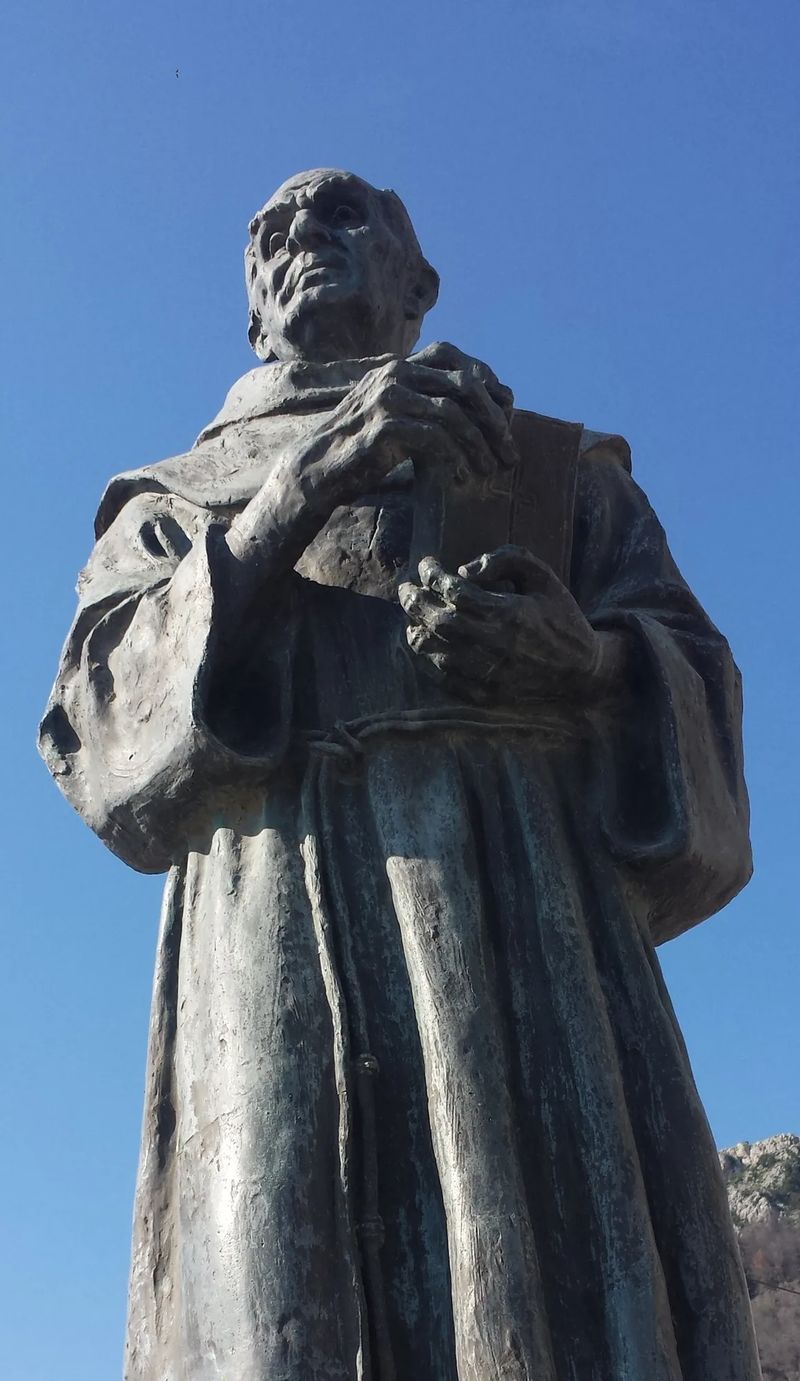
It is worth mentioning that Jorgo Papasidheri is the greatest Arvanite singer and composer. Jorgo Papasidheri was born in Salamina, Greece, on September 14, 1902. He was the fifth of nine children in the family of Kristo and Katerina Papasidheri, the daughter of Panajot Budalli. It is worth noting that Salamina has been one of the hearths where the musical heritage, clothing, and mother tongue of the Arvanites have been preserved and cultivated.
After primary school, he did heavy labor as a farmer and a sailor on merchant ships until he devoted himself entirely to singing. In 1923, he completed his military service in the Navy. In 1928, the Columbia associate Lamproulis met Papasidheri through the mediation of Hadrian Sideris from Salamina, a professional musician from a musical family, who was a good man and a dear friend of Lamproulis and Papasidheri. They spent many hours together, discussing and singing. Lamproulis invited him to collaborate with Columbia. So, what happened? Jorgo Papasidheri recorded his first songs at the age of 26 in 1928. After the recording, a “matrix” was moved to England, where it was pressed at 78 rpm (a method of recording records) and arrived in Greece six months later in 1929.
At first, he recorded several amanedes, a type of song that we know requires a performer with great vocal ability. He also sang rebetiko songs by Matheson, Tounta, Skarvelis, Barousi, and Psyrioti. At that time, in the early 1930s, he received 1,000 drachmas from Odeon for each song.
THE WEDDING WITH THE GIRL, VITA...
One of the most important chapters of his life was his marriage to Afërdita Ceva, who even after the age of 96 spoke with respect about his name and history. In 1931, he married Lady Venus (Vita), Isidor Ceva. In 1932, their only son was born, the beloved doctor in Salamina, Kristo Papasidheri († 1992). In November 1940, Papasidheri made a contribution to the Greek army, which fought in Albania. At that time, he wrote the songs: “Deep in the Mountains of Këlcyrë” and “Day and Night With a Rifle.” He later composed and sang the songs “To Return in Glory,” “Birds Flying Over Albania,” and “And You, Mountains of Korçë.” These songs were recorded on records in 1947. It is somewhat strange, but you cannot find these songs in circulation; you read about them in the records of the author’s life and work, but you cannot find them even in the richest record collections in Greece. Among the Arvanite songs, several created by him are known and recorded, such as (I Will Cut My Braid), (Why Is the Road Rumbling), (Chair-Chair), (Three Steamboats Rose and Left), etc.
But what are the values of his song and his rare vocals in terms of timbre, color, elasticity, vocal range, and its harmonization with the lyrics he created himself? Although he was self-taught, the expressive power of his art in writing and singing, harmonized together, reached the peaks of folk music art. I rightly ask today, so many years after his death, as I myself travel through the places where he sang, where he left his name as a man, as a singer, and as an ancestor of the Arbër... I have met many people who knew him closely, but this is not the place for such analyses, but rather for his creativity and wonderful voice. Where, then, lies the value of this creator whom the Greeks hold in the pantheon of their culture? Nikollaq Kokori, who has also published several books, tells me: “If you notice and listen carefully to his voice and his pronunciation of the Albanian language, you wouldn’t realize he was an Arvanite, because we (speaking for himself) have somewhat lost it over time. But Jorgo, during the years he was in Albania at the time of the Italo-Greek war, mastered it brilliantly.” To tell the truth, I notice this too, but it is also worth mentioning the love with which he enriched the language of his ancestors. As if this were not enough, he clothed it in his voice and music, making it immortal, making it national, and bringing it into the soul of every Arvanite home. Papasidheri has a rare uniqueness in his creativity. With his mastery, skill, and voice, but also by interweaving three currents or traditions, he managed to create a music of his own that not only stood the test of time but entered Greek music as a new creation. And this was the beautiful harmonization of traditional Arvanite music, Oriental songs, and the Greek music where he was born and raised. I listen to and always enjoy this interweaving, and I ask myself: How is it possible that no Albanian scholar has taken the trouble to look at, understand, and speak about his unique qualities? Papasidheri is a composer and singer of our time. Must years pass so that facts, people, and songs are lost, and only then we try to revive him, as we always do? NO! I am writing this in capital letters, because it will be a great mistake if that happens. Papasidheri sings his songs in his mother tongue, and this is no small thing, as it shows that, along with the song, the language and traditional culture of our Arvanite and national folk music have been preserved through the centuries. Because by studying them together and separately, values are extracted and new paths are opened for collaborations and for keeping alive a tradition which recently seems to be reborn and flourishing in Arvanite culture. Papasidheri, like rarely any other Albanian creator, has more than 1,500 songs recorded on records, whether with his own voice or those of others. Is this not a foundation from which our music grew and blossomed? He was born in a place with traditions where the language and customs are preserved even today.
During his career, he went to every corner of Greece, from the North, Thessaly, Euboea, Attica, the Peloponnese, and to several islands. In 1972, he went to Chicago in America for a month. In addition to the Columbia discography, he collaborated with other companies such as Odeon, Parlophon, His Master’s Voice, and others. He recorded dozens of songs.
He also wrote lyrics for songs that were performed by other singers. Papasidheri saved dozens of old folk songs from certain death by writing them down, singing them, and returning them to the bosom of the people.