The book titled “Opening the Iron Curtain” has recently been published by the M&B publishing house, authored by the well-known diplomat and professor, Dr. Ilia Zhulati.
Dr. Ilia Zhulati has lived in the United States of America since the early 1980s. During the period from 1980 to 1990, he served as the secretary of our embassy to the United Nations in the USA.
It is worth noting that Ilia became a diplomat at the age of thirty—a clear proof of his maturity, seriousness, and professional preparation. He completed his studies at the United Military School, but his passion for diplomacy and foreign languages pushed him to look further ahead and take on new challenges.
In this piece, I do not want to dwell at length on his rich career, but rather on what he has given the Albanian reader through this book.
Within its pages lie the historical values of the period it describes—with the good and the bad of that time, but also with the battles the author fought both for himself and for the Albanian nation.
Often, faced with difficult situations, he was forced to take personal initiatives, which sometimes clashed with the official line of the system he himself belonged to and represented.
Nevertheless, Ilia proved to be visionary, combative, and unwavering in his beliefs. More than once, he even challenged those who had entrusted him with his post and position in diplomacy.
He often undertook these initiatives without consulting others, being still young in age, but possessing an inexhaustible energy and a courage undeterred by fear of the system.
The book is built on three main lines, which make it not only diverse but also engaging and enjoyable for the reader.
First, we have the autobiographical approach, where the author places himself at the center of the narrative as a protagonist, diplomat, friend, comrade, and citizen. He acts driven by a sense of justice, even though the politics of the time were restrictive and often stifling.
In contact with Albanian emigrants, who for years on end had been unable to meet their families in Albania, he tried to use his influence as a diplomat so they would be granted the right to reunite with their relatives—provided, of course, they had not compromised themselves with punishable acts.
In this way, he won the respect and sympathy of the emigrants, while within the structures of the system, the envy, hatred, and malice of his superiors arose.
However, with perseverance and dedication, he managed to build around himself a wide network of well-wishers and people eager to help their homeland.
Second, the book brings a protocolary and historical dimension. Every diplomatic action of his was recorded in protocol, reasoned, and documented, bearing his signature or those of his superiors.
This ensures that the events of that time in the USA come down to us today accurate and verified through archives and official documentation. The facts speak for themselves, eliminating any possibility of misinterpretation or speculation.
During that period, Ilia was accused of liberalism and collaborating with the Americans, but they never managed to truly harm him, despite the numerous letters sent to the Ministry of Foreign Affairs.
On one occasion, as the author describes, he was recalled to Albania with the intention of being arrested, but faced with the power of facts and the truth, the authorities failed to carry out that scenario.
Third, a very important element is the original perspective the author offers on the situations of the time and the decisions he made.
At every step, he notified the Ministry of Foreign Affairs and waited for a response, but thanks to his talent, maturity, and personal initiative, he successfully managed to implement the necessary actions.
The book contains many concrete facts that prove this.
After the dictator’s death, Ilia took even more bold initiatives. He began to hold more frequent meetings with foreign diplomats, especially American, British, and French ones, given that he had studied foreign languages at some of the most prestigious universities in France, Denmark, and later in the USA.
In this part of the book, the author’s deep familiarity with the international reality and the importance of connecting Albania to the free world stands out.
His detailed and wise analysis of the difficult circumstances the country found itself in, as well as the importance of integration with the West, make this work special.
Ilia moved forward with maturity, intelligence, and courage, gaining ground without falling prey to the traps the totalitarian system constantly set for him.
On his initiative, many issues related to Albanian affairs were raised at the UN during those years. They were:
* The issue of the Corfu Channel;
* The issue of Kosovo;
* The issue of cooperation with Albanian emigrants around the world.
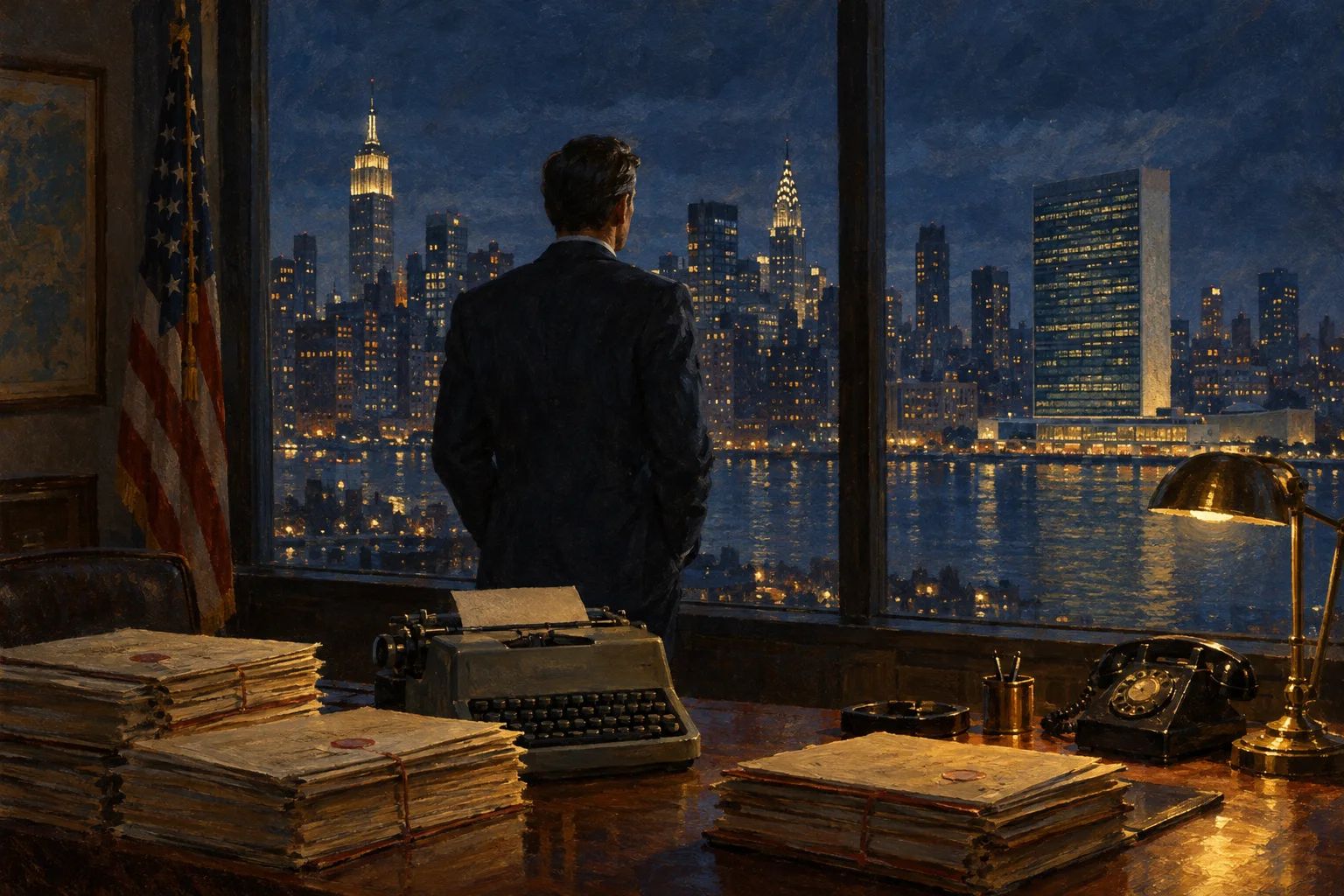
The author of the book, simultaneously the first secretary of the Albanian embassy to the UN in New York, often addressed his superiors with these words:
“The emigrants are not enemies of the Albanian state and nation, but they are enemies of our political system.”
He shows how he created and built connections with emigrants and intellectuals of Albanian origin. He enriches this with names, facts, photos, and concrete discussions.
Furthermore, the author of the book presents written facts meant for the First Secretary of the Central Committee of the Party, Mr. Ramiz Alia, regarding the possibility of establishing diplomatic relations at the embassy level between Albania and the USA.
In this endeavor, which was not easy at all, he presents his talks with the envoy representing the USA, Mr. Moskos. He achieved this success when in Vienna, in 1990, together with the American representative, they set the date to carry out these bilateral actions in May of that year.
In my writing, things might seem to flow simply. The water of thought seems to flow quietly and freely, but when it came to establishing embassies, the situation was nothing like it is today.
The author of the book, Dr. Ilia Zhulati, explains these developments in detail, including in the pages of the book for the reader not only the emotions of the moment but also the successes achieved at that time.
I think anyone who reads this book will understand the great struggle and the behind-the-scenes events, right up until the moment hands were shaken and the agreement with the great American state was signed. After this major achievement, there was much applause, but also a fight to claim the credit on the political stage. However, with the release of this book and the facts published within it, many things are struck down as unjust and worthless. Success belongs to those who turned their souls into a guiding light and made their dreams a reality.
Having already expressed some of my thoughts on this book that is now in circulation, I want to add that Mr. Ilia Zhulati is a great tree planted at the foundation of the nation, one that must be constantly harvested and shaken so that we may gather from it the fruits of a bygone era to serve the future.
Such people and intellectuals must not only be appreciated for their work, but this work must become part of the broader culture, of the readers, and of our national history.
Zhulati’s book is not simply a personal account, but a document that sheds light on the real functioning of Albanian diplomacy during a dark period, on its limitations, but also on the small spaces where certain individuals, with courage and vision, could make an impact beyond the schemes of the system.
I wish Mr. Ilia Zhulati and his book a good journey in the hands of the reader, whether in English or in Albanian, as the book has been published in both languages and distributed both in Albania and in the United States of America.