On the novel “Fallen from the Sky” by the writer Tomë Kuka
Just like every year, this year too, Albanian artists planted the trees of creativity on their papers, canvases, and staves. The end of the year also brings the evaluations of works in the national competition for creativity in general and in each sector in particular.
Today, we will try to say a little more about the artistic creativity of the written word—poetry, short stories, novellas, novels, and so on. But we will focus specifically on the heavy artillery of this genre, which is the novel.
This year, the winner of this prize was the novel titled “Fallen from the Sky” by the writer Tomë Kuka. But what distinctiveness and innovation did this author bring to win the book of the year award? What was the theme of his book that made it a winner? What did he have that others did not?
We will try to elaborate on this and more in these lines of critical thought.
The author in question is already known to Albanian readers for his previous works. Following the flow of his source in this genre, his qualitative as well as quantitative growth is both reasonable and understandable.
This writer has his own unique window from which he views the world, finds his theme in it, and after grinding it in the mill of his talent, pours it onto the white paper for the reader.
“Empty words,” someone might say, “get to the point.”
And indeed, I am stepping inside his artistic gallery to extract its artistic pearls, but also whatever flaws it might have. To begin the song, or the lament for what lacks value. Just like the author, I too am using the written word.
THE WORD AS ARTISTIC DOUGH IN THE NOVEL
Starting with the word, the first and only material of a literary genre. The word is the sound expressed by the mouth, which conveys a meaning, a thought, and so on. So, in the specific case of a literary genre, the author does not use his mouth, but his pen. Through it, he speaks to the theme, the characters, the landscapes, the dialogues, or the monologues.
The author, Tomë, through the word—soundless but written—expresses, receives, and imparts a thought.
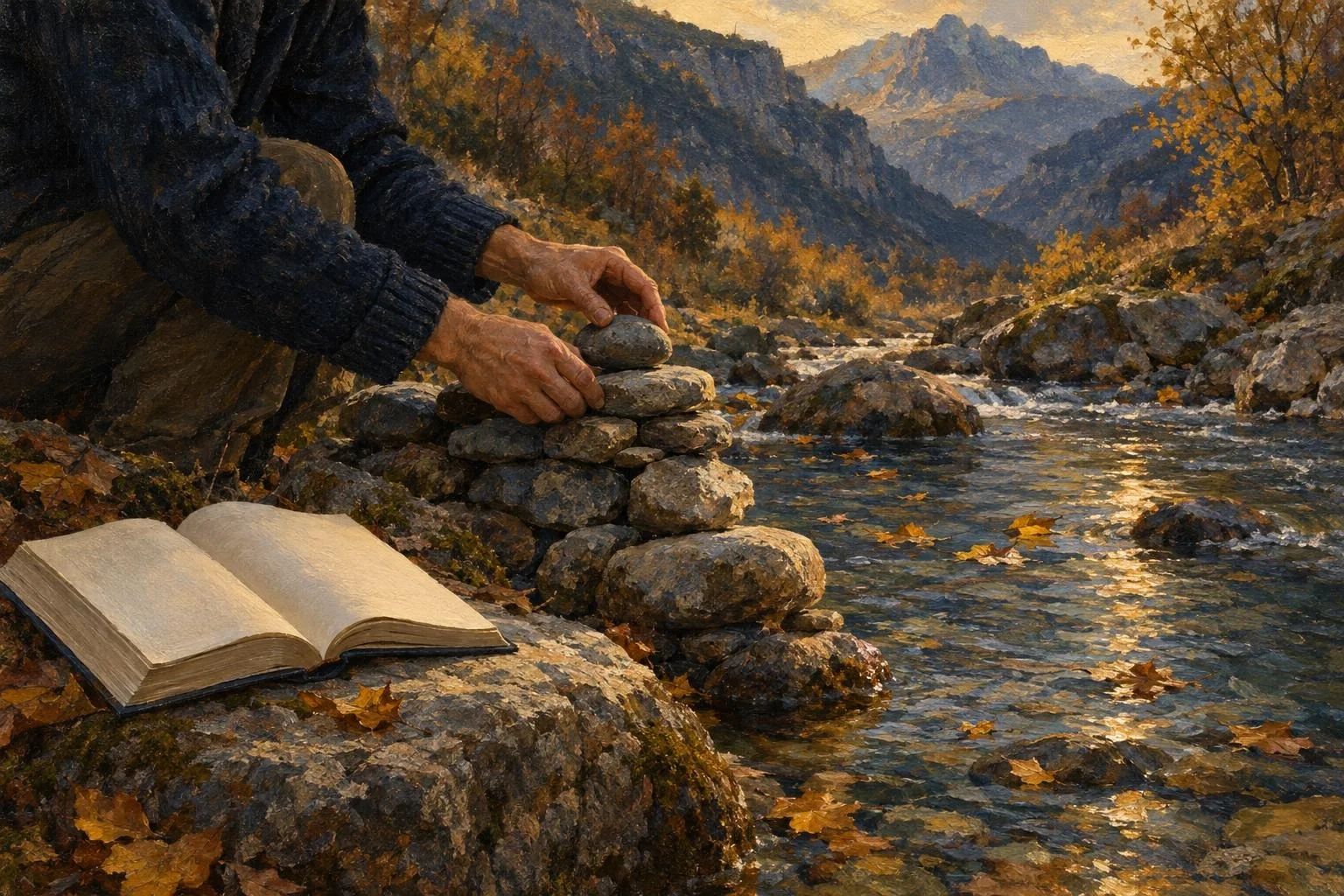
In his work “Fallen from the Sky,” Tomë Kuka says on one page that even the small pebbles in a stream speak. In this case, he takes a small material like a river pebble and builds a wall with it, a house, and so on. Today, as I read and analyze his work, instead of that river pebble, I take the letter, and by joining them I make sentences, and then a fortress or an artistic novel like this one Mr. Kuka has gifted us.
To present his ideas and thoughts, the author of the book has chosen a language he knows very well, which might also be the language of the place where he was born and raised. He gives the word a laconic meaning when necessary, enriches it with the wisdom of tradition when it comes from the mouth of an elder, or makes it figurative and beautiful when it comes from lips or a chest in love.
The word in his pen is a paintbrush; it has color when it speaks of leaves, it has a voice when it speaks of chirping birds, it has a sound when it flows like a spring, or a thought in a conversation.
The word carries within it the weight of the tradition where it is spoken, the understandable and figurative nuances when it conveys a simple thought, yet with a great or deep underlying meaning. This is evident in the conversations of the characters who dialogue, who speak little and imply a lot.
I see and understand that the author, Kuka, plays with the word; for him, it is the most beautiful part of the tool with which he reflects and presents a living nature of what he sees or hears from the breeze, from the flapping wings of a bird. I have in mind here the great Russian writer Paustovsky, as one of the world’s geniuses of painting nature. To capture this nature, he abandoned civilized Moscow for ten years and lived in the villages of Ukraine. There he saw with his own eyes the rivers and their babbling, the chirping birds, the breezes in the birch trees. In this specific case, Kuka knows the environment very well, where with the power of the word he builds scenes full of life and color of the flow of the Osum, or the streams and the rustling of the forests, which he perhaps lived and experienced in his childhood and youth. They have now become one with the author and emerge from his thoughts, his gazes, and his pen, entering the white paper whenever the author calls upon them or needs them.
THEME AND ARTISTIC STRUCTURE
Just like all authors in general, Kuka too has chosen the theme of his novel.
For a novel author, the theme is the field of “Torvioll” where the battles of thoughts, the scenes, and the behind-the-scenes will take place, which the author first builds in his mind. He builds armies like a great military general, places the commanders and soldiers in them, and, with the talent of a set designer, throws them in to perform on this stage.
In this specific case, I think and understand that the theme of the novel is contemporary; many of its scenes have perhaps been experienced by the author, but also by the reader. Being fresh, the imagination of the scenes one reads is accessible, enjoyable, familiar, and experienced by the readers as well.
Many times after reading such a work we say to ourselves, “I could have written this too,” but in fact, it only seems simple to us, because managing to bring it into a novel is extremely difficult. This is done by talent, its unraveling, and its delivery into the broad field of reading.
Anyone who knows even a little about this struggle in building a novel will understand what I am writing. The brain of the writer Kuka, or his talent, holds within it all the scenes and battles that are played out; he watches them from above like a feature-length film. In long battles of thoughts, he removes and places his characters on the stage to achieve the goal he has set for himself on the path of the novel. Some of his characters are killed in the heat of battle. Others appear, taking the reins of the game. Someone stays silent like Hetem Myzeqari, someone shouts and kills like Poshi i Humbëtirës, someone comes only as a character, without physically taking part in the constructed scenes, like Beqir Billa, and so on.
In the absence of a director—a role played by the author—he provides the movements with words, unlike in set design where they are given through physical actions, pantomime, or costumes. In the case of a novel, Kuka does this through the chosen word, the refined and precise thought, so that the purpose of the character’s action is understood better and more accurately, even if it is the song of a hen laying an egg in the coop of his novel, or the crowing of a rooster on the roof of the house, of a leaf that sways and rustles, which both as an image and as music the author’s eye and ear see and hear, but all of this in complete synchrony with the event and its core.
THE CHARACTERS AND THEIR ARTISTIC ATTIRE
Unlike many Albanian novelists, Kuka has his own way of carving his characters and their portraits. It seems as though he does not bother with sculpting characters, does not bother with their personalities, and yet, he brings out their characters in a simple and novel way. He does not explain the wrinkles on their foreheads, how their hair is combed, or how they dress, in order to then arrive at their artistic portrait. He dresses them neither in fur nor in a cloak, neither in a tailcoat nor in a fedora. The author highlights their traits and character through their words, through their movements. This is how he portrays the character of Poshi i Humbëtirës. Through his actions, his mouth, his ignorance, but also his brutality, he perfectly unfolds his character. Just as, conversely, the silent Hetem Myzeqari, with cigarette smoke above his head and the smoke of his thoughts, presents to the readers a character who stays in your mind even after you have finished the last page of the novel.
Through murders and threats, the author characterizes a criminal, but in this very man and inside him, he lights a spark of love for his child who is waiting to come into the world. As much as he kills, he fights just as hard to secure the life of the one expected to be born from his soul, from his feelings. So, in a single person, the author unfolds two portraits of a man who is, in truth, as much a murderer and mysterious, as much a criminal as he is compassionate, as much treacherous as he is caring for his offspring.
All the characters who enter and exit, whether with great weight or little weight, give the novel’s drama its light and shadow, whether it is Fatbardha, Hetem’s daughters, or the priest and the imam.
If you read the novel carefully, you will see the difference between the Americans and our characters in the novel; you can easily tell the difference even in the characters and the traits they carry on their shoulders. On one hand, our brutality; on the other, their silence. On one hand, the word that offends; on the other, it comes out calm and quiet, yet holds bitterness and self-interest within.
THE STYLE OF WRITING, INTERWEAVING WITH THE PLOT
The author is unique in his way of writing. His style features short, sharp, precise sentences in its form of expression. This way of writing is preferred by the reader for several reasons. The reader gets the sentences like cracked walnuts; they do not get tired between lines and heavy punctuation to extract the meaning of the expressed thought. Every sentence expresses itself from within and gives the reader the best possible outcome. It makes the reading engaging, but beyond that, it makes the plot clean and beautiful.
Besides this, in his latest novel, drawing also from experience, the author knows how to present the purpose of his subject to the reader in the right form. He works and operates with short, alternating chapters. The events seem like subjects that end within the chapter, but in reality, they are connected by an invisible thread to the flow of events.
So, where it feels like the reader might be getting tired from a long read, the author closes it and moves on to another chapter that does not resemble the first. It might be more pleasant in colors, in feeling, in thought. And after a somewhat cheerful and relaxing chapter, the writer dives into a deeper current, filled with events and the carving of characters through their language and actions.
The chapters resemble the flow of a stream and its babbling over the stones. Somewhere there is a crash against a rock, somewhere a multitude of small pebbles gives the flow a different roar, and further on a leaf, a butterfly appears between the lines—all these metaphors to make the noise of the stream more beautiful with the colors and music that the writer composes and orchestrates, and casts into his lines sometimes with delicacy and sometimes with intent, to create the scenes that interest him in the novel.
In many of them, the author does not deal much with the spiritual world of the characters, but as he conveys the plot, their world unfolds on its own like a random surprise; this makes the reading more engaging and the reader more interested.
In conclusion, not to drag on too long, we can say that the author, with the beautiful tree of creation, has achieved the values of a novel that is both modern and enjoyable. Anyone who savors reading its fruits, while also becoming part of the written event, feels good and realizes they are learning a little more from the dramas that life serves us.
Nowadays, readers have indeed decreased in number for many reasons, but this does not mean that written works are weak. The art of writing belongs to generations; it is not seasonal like seasonal fruits or flowers with their colors and scents. It holds within it the life issues of the time it is written, but also of the generations to come, absorbing it as an experience and a lesson in everyone’s life.
Further congratulations to the author, and may we meet again at other publication celebrations, and likewise to the publishing house that holds his published book.