Great anniversaries carry a small risk: when the ceremony ends, attention often ends with it.
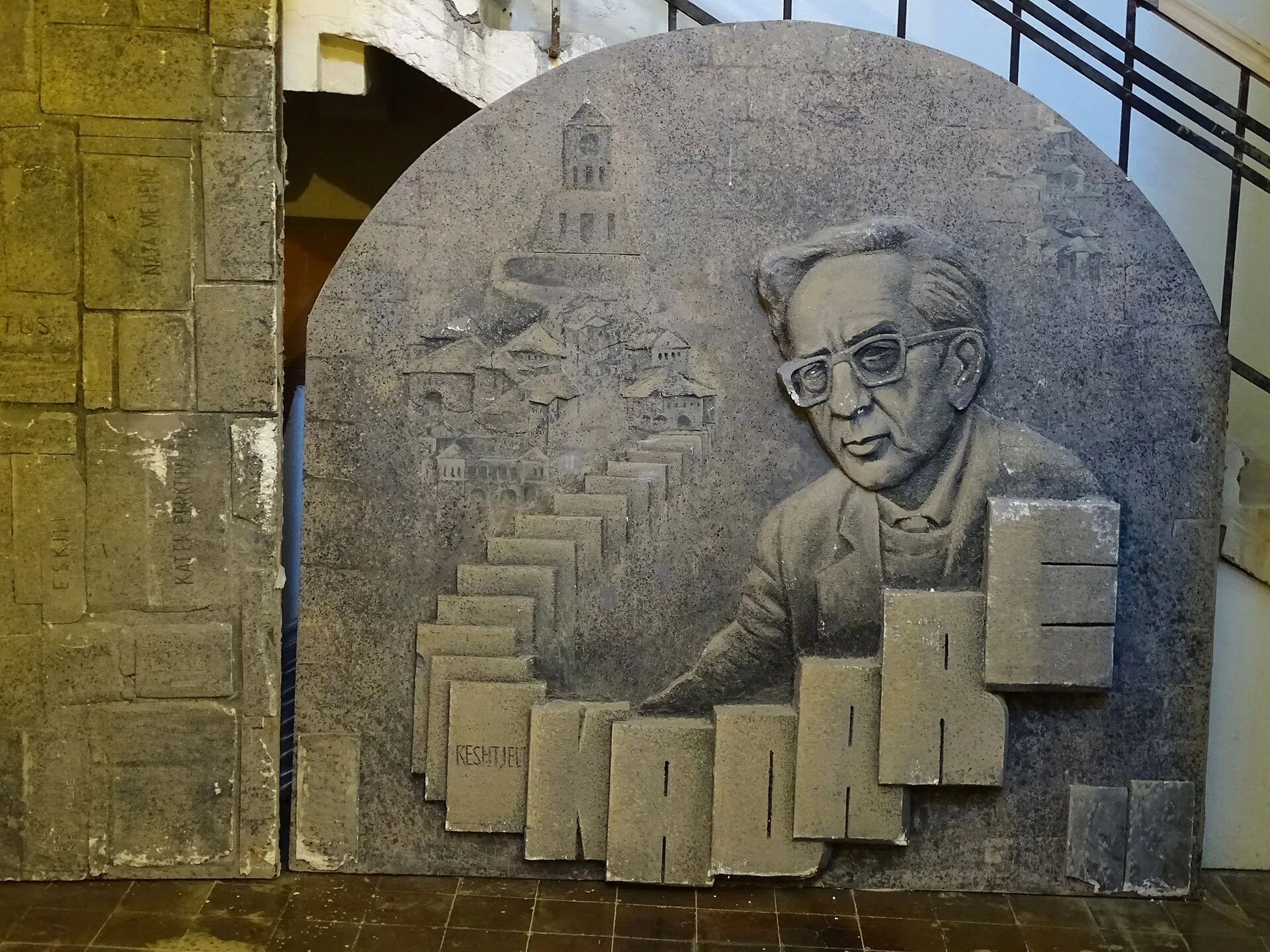
On 28 January 2026, Ismail Kadare would have turned ninety. The writer, born in Gjirokastër in 1936, died in Tirana on 1 July 2024 at the age of 88, leaving behind a body of work translated, according to the Associated Press, into 45 languages, the first Man Booker International Prize in 2005 and a name mentioned for decades as a Nobel contender. The first round-number anniversary after his death was marked in Tirana, with an event at the Academy of Sciences, and in messages from Albanian embassies. Now that the first waves of tributes have receded, the only question that matters is what remained of them.
An anthology instead of a speech
The most lasting of January's events was not a speech but a book. At the Albanian Academy of Sciences' event on 28 January, the three-volume publication “Kadare në kritikën letrare botërore” (Kadare in World Literary Criticism) was presented. In her greeting, the president of the Kosovo Academy of Sciences and Arts, Justina Shiroka-Pula, called it a scholarly achievement that bears witness to Kadare's presence in international literary thought, and dwelt on the writer's relationship with Kosovo.
This is the kind of legacy that does not end with the anniversary. An anthology of foreign criticism gives Albanian scholars the material to see Kadare from outside, as others read him, and frees them somewhat from the two old dangers of local reading: unconditional worship and political polemic. But an anthology is only a beginning. Still missing is what takes longer: a complete critical edition of the work, with the variants the author himself changed over the years, and an archive open to researchers.
The last letter of an adversary
The most moving text of the anniversary came from a contemporary. The academic Rexhep Qosja, who would himself have turned ninety in June, wrote a letter to the Minister for Europe and Foreign Affairs, Elisa Spiropali, and to the Kadare family for the 28 January event. Qosja recalled their friendship from the 1970s, his public defence of Kadare's decision to seek asylum in France in 1990, and then their well-known polemic on Albanian identity, which, as he wrote, faded their friendship until their paths no longer met. That is precisely why the letter's conclusion carries weight:
"Ismail Kadare sot nuk ka nevojë për lavde të rastit. Ai ka nevojë për lexim, rilexim dhe kuptim." ("Ismail Kadare today has no need of occasional praise. He needs reading, rereading and understanding.") — Rexhep Qosja, letter for Kadare's 90th anniversary
Qosja died on 23 April 2026 and was buried the same day in a family ceremony, as he had wished. His letter was made public after his death. It remains perhaps the most honest document of this anniversary, because it comes from someone who was under no obligation to praise Kadare and who chose, in the end, to place the work above the disagreement.
Paris and Tirana
France, where Kadare sought asylum in 1990 and spent much of his later life, has taken steps that will last. In October 2025, on the initiative of the association “Les amis d'Ismail Kadaré”, the Council of Paris voted unanimously to place a commemorative plaque at 63 boulevard Saint-Michel, where the writer lived. A plaque on a Paris street is a small thing, but a durable one: it needs no invitations and no speeches.
In Albania, by contrast, celebration remains mostly a matter of the calendar. The official messages of 28 January, the flowers and the commemorative speeches are signs of respect, but none of them replaces the quiet work of philologists, translators and teachers.
The real test
There is a simple way to measure what remained of the 90th anniversary: to ask how many pupils will read Kadare in full, not in anthology excerpts, and how many new studies of him will be published in Albanian in the years to come. Future anniversaries will be quieter. That is when it will become clear whether what Qosja called the need for reading and rereading has been taken seriously.
Kadare built his work on the idea that memory is a form of resistance to imposed forgetting. It would be a bitter irony if, in his own country, he were remembered only on round-number dates.
Sources
- Albania's world-renowned novelist Ismail Kadare dies at 88 (Associated Press), Associated Press via Idaho News (2024-07-01)
- Përshëndetje e Akad. Justina Shiroka-Pula, 90-vjetori i Ismail Kadaresë, Akademia e Shkencave dhe e Arteve e Kosovës (2026-01-28)
- 90 vjet nga lindja e Ismail Kadaresë, Ambasada e Shqipërisë në Serbi (2026-01-28)
- Letra e Rexhep Qosjes për 90-vjetorin e lindjes së Ismail Kadaresë, Shqiptarja.com
- Shuhet në moshën 89-vjeçare Rexhep Qosja, BalkanWeb (2026-04-23)
- Une plaque à Paris pour Ismail Kadaré, l'Albanais honoré boulevard Saint-Michel, ActuaLitté (2025-10-14)