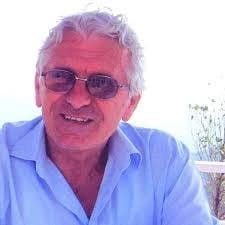

WHEN YOUR OWN COUNTRY DOES NOT VALUE YOU, DO NOT EXPECT EUROPE AND THE WORLD TO VALUE YOU
An interview with Prof. Dr. Nikolla Spathari, given to the writer Vasil Premçi
Vasil Premçi: Among writers, poets and literary circles in this country, there is a view that the “literary fortress” (recognition and fame), as some of them figuratively call it, can be conquered from abroad. This concerns certain Albanian writers who have been translated in several European countries. What is your opinion?
Nikolla Spathari: Yes, I have heard this view in writers’ circles: that we supposedly need to win over Albanian public opinion from abroad, with our books translated into foreign languages. But why, for heaven’s sake, can’t these Albanians read our books in their mother tongue? Must we bring them back in a foreign language!? Or is a work necessarily good just because it has been translated into a foreign language? Creative work is immortal when it is beautifully written. And it is beautifully written when the author has a creative conscience, alongside innate talent and hard work.
Glory! Those who spend their time thinking about how and where to seek it will never attain it. The poets, writers, composers and painters most likely to attain it are those whose minds are on their work rather than on glory. My view is that true glory comes neither from abroad nor from home unless your work carries it within itself. And yet only mediocrities make such mathematical calculations about glory. The talented do not concern themselves with it, and rightly so. But the mediocrities who waste their time chasing glory are also “doing the right thing”, since they have no use for that time to create genuine literature.
When your own village, town and country do not value you, do not expect Europe or the world to value you. A writer writes for his own people, but if his work has a breadth that makes it valuable to other peoples, so much the better.
I am reminded here of something the American writer Elie Wiesel wrote. He says: “Where should I begin? The world is so large. I shall begin with my country, which I know best. But my country is so large. Better to begin with my town. But my town is so large. Better to begin with my street. No, with my house. No, with my family. Ah, yes! I shall begin with myself...”.
Our early rhapsodes did not even take care to leave their names on their creations, yet they left us gems such as the “Ciklin e Kreshnikëve”:
How brightly this sun shines, how little warmth it gives,
How the wind shakes the plane tree of Jutbinë,
So much snow has fallen.
The beeches are weighed down, ready to break,
Only the crowns of the pines showed…
Such were the treasures those early creators left behind in the solitude of the mountains, without a thought for glory. Their work remained with the people as a monument, and this should be the creator’s great aim. If he is capable of achieving that aim, glory comes of its own accord. What does it matter where it comes from, abroad or at home?!
A touching episode involving Isuf Myzyri, the celebrated author of most of Elbasan’s urban songs, illustrates the true creator’s profound modesty in a simple yet utterly magnificent way. It was 1955. Unless I am mistaken, it was just a year before the genius of Elbasan’s folk song closed his eyes for ever, leaving his great soul to his people in his songs. A group of four or five of us from Shkodër went to Elbasan on business. One of them, a relative of mine, took me along as a child to see Elbasan. “To see the world with your own eyes,” as he told me. It was summer, and that evening our little group sat down at a small garden bar whose name and location I no longer remember. When the drink began to take effect, our little group broke into song. It must be said that it is hard to find anyone from Shkodër who, once the table is laid, cannot sing and crack jokes. And so I remember that, on that distant night in the fifties, our little group was a great hit in Elbasan with its urban songs from Shkodër. I noticed a frail old man in distinctive dress, sitting alone at the table opposite, swaying along to our singing with his weary but supple body. He beckoned to me as I watched him, somewhat bewildered. Perhaps it was because the white that predominated in his clothing had put me in mind of a shroud. I approached him fearfully, but he stroked me with his weathered hand and gave me three heads of garlic to take to the group. This very modest gift from the kind-hearted old man also seemed to be an invitation for our group to leave the songs of Shkodër aside for a while and sing something from Elbasan. The song “S’paske pasë një pikë mëshire” pierced the Elbasan night and spread through the lanes. Somehow my eyes strayed to the old man, and to my surprise I saw him wiping away tears.
“He’s crying,” I said, but everyone was so carried away by the song that no one heard me.
When the song ended, the old man rose in tears and came over to clink glasses with us.
“May you live long!” he wished us. “I never imagined my songs had reached as far as Shkodër.”
“Why, who are you?” asked one of our group.
“I used to be Isuf Myzyri, because now, as you can see, there is hardly anything left of me,” the old man said, and his eyes filled with tears again.
What I wanted to say through this episode is that true creators have never thought about how far the glory of their work might spread. Indeed, they were so modest that the little world of a single town was enough for them.
Vasil Premçi: Many good writers began with poetry. As we know, poetry is more difficult than prose. Why do these poets abandon poetry and write prose?
Nikolla Spathari: Everything that happens in life happens for a reason. Poetry is undoubtedly the genesis of the literary universe. But a human being is also a universe, unable to escape the general laws of development.
Just as peoples, in their infancy, first turned their thoughts to poetry alongside carving, so every young person who begins to write finds an outlet in poetry. Poetry is better suited to youthful feelings because it allows them to be expressed immediately and through imagery.
Young people generally have little taste for the lengthy commitments that prose demands. But as the years pass, when a young person has gained experience in writing poetry and reached literary maturity, he begins to think of a roomier suit for his creative work. Poetry is indeed a difficult genre and demands a powerful talent, but everyone enters it when taking their first steps. Most fall by the wayside; only a few reach the finish line. Nothing is cut and dried. For instance, our three outstanding twentieth-century writers, Migjeni, Ismail Kadare and Dritëro Agolli, did not abandon poetry. They continued to work successfully in both genres. What matters is that whatever genre a writer works in, he must write well. It is interesting that all writers who come from genuine poetry also write poetic prose, with spare, evocative language. The person who knows how to write is the one who says a great deal in few words.
Vasil Premçi: It is a well-known fact that some world-famous writers, such as Ernest Heminguej and Dino Buxati, as well as some of our own, such as Petro Marko and others, came from journalism. Yet one of the finest French writers, Emil Zola, says more or less this about the profession of journalism: “Journalism is a kiln (a furnace for burning stones to make lime—my note) that demands great dedication, takes up all your time, separates you from your family and ultimately destroys your talent as well.” Both Heminguej and Buxati have pointed out that, to escape this “danger”, you must know when the time is right to leave it. What is your opinion?
Nikolla Spathari : Not just I, but any writer, however great, would be hard put to offer an opinion on definitions given by such giants as Emil Zola, Ernest Heminguej and Dino Buxati. Nevertheless, to paraphrase Zhvejku, I would say: I take the liberty not of contradicting them, but of adding something. I believe they mean the reports and news items that take up all a journalist’s time, since these are a newspaper’s daily bread. It is different with essays and commentary, which can serve a writer as an antechamber to literary works.
In general, newspaper work has always been a matter of earning one’s daily bread. In the days of Emil Zola, Ernest Heminguej and Dino Buxati, a beginning writer could not earn a living from novels or short stories. Under the socialist system, it was out of the question. You had to become very well known before you could work as a “freelance writer”. So, here in Albania, Dritëro Agolli, Ismail Kadare, Petro Marko, Qamil Buxheli, Xhevahir Spahiu, Niko Nikolla, Gaqo Veshi (Hyskë Borobojka), Zija Çela and others worked for newspapers and magazines for years on end. It is true that a newspaper wears you out, but it is equally true that it helps you. It teaches you about life and people down to the smallest detail. Besides, while working for a newspaper, a journalist can also be working for himself. For instance, if you write an inspired satirical piece for the paper, tomorrow you may have it ready to turn into a humorous story.
Vasil Premçi: What do you think of the criticism directed at the best-known Albanian writer, Ismail Kadare, for retouching some of his works?
Nikolla Spathari: I do not like the use of the word “retouching” for a literary work. Revising does not mean retouching. Ismaili himself has given the most exhaustive answer to this question: “A writer does as he pleases with his own work.” I am not aware of Ismaili having retouched anything to make it appear that he never wrote about the Party. If that had been his aim, I think the first thing he might have retouched would have been one of his poetic masterpieces, the poem “Shqiponjat fluturojnë lart”. And it would not have needed much retouching: remove the word Party and put Albania in its place. My complete works, a series of twenty volumes, twelve of which have been published, also include five volumes of essays and commentary. Only one of the five volumes was written after 1990. The other four contain pieces published under the totalitarian system. I shall change nothing. Not even a title I had called “Kohët Tona”, which the editors thought would sound better as “Kohët që solli Partia”, because future generations must know that era too, as it was, not retouched.
Vasil Premçi: For a writer there are two realities: one, let us say, objective, and the other subjective, existing only in the writer’s mind and workshop. Some writers, wishing to draw readers’ attention to the subject of their books, declare somewhere in the introduction that “The events in this book are real”. What is your opinion of the relationship between objective reality and the reality a writer describes?
Nikolla Spathari: Those writers who swear that this is how it happened do not understand that there are two truths: the truth of life and artistic truth. The writer who cannot turn the truth of life into artistic truth swears that this is how it happened, but no one believes him, because artistically he has failed to convince us. The truth of life, in the talented writer’s workshop, is transformed into artistic truth and, as such, becomes believable and needs no swearing to. Indeed, artistic truth has great power. Sometimes, even though it completely alters reality, it remains believable. I can give an example from our own literature. Those who knew Qazim Mulleti have affirmed that he was a cultured man, educated in Europe, who knew several foreign languages. Yet the playwright Besim Lëvonja gives us a semi-ignorant prefect. Naturally, there were such prefects, but Qazim Mulleti was not one of them. If he had only changed his real name, that character would be a finely sculpted artistic figure. In general, when people remember Qazim Mulleti, they always have in mind not the real one, but the one created by the playwright Besim Lëvonja. That is what artistic truth is!
Vasil Premçi: You have cultivated several literary genres, publishing poetry, short stories, novels, children’s literature, journalism and studies, such as your interesting book “Malësia e Madhe siç e njoha unë”. In which genre do you find yourself most at home?
Nikolla Spathari: A writer holds dear all the genres he cultivates. It is like a mother’s love for her children. But, just as every mother wants all her children to be beautiful, a writer too must strive to cultivate successfully all the genres he works in. How far I have achieved this I do not know, but I can offer a few examples of what the critics have said:
The chairman of the Society of Writers of Western Greece, Leonidha Margariti, says among other things: “Personally, I would like the poet to allow me, by paraphrasing the title of this poetry volume of his, to imitate him and present it as follows: ‘Nikolla Spathari will remain forever’.”
Prof. Dr. Gjovalin Shkurtaj: “…Then, Nikolla Spathari, with his poetry too, reaches the peaks of Albanian letters, with a constellation of poems among the most pleasing and spot-on.”
Prof. Dr. Flori Bruqi: “Nikolla Spathari, an author with a wide range in the field of letters as a humorist, poet, reporter, scholar and children’s writer, as well as with a long span of time as a creator, has made a name for himself and stood out with his work, but I think he has achieved his highest quality values with his poetic output.”
Gjergj Vlashi (Honor of the Nation): “He (Nikolla Spathari), in poetry, is generally sparing with words; he removes everything superfluous, working like a sculptor.”
Sazan Goliku: “Spathari’s poetic output occupies a considerable and qualitative place in the opus of his work... This poet’s poetic vision is inseparable from nature. He kneads the glassy dough of the motif with the elements that surround it, which set the feelings free.”
Bardhyl Agasi: “Nikolla Spathari can be described as one of the contemporary poets who has sung the most to love, this matter as divine as it is human, which in Spathari’s poetry always sounds youthful, eternal.”
Agim Bajrami: “Since we drew a parallel between the poetry of Rreshpja and Spathari, I want to say that, after Frederik’s death, few could raise a poetic monument to him as Nikolla Spathari did, his twin in poetry, but with more light. Perhaps because no one had been closer to him than he was, neither in life nor in poetry.”
Fatmir Minguli: “Spathari also has the luxury of being a scholar, and what is more, an expert on the epic poetry of the northern heroes. This luxury, combined with poetic melodiousness and dynamic thought, makes his poetry unique.”
Vladimir Muça: “In the Migjenian footsteps of poetry, Shkodër reaffirmed, at the end of the 20th century and the beginning of the 21st, as products of its poetic heritage, two poets, as close as they are distinct, Frederik Rreshpja and Nikolla Spathari, who come as creators of the same poetic school. Both are the worthiest followers of the poetic art of the great Migjeni.” Without dragging it out any further, I will briefly offer a few considerations on the short story genre:
Dritëro Agolli writes: “From Nikolla Spathari’s book flows an elegant humor, full of paradoxes, a subtle humor that often shifts now into irony and now into sharp sarcasm, mocking and stinging the old and new vices of man.”
Prof. Dr. Jup Kastrati: “ We scientists laugh very rarely; nevertheless, reading this book of stories, I too, like the others, laughed and relaxed. It was a pleasant and joyful break, because I read a book that makes you think.”
Fadil Kraja: “In Nikolla Spathari’s stories, vices, arrogance and ugliness are no longer the property of clerks or brigadiers. This time we have high officials, MPs and politicians, ministers of state, and why not, even presidents. It is as if the author wants to tell us: If it usually smells bad down here, do not forget that a fish rots from the head down.”
Paulin Selimi: “The comic situations are masterfully interwoven, so the reader eagerly swallows both the fine humor and the grotesque, because even the grotesque is delivered with admirable finesse.” My own opinion is that cultivating many genres enriches a writer’s curriculum, but on one condition: wherever he sets his pen, it must be of high quality.
Vasil Premçi: How have your publications of historical and ethnographic studies been received by scientific circles?
Nikolla Spathari: Once again I will leave the floor to the scientific authorities, who have more or less answered this question:
Academician Gjovalin Shkurtaj: “‘Malësia e Madhe siç e njoha unë’ is one of the most valuable books dedicated to Malësia e Madhe, an ‘encyclopedia’ of virtues, deeds, sufferings, and the preservation of elements that reveal the antiquity and the ‘marrow’ of immortal national traditions, such as besa, generosity and patriotism. He worked on this book for more than forty years.… Like no one else (and only a son of hers could do this), N. Spathari, with his book, explained that the compound name ‘Malësia e Madhe’ is a symbolic name, a name that paints a portrait of the great virtues Malësia possesses.”
Prof. Dr. Agron F. Fico: “The scholar Nikolla Spathari, in his book ‘Malësia e Madhe - tokë e një etnokulture të lashtë’, brings new contributions, and for the first time, to several problems of ethnoculture; for example, he examines the naming of the kanun that bears the name of Lekë Dukagjini, and elaborates extensively on the tribal life of Malësia e Madhe. I learned quite a few facts and concepts that were unknown to me. The mind of a master scholar and a trained hand are evident in the book. This book, in my judgment, honors the author but also brings a new, original and rich contribution to the ethnoculture of this area of such wealth, which has also been the object of study for quite a few foreigners. The author raises problems for discussion for the first time, such as: is Leka the author of the Kanun? And how many layers does the concept of ‘friend’ have? etc. The book enriches the library of Albanian books.”
Prof. Dr. Flori Bruqi: “With his book ‘Malësia e Madhe siç e njoha unë’, Spathari has shown culture, intellect, scientific grounding, analysis and powerful arguments. He has used vast information, wise and carefully chosen references, and an intertwining of realities with tradition, which he has traced back to prehistory.”
Meçan Hoxha: “Another added value in Nikolla Spathari’s body of work is the book ‘Në këngë është edhe historia’. This book, due to the themes it addresses and the seriousness with which it was crafted, shines like a pearl in the golden necklace of Nikolla’s creations. The studies collected in this book set Nikolla apart among many other professional scholars who have dealt with the history and culture of Shkodër, such as ethnographers, historians, musicologists, art critics, etc.”
Skender Temali: “On his long path of over half a century of creativity, he overcame the storms of the time with his chest, manliness, wisdom and talent, for it was not very easy to keep from sinking when you had a biographical blemish that neither let you publish nor kept you from being a village teacher forever. He managed to make his mark, at first with children’s books as much as in journalism, where his literary reports even in the main newspaper of the time, ‘Zëri i Popullit’, were far superior to those of the people warming their backsides in the armchairs of editorial boards and other offices. That is why his ordeal is synthesized in a few lines of the poem ‘S’e dua buzëqeshjen tuaj’.”
Vasil Premçi: You are publishing the series of your collected works. Does this not show that you have concluded your literary output?
Nikolla Spathari: Yes… I am gathering my work into a series of 20 volumes. Naturally, it is a special edition of my complete literary works. So far, 12 volumes have come off the press, and the other 8 volumes will be published as well. Since you asked me about this undertaking, I want to say briefly what the structure of my literary work is: my scholarly books are collected in the first three volumes. Poetry takes up five volumes. Short stories, two. Novels also two volumes, children’s literature three, and finally journalism takes up five volumes. As for your question of whether this shows I have concluded my literary output, I would say it shows I am working with greater intensity…