A Story
The news broke on a Friday evening. Television screens endlessly repeated the bizarre and unusual event that had taken place. Sensation! A horde of mice had broken into the home of the great writer and critic Mihallaq Gjinobardhi. But the wonder did not end there. The disorganized horde, like the crowds of demonstrators in the center of Athens, scattered independently and gave up the ghost. They kicked the bucket, as the people say. That was the rumor, because in truth, at the scene of the event being discussed, there was no eyewitness, nor anyone else who knew beforehand about the invasion or the tragedy that would subsequently unfold.
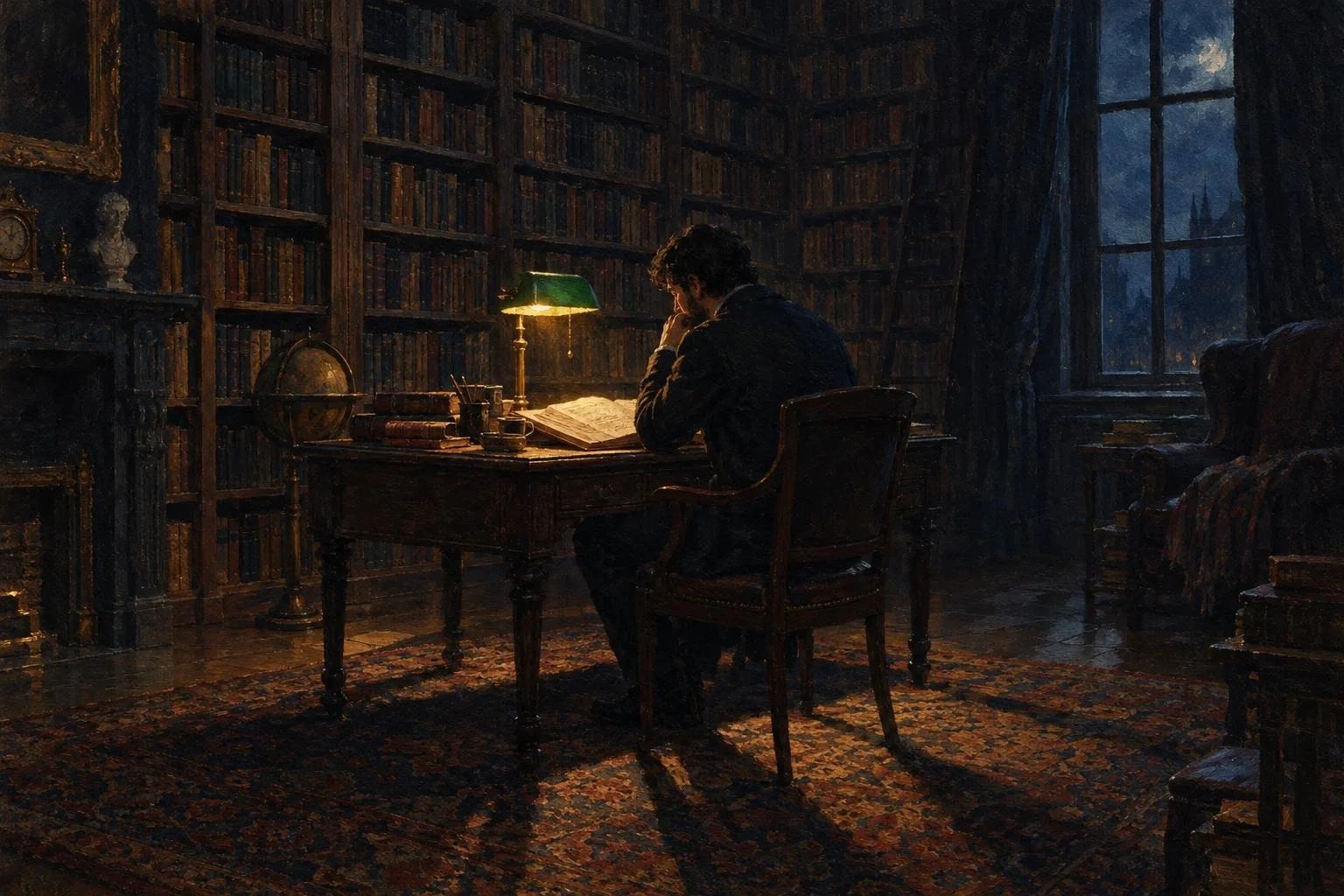
When the competent authorities arrived at the scene, they found the mice lying in twos and threes, apart or together. This was according to their last-minute wishes and their social and kinship ties. Most of them had breathed their last in the study of the writer and critic, where there was the most light and the most books. Surprisingly, in none of his major works had the writer ever mentioned their name, nor had he used them figuratively to imply that he employed them as tools to bring into his works values stemming from their tribe and genus. He had never described their good qualities in his works, let alone their bad ones. That is why the news dropped like a bomb. Like those bombs they throw at embassies. Not to cause human or material damage, but just for the uproar. Just to instill fear, or to attract attention. What had the mice that entered Mr. Mihallaq’s house been looking for? Violating someone else’s home is a legal offense, and you are punished according to the articles contained in the “Penal Code.”
Someone among those present explained that the penal code was for humans and not for animals, since they do not belong to the same group and had not voted for the law in question. Behind their action hid many questions. Who had organized the mice, and what was the purpose of this organization? Was the war being waged against the great writer, or did the hidden hand conceal an organized strike against the national artistic oeuvre?
Psychologists, doctors, analysts from various fields, animal life researchers, and others appeared in the television windows. In one of the windows, Miço’s face also appeared, round as a pancake. The meadow of his fallen hair caught the eye; the greenery and blooming had given way to the drought, to the desert of his feelings. A few wrinkles like deep ditches eroded by the waters of the great thoughts he poured onto paper. Corrosion in his eyes, on his lips, in his bell-like ears, deafened by the oblivion of time. He sat looking somewhat frightened and drawn in the face, like a squeezed lemon. He clutched his house keys in his hands and tried to make them understand that he had locked the doors securely when he went out. He locked the doors securely so that the characters of his works would not get out without his permission and get lost in the streets of Athens, since they did not know Greek very well. He kept them isolated like this and would say, “Better under lock and key than to tire myself out looking for them.” He had gathered them with great effort and put them into the pages and drawers of his works; was he now to tire himself out again to find them? Lock the door and silence the wicked mouths. But he wondered, how was it possible that even with the doors locked, a horde of mice had entered the house of his characters?
The psychologist, a tall man with a scar above his eyebrow, analyzed the situation: “The mice must not have been well spiritually, this as a result of the peace they have made with the cats, and now they no longer hide
as befits their tribe. I am certain that they committed the act of entering Mr. Mihallaq’s house unconsciously. The fact that they did not eat a single piece of cheese proves this perfectly. The question arises, why did the mice go to the great writer’s house and not to another house? Had they perhaps heard something about his name and his work? But this does not hold up; mice do not know how to read or follow television programs (although they have plenty of free time) to see Mr. Mihallaq when he gives interviews or trumpets his works. That is why finding the truth is difficult and requires a lot of work, which takes a lot of time and a lot of expense.”
The doctor did not let his words fall to the ground, but proclaimed: “The mice suffered from a diagnosis for which a medical commission must be convened. A biopsy and a necropsy must be performed so that the victims, ‘The Mice,’ do not die in the middle of the house en masse, since this is called genocide, and secondly, they have left many question marks. Their death requires a scientific medical solution.”
The analysts, thrown into the mill of analysis, went back and forth, confronting the actions and convictions of the mice, their connections with the house and the author. They tried to discover who was hiding behind
these scenes and why.
Mi-hall-aqi listened attentively to all parties without understanding a thing. His gaze had an exclamation mark at the end of its thought, like the ones he puts at the end of the chapters of his books. An exclamation mark, a state of astonishment that expresses inner fear, uncertainty, and hopelessness.
After them, a large head appeared in the small window, with a nose like an adze and bulging eyes like a crocodile’s: “Let us wait for the analyses from the forensics laboratory. We will also do DNA testing on the lifeless mice to accurately find their connections with the house in question. Could the enemy be internal? We do not know if Mr. Mihallaq has ever kept mice. And if he has, which of them worked underhandedly, so that the others could enter the house too.”
Mi-halli was frightened. He had not kept mice, but he had lived with mice and flies when he did not have the name he has today. He had lived for years in a shack where mice, tortoises, and lizards went in and out freely without a pass or a residence permit; in fact, Mihallaq himself did not have a residence permit.
The television viewers had fixed their eyes on the glass screen, just like Mihallaq’s eyes, and waited to learn about the fate of the mice and their connections with the great writer.
Meanwhile, the news anchor adopted a serious posture. This showed and implied to the viewers that the situation was serious. What had happened?
People all over the country, in their homes, cafes, and beach taverns, moved closer to their televisions, dragging their chairs without caring about the disturbance they caused others, without taking their eyes off the anchor’s mouth. As if its opening were the key that unlocked the door of truth regarding the murder of a horde of mice.
The anchor, holding the sensation in his hands, did not speak. Did he perhaps want to test people’s patience? Finally, he took a deep breath,
as if this was what he had lacked to express the truth, and began:
“Mr. Mihallaq, who loves books very much, has filled his house and library to the brim, and every time he leaves the house, he sprays a pleasant fragrance into its space. He sprays most of it in the library where his books and those of his fellow writers are, so that even though no one opens them to read them, they can at least smell the pleasant scent.”
People were not understanding a thing; they saw a smoke drifting across the screen but nothing more, while the disease of curiosity gnawed deep inside them.
“This spray, as well as the stamp on the desk kept by the gentleman, who is the Chairman of the Writers’ Association, contain the aroma of fried cheese and grease, since Mihallaq carries it with him and stamps things according to interest and success in various bars, which made the mice rush into his house. And since the doors were locked, they entered through the chimney.”
“The smell of cheese provoked their spiritual state,” the
psychologist said.
“This kind of disease is called hunger,” the doctor added.
“They were incited,” the analyst chimed in.
The anchor paused for a moment to give the viewers time to think, and continued: “The mice ate parts of the writer’s books. It has happened other times that they eat and gnaw on books, but we have had no victims. Then why did they die? There are no poisonous substances in their bodies.”
The people were relieved. They moved away from the screens and approached the dining tables they had abandoned while waiting for the news.
Everything was clear to them. The mice had eaten the ideas of Mihallaq’s works along with the paper, and they had...