In those days, the publishing house informed me that my first book, “The Road to Freedom,” had been published in Greek. It felt as if something changed inside me. Holding my book in Greek in my hands (I had published several in Albanian) seemed to increase my worth both as a person and as a writer, as well as a member of those people who had welcomed me.
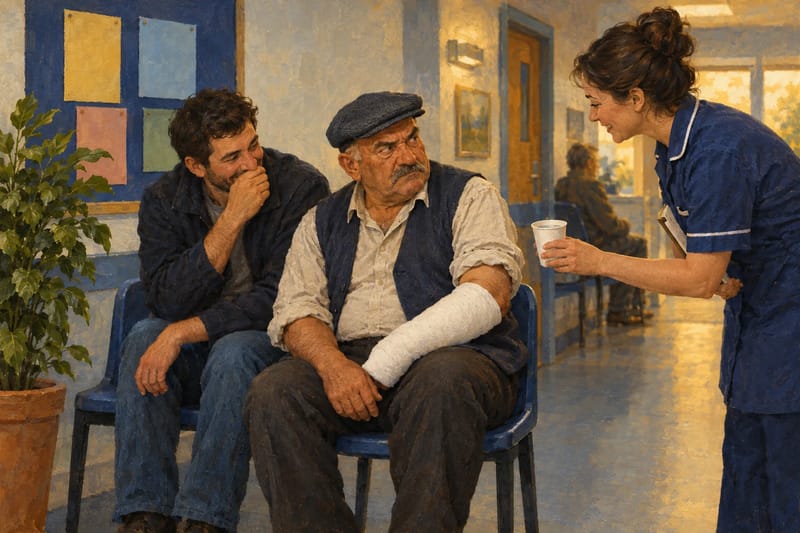
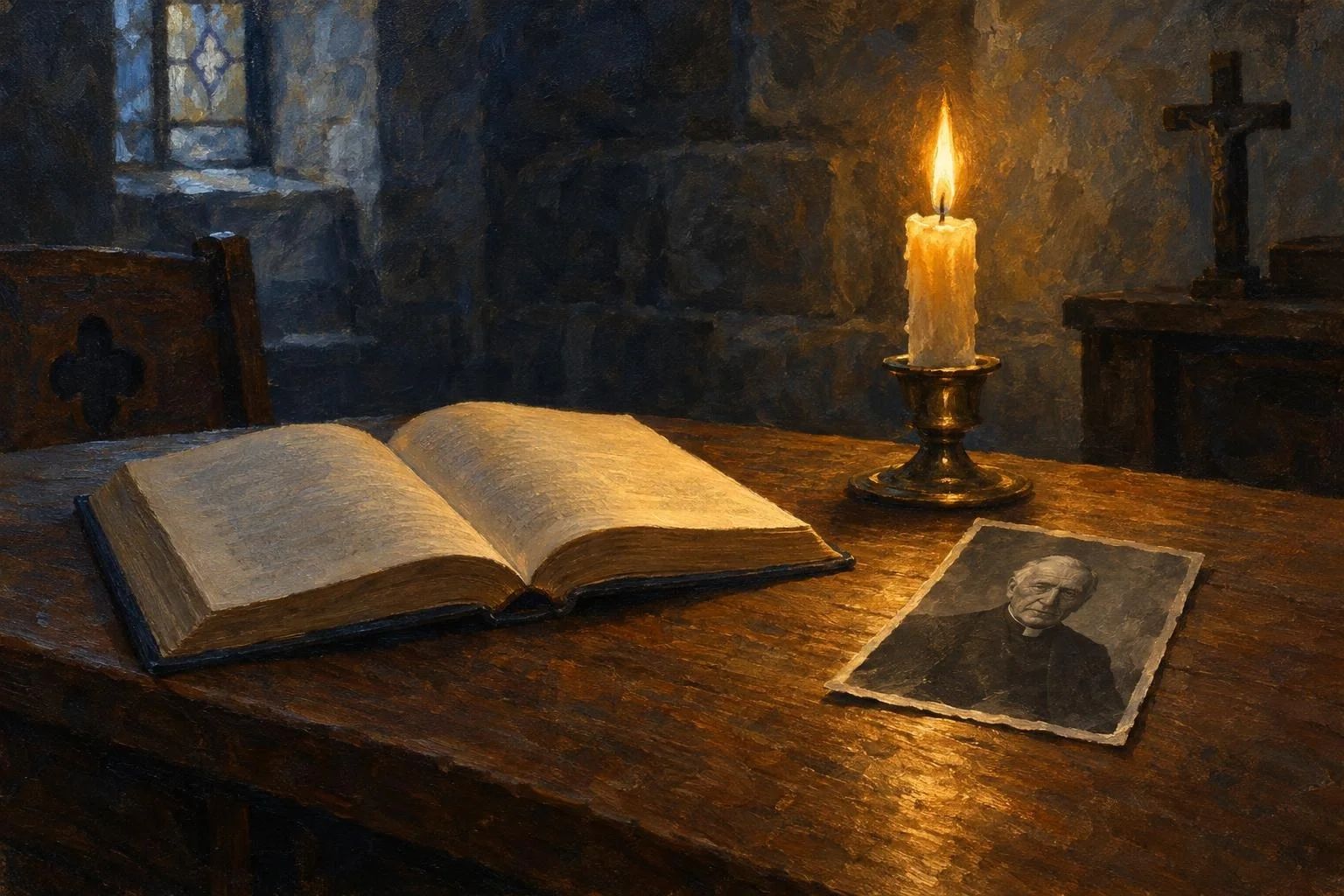
The book’s plot was simple, but painful. A 14-year-old boy from Albania had run away to find his grandfather, who was a priest. His father had been imprisoned when his grandfather fled. The book reflected life before the 1990s. The boy’s ordeals throughout Greece, his suffering, and the dog they had with them, showed pain, hardship, and uncertainty. One day, a village priest finds him unconscious in the courtyard of his church. He takes him and brings him home. The moment he tries to change his wet, frozen clothes, a photograph falls from the child’s chest. The priest picks it up and sees himself in it. He realizes this boy is his grandson... He calls an ambulance and they take him to the hospital. For three days and nights, the doctors stay by his bedside. The priest, his grandfather, tells them:
“This boy must live. He is my grandson, my blood, the continuation of the family I left behind in Albania.”
The hospital director, surrounded by doctors, gives him the bitter news:
“This boy cannot live…”
“Why?”
“He comes from a world that no longer exists, and with the life he has lived there, he cannot live in this world of ours.”
This was a great spiritual blow for his grandfather…
When the book arrived in the village, everyone snatched it up, reading and looking at it with the kindness of the candle flame that cast light in the spaces of the church. This made my name be seen as a special case. They all drew me close, whether in their conversations, at their tables, or occasionally in their homes.
The family of the priest and Panajota looked at me with a different kind of love, more devoted, more affectionate, so much so that it seemed they were boasting about me, about my presence, my horizons, and my talent…..
It seemed to me that the initial underestimation was wiped away. They looked at me with different eyes. I felt proud, as if to tell them that we too, from where we come, know how to live, because in those years Greek propaganda worked to present us as uneducated, feeble, poor, untalented, and ill-mannered..
***
When I went up to the top floor, the parquet corridor welcomed me with a soft, almost living silence. My footsteps could be heard lightly, as if they didn't want to disturb the quiet of the house. The pale light of the lamp hung on the wall, casting long shadows that moved with my every step.
And there… In the half-darkness of the corridor, by her door, stood Elpidha.
Leaning lightly against the doorframe, with a posture that was neither waiting nor coincidence. It was as if she had sensed I was coming.
With a slow movement, she tossed her hair over her shoulders. Her slender fingers slid over her neck, like a long-thought-out motion. She didn’t speak right away. She just looked at me.
And in that look there was something that stopped me for a moment — not a stopping of the body… but of thought. I went into my room. I left the door slightly open. Not by chance.
I had to go back down for dinner… but perhaps not immediately.
She appeared again in the arch of the door.
The light coming from inside the room touched her face. Her eyes shone brighter… or maybe it was just the way I was looking at her.
“Your change of clothes…” she said in a low voice, “are on the bed. They are washed… and ironed.”
She paused slightly.
“They carry the scent of my hands.” She pushed the door a little more. In that small opening there was more than a simple gesture. It was like an invitation… or a test.
Her movements became softer, freer, as if following a rhythm only she could hear.
Her body shifted lightly in the space, not to show… but to imply. Then she walked away. With light steps, almost soundless. Her hair fluttered over her shoulders and further down… like a soft wave that pulls back, but leaves a trace.
I stood in place for a moment. She seemed to me like a being from another world… like a fairy that doesn't fully belong to reality.
On the bedside table was the book. I opened it. Turgenev’s “First Love.”
Between the pages, a rose petal. And her scent. Not strong… but enough to fill the mind.
I closed the book slowly. And for a moment I didn't know if I was reading a story… or entering another.
***
When we went down, the table was set with special care. The light of the lamp created a warm circle on the table. After we ate dinner, the table was laid with peeled apples, dried fruits, stemmed glasses — everything looked as if it had been set for an occasion grander than an ordinary dinner.
“Elpidha,” the priest said, “go to the cellar and bring us a bottle of the old wine.”
She got up immediately. Her movement had a strange lightness — like a butterfly obeying its own instinct.
When she returned, she held the bottles with special care. On her face was a light I hadn't seen before. Not just beauty… but a kind of silent determination.
Andoni got dressed and left for the weekend evening. The room was left in a sweet quiet.
The glasses were filled.
“Cheers,” Papa Vasili said, raising his glass.
His eyes shone.
“I feel good having you in the house… more than I have said.”
Then he added, in a lower tone:
“We are of one blood.” He meant that they were Arvanites, therefore, we were brothers of the same blood.
His words fell on the table like a stone in calm water.
I looked at them all.
Panajota — silent, restrained.
The priest — open, perhaps more than usual. And Elpidha…
She didn't take her eyes off me. Her face had taken on a soft crimson hue.
Like an apple that has just touched the morning light.
The hour passed without being felt. The priest stood up, but his legs didn't hold him well. Elpidha supported him.
“He doesn't usually drink,” she said with a slight smile.
Panajota added:
“He feels good with you.”
Simple words… but filled with meaning.
They left for their room. The house was left in a different silence now. More intimate.
“Shall we go?” I said to Elpidha.
She didn't speak.
She only nodded. Her hair moved lightly… rippling like the tresses of a willow when the wind shakes them over the mirror of the water. I leaned in to get up, but she pulled me. Her strength was more play than necessity. In that pull, she lost her balance a little and fell on me.
We laughed. A liberated laugh.
“The wine has gone to your head a little…” she said in a light voice. She took me by the hand. And led me toward the stairs.
I didn't object. Maybe because I didn't want to. Maybe because I couldn't.
She led me to the bed. She sat me down. She looked me straight in the eye. For a long moment. Without words. Without movement. Only breathing.
Then…
She leaned in.
Her kiss was light. But real. Without rush. Without demand. Like a touch that wanted to be remembered.
She pulled back immediately. Her eyes changed. As if she had woken from a dream.
She opened the door. And left. Quickly. Like a butterfly that doesn't stay long in one place.
The room remained quiet. But not empty. Her scent was still there. The taste of the kiss… too. I lay down. And for the first time in a long while… I didn't seek sleep. It came on its own. Like a dream that had begun before I closed my eyes.
Morning didn't come as usual. There wasn't that sharp division between night and day.
It was more like a silent continuation of what had happened — a soft light that entered the room without waking me immediately, as if afraid to ruin something.
I woke up with my eyes half-closed. For a moment I didn't know where I was. Then I smelled the scent.
It hadn't vanished.
It was lighter now, more dispersed… but still there. On the pillow. In the air. In my mind. I touched the spot where I had slept with my hand. As if looking for an unseen trace. And then… the memory came to me.
Not as a complete image, but as a feeling that grips you inside — that leaning in… that closeness… that kiss.
I stayed motionless for a few moments. Not to remember it… but to see if that feeling was still real.
I got dressed slowly. Everything I did had an excessive care to it, as if any movement might snap me out of that state.
When I opened the door, the corridor was quiet. The morning light had replaced the night lamp, and the parquet looked colder, more real.
I went down the stairs. The light clatter of dishes and the aroma of coffee brought me into the ordinary world. But I was no longer ordinary.
They were all there. Panajota by the stove, with that unchanging quietness of hers. Papa Vasili sitting, his face a little heavy from the evening's wine, but with a softness in his eyes.
And… Elpidha.
She was sitting opposite my place.
When I walked in, she didn't look at me right away. Or she pretended not to see me. Then she raised her eyes. A single moment. But enough. There was no open smile. No direct sign. Just a faint light in her eyes… and an unspoken question.
I sat down.
“Did you sleep well?” Panajota asked, handing me the cup.
“Well,” I said. But my voice came out a little warmer than usual.
Papa Vasili smiled slightly.
“Wine helps sometimes,” he said.
I turned the glass of water in my hand, in no rush to answer.
“Yes…” I added, “but there are times when a man sleeps well even without it.”
A brief silence.
Elpidha lowered her eyes. And with her fingertips she adjusted an invisible thread on the table.
“There is sleep that comes quietly…” she said suddenly, without raising her head, “and there is sleep that keeps you awake even when you sleep.”
Panajota looked at her for a moment.
“What do you mean?”
Elpidha raised her eyes slowly.
“Sometimes,” she said, “a little thought… makes you not feel the night.” Her words were simple. But the way she said them… was as if she had touched me again.
I rested my elbow lightly on the table.
“There are also thoughts,” I said, “that don't let you sleep… because you don't want them to go.”
Papa Vasili laughed lightly.
“You young people always have more beautiful thoughts than we do.”
But I wasn't fully listening to him. Because she was looking at me. Straight. Without fear.
“Sometimes,” she said again, taking a piece of cake, “a person isn't sure if what they saw was a dream… or something else.” She broke the cake carefully. “And they don't know if they should remember it… or leave it be.”
Panajota smiled slightly.
“Dreams are beautiful when we don't explain them too much.”
I picked up my cup. I brought it to my lips, but didn't drink right away.
“There are dreams…” I said slowly, “that aren't forgotten even if you want to.” And for the first time… she smiled. Not openly. But enough to give me the answer I was looking for.
The light had fully entered the room now. Everything looked ordinary. The table. The cups. The priest’s voice talking about the road we would take. But beneath this ordinariness… something else flowed. A silent agreement. A little secret that was no longer just hers… nor just mine.
BY PILO ZYBA