In the Vjosa valley, the names of villages outlive their inhabitants, and literature remains one of the few places where those villages are still fully alive.
A valley between mountains
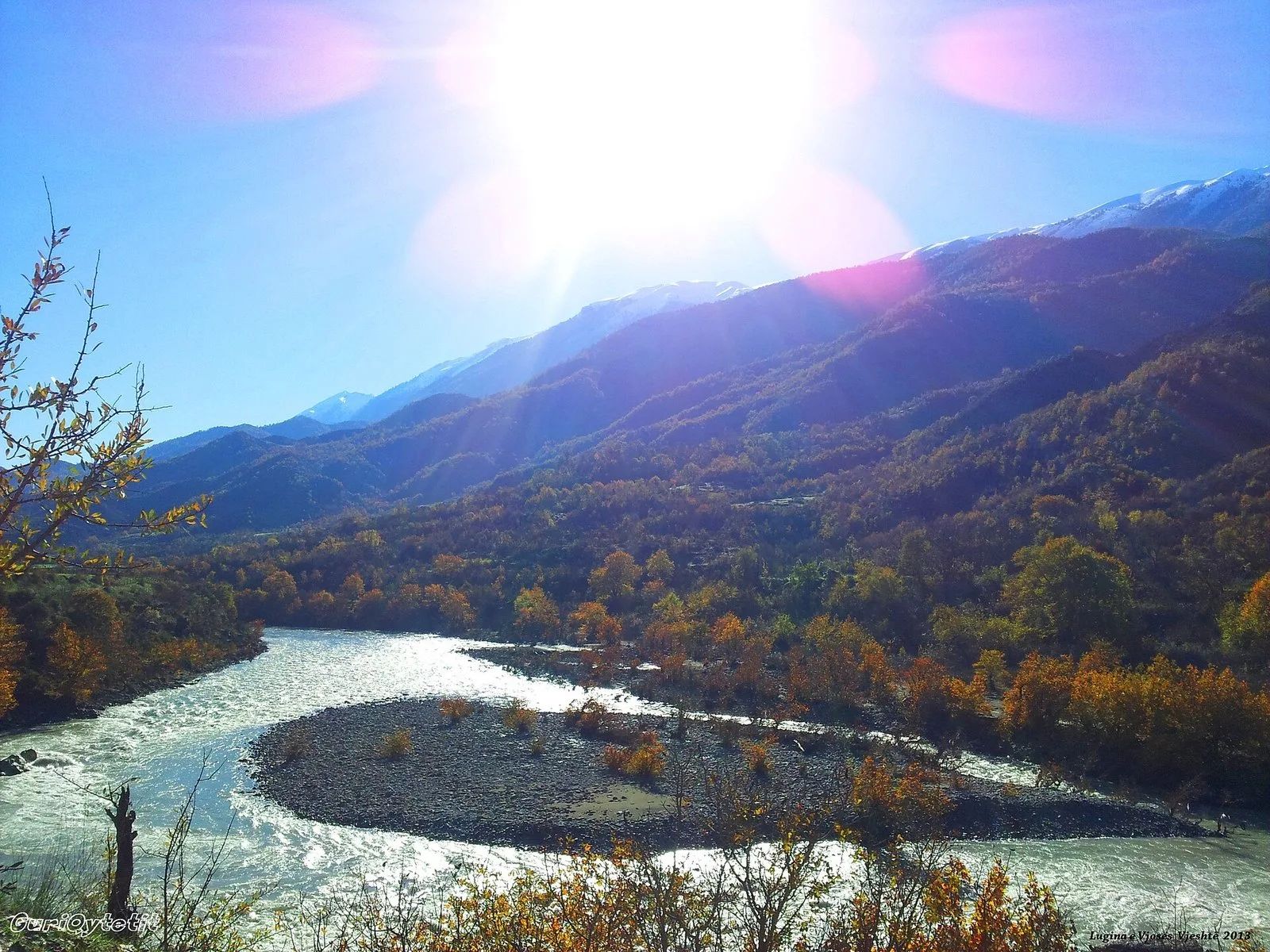
Përmet lies on the Vjosa, where the river runs along the Trebeshinë–Dhëmbel–Nemërçkë mountain chain. The Vjosa comes down from Greece and crosses Albania to the Adriatic without being stopped by a single dam. The town is known for its fruit preserves and compotes, its wine and raki, and for a particular page of political history: in May 1944 it hosted the congress that elected the country’s provisional government. According to a folk explanation, even its name is tied to water, to the quenching of thirst by travellers who stopped at the valley’s springs.
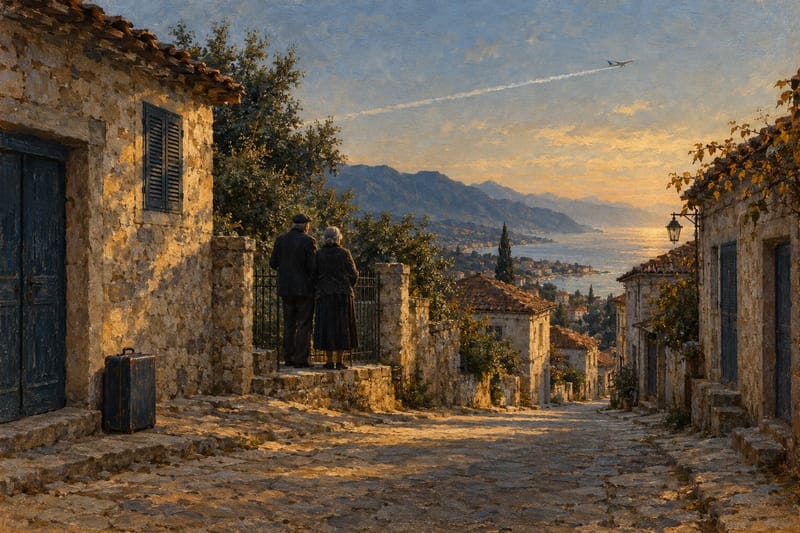
About five kilometres south-east of Këlcyrë, 344 metres above the Vjosa, lies Grabovë. Its slopes are terraced with olive trees and vines, and higher up the hornbeam woods begin. One travel guide puts the village’s present population at around thirty, most of them elderly. The village has a small chapel of Saint Kyriaki beneath an oak some two hundred years old, rebuilt after the fall of communism; six kilometres away stands the church of Kosinë, a thirteenth-century Byzantine building with original frescoes.
The figures of emptying
The municipality of Përmet, within its present boundaries, had 15,094 inhabitants in the 2001 census, 10,614 in 2011 and 7,980 in 2023. In less than a quarter of a century, then, it has lost nearly half its people. The administrative unit of Frashër, where Naim Frashëri was born, counted just 144 residents in 2023. It is a figure closer to a neighbourhood than to a district, for a place that gave the National Renaissance some of its most important names.
Such figures say a great deal, but not everything. A village rarely empties all at once: it happens as a series of small absences, until one day the last door closes without a sound. The census records this as a change in a table; for those born there, it is the loss of a whole world of words, names of fields and springs, customs and recipes that lived only because someone repeated them every day.
What literature keeps
It is not without meaning that the author of one of the founding works of Albanian literature was born in this district. Naim Frashëri, born in Frashër on 25 May 1846, published the poem “Bagëti e Bujqësi” (Herds and Crops) in Bucharest in 1886, describing in an idyllic register the natural beauty of the country and the modest life of its people. The poem was published far from home: the memory of the valley became literature precisely at a distance, a pattern that would repeat many times in the century that followed. The same family also produced Sami Frashëri, writer and one of the leading figures of the National Renaissance.
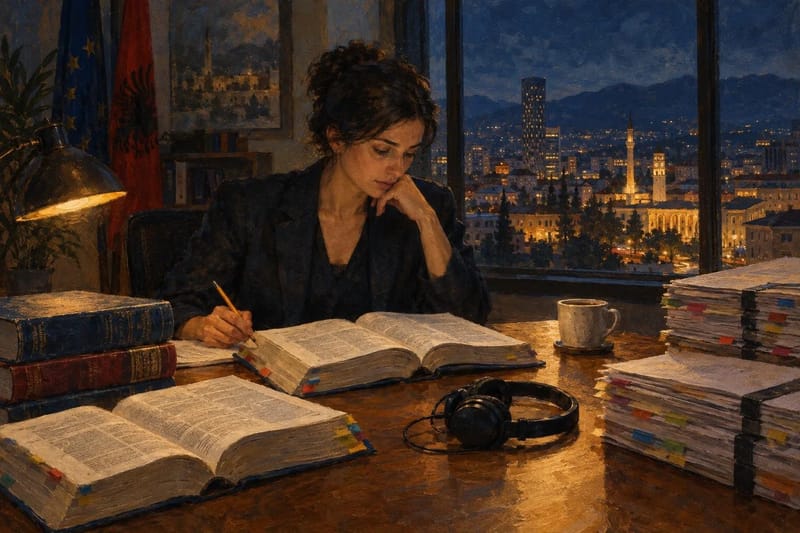
Something similar is happening today, on a different scale. The people of the valley who write, remember or simply tell stories often do so from the country’s big cities or from emigration. Place names that were once part of daily life turn into poetic words; a spring, an oak, a mountain path enter verse even when no one visits them every day any more. Literature cannot repopulate a village, but it can preserve its inner map, the one no census measures.
A valley as an archive
In this sense, Përmet and Grabovë are also an open archive. The rebuilt chapels, the Byzantine churches, the olive terraces and the preserve recipes are documents as much as books are. The question facing this valley, and many others in southern Albania, is not only how to keep people there, but also who will read and pass on this archive when its last witnesses leave. The answer belongs, at least in part, to those who write: a single book, a memory set down on paper or a poem about a forgotten spring can extend the life of a place beyond the lives of its inhabitants.
Sources
- Përmet, Wikipedia (accessed 2026-10-16)
- Përmet (Municipality, Albania) – Population Statistics, City Population (census data, INSTAT) (accessed 2026-10-16)
- Grabovë, Albania, Albania Visit (accessed 2026-10-16)
- Naim Frashëri, Wikipedia (accessed 2026-10-16)