Almost three years after it was signed, the protocol that allows Italy to hold migrants at Shëngjin and Gjadër has passed the midpoint of its planned life, and it continues to divide governments, courts and human rights organisations.
What the agreement provides
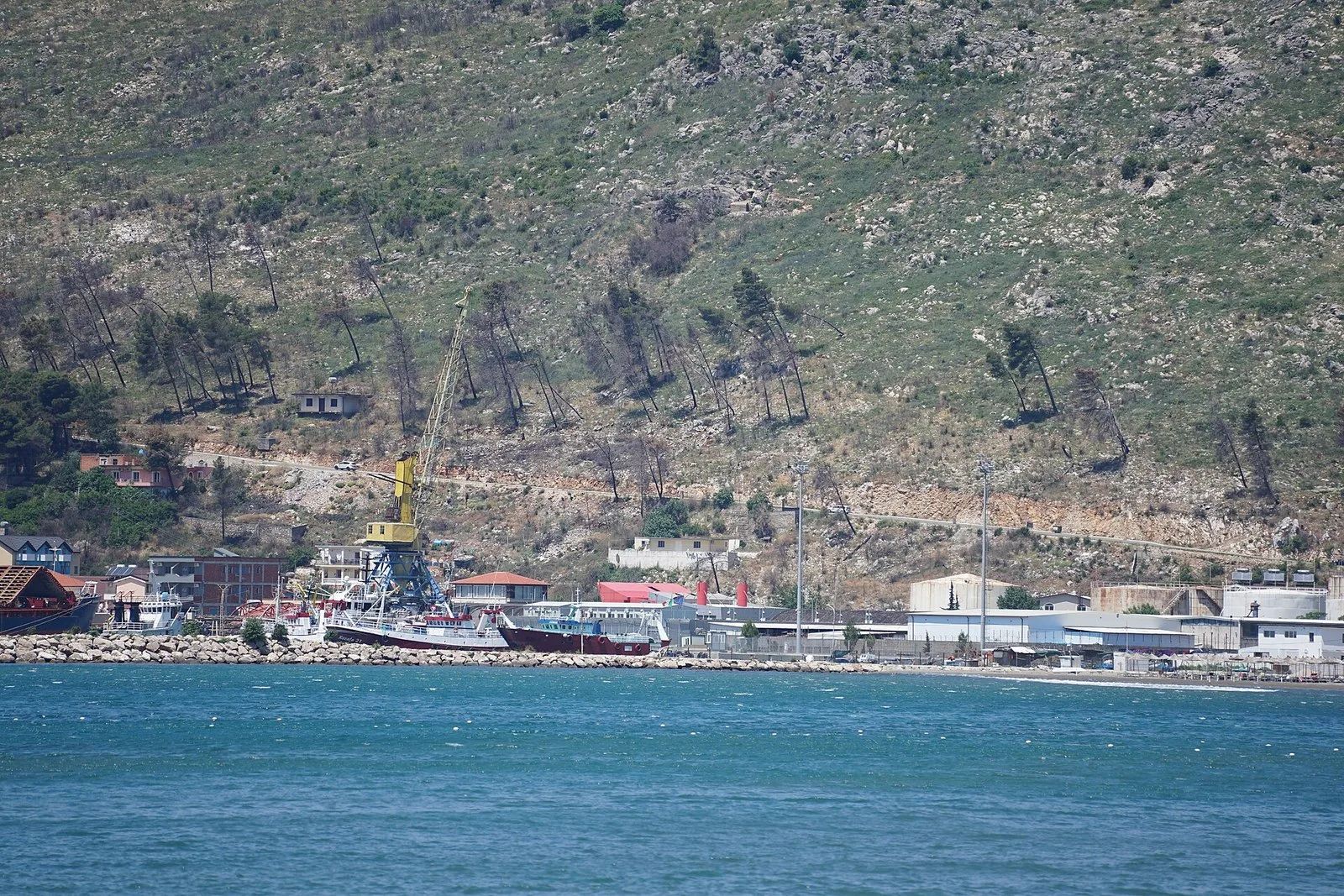
The protocol was signed on 6 November 2023 by Italian Prime Minister Giorgia Meloni and Prime Minister Edi Rama. It allows Italy to build and run two centres in Albania: one at the port of Shëngjin, where arrivals are identified, and another at Gjadër, where they are held while their applications are examined. According to the ANSA news agency, the agreement excluded people with special needs, children and pregnant women, as well as those rescued by NGO ships; planned capacity was up to 3,000 people a month.
In Albania, Democratic Party lawmakers took the agreement to the Constitutional Court, arguing that it handed territory and state power to another country. The court, which had suspended ratification in December, approved it on 29 January 2024. On 22 February 2024 parliament ratified it by 77 votes out of 140. The protocol runs for five years.
From expectations to the courts
The centres formally opened on 11 October 2024. According to a report by Amnesty International Italia, 74 people were transferred from international waters to Shëngjin between October 2024 and January 2025, 12 of whom were sent back to Italy after being found vulnerable or underage. Two Bangladeshi nationals brought to Albania challenged the rejection of their asylum claims, and the case reached the Court of Justice of the EU. On 1 August 2025 the court ruled that states may designate a “safe” country of origin by law, but only if that designation is subject to effective judicial review; it added that, until new EU rules took effect in June 2026, a country could not be deemed safe unless it was safe for its entire population.
Since April 2025, Gjadër has been used mainly as a detention centre for returns. The complex comprises an 880-bed asylum centre, a 144-place repatriation unit and a detention facility for 20 people. According to Amnesty, 192 people had been brought there by October 2025, and 25 of them were declared unfit for detention and returned to Italy. In February 2026 two charter flights brought around 80 more people from Italian repatriation centres.
Where the parties stand
The Italian government defends the agreement as a border-protection tool and a possible model for Europe. In August 2026 Rome announced that it would propose similar centres in third countries to its EU partners, financed by the bloc.
Critics read it differently. The Italian opposition and some citizens have challenged the costs: the planned budget is around €670 million up to 2028, while some Italian opposition figures have cited estimates closer to €1 billion, a calculation that fact-checkers such as Pagella Politica have disputed. Riccardo Magi, leader of the +Europa party, called the February flights a waste of money. Amnesty International Italia, in its report of 20 June 2026, documented forced transfers, detention without adequate safeguards and cases of self-harm, and called on the government to end the agreement.
In Tirana, nuances can be heard even within the government. Rama said on 12 May 2026 that the protocol would remain in force for as long as Italy wanted it. Foreign Minister Ferit Hoxha told Euractiv that the protocol is for five years and that he does not expect an extension, because Albania aims to be an EU member by 2030. Eleonora Testi, a legal officer at the European Council on Refugees and Exiles (ECRE), adds the legal argument: on accession, Albanian territory would become EU territory and this kind of arrangement would no longer be possible.
The memory of the Adriatic
For Albanians, the agreement also has a dimension that does not appear in court rulings. On 8 August 1991 the ship Vlora, carrying some 20,000 people, reached Bari from Durrës. The arrivals were housed temporarily in the Della Vittoria stadium, and by 16 August almost all of them had been sent back to Albania; only about 2,000 managed to leave. Since March of that year, tens of thousands of Albanians had already landed on the coast of Apulia.
Thirty-five years later, the Italian flag flies over the port of Shëngjin, above a centre where Italy holds people who have come from other countries. This reversal of direction is an argument neither for nor against the agreement. It is a historical fact that makes the debate more personal for many Albanian families, at home and in Italy, where Eurostat counted some 495,000 Albanians at the start of 2014. The protocol’s expiry and the EU accession timetable will together decide how this chapter closes.
Sources
- Italian migrant centres in Albania to end after EU accession, New Union Post (2026-05-13)
- Italy and Albania reaffirm migration deal amid doubts over its future, Brussels Signal (2026-05)
- Albania court OKs Italy migrant deal, ANSA (2024-01-29)
- Albania parliament approves deal to accept migrants from Italy, VOA (2024-02-22)
- Centri in Albania: il report di Amnesty sui diritti e il protocollo Meloni-Rama, L’Espresso (2026-08-20)
- CJEU sets stricter limits on safe country of origin designations, American Society of International Law (2025)
- Italy to propose Albania-like migrant centres at the EU level, Euronews (2026-08-03)
- Italy: 80 migrants in repatriation centers transferred to Albania, InfoMigrants (2026-02)
- Lo sbarco di 20mila albanesi a Bari, 30 anni fa, Il Post (2021-08-08)
- One million Albanians live in Italy, Greece, Tirana Times (Eurostat data) (2015-12-24)