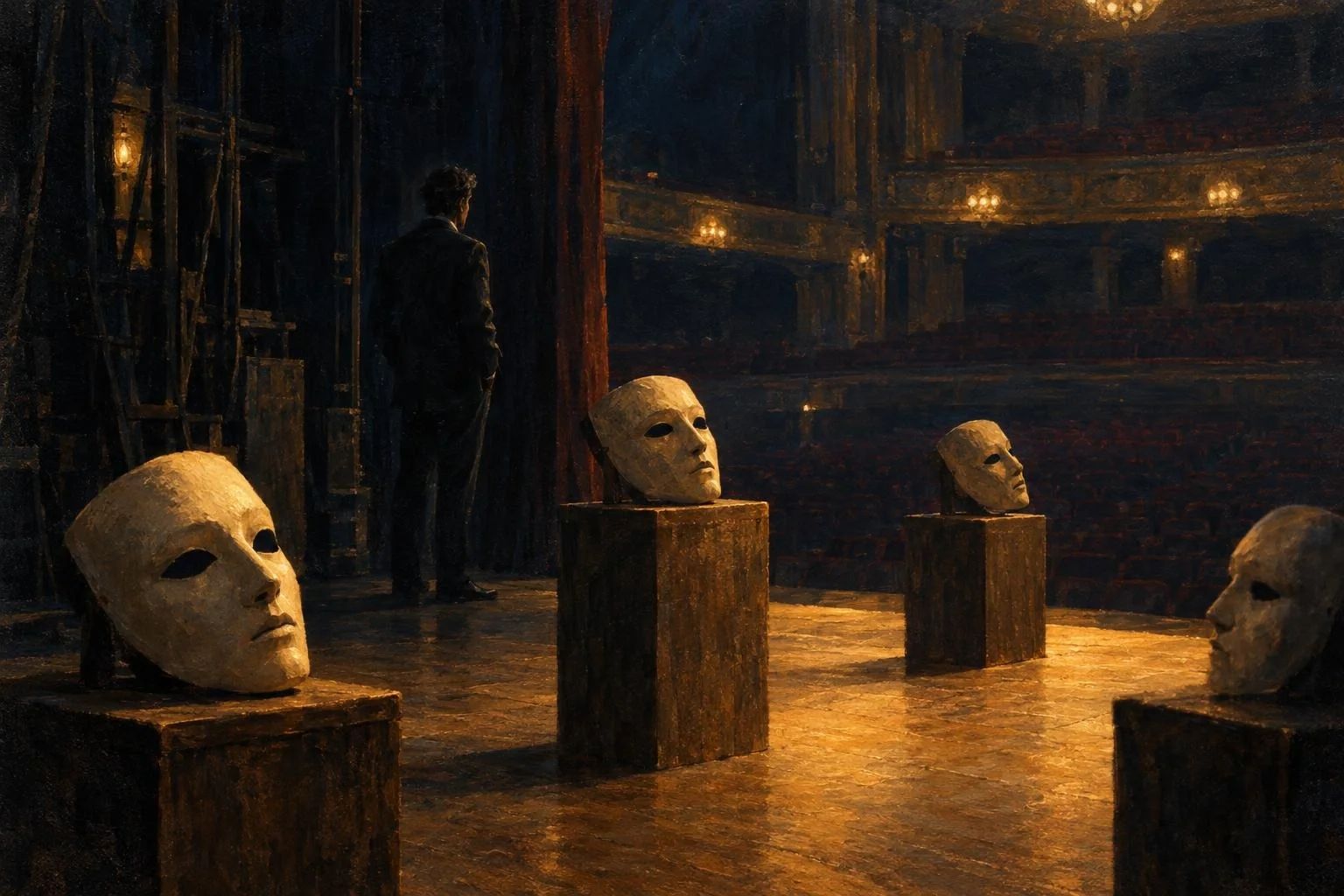
Arben Çejku’s novel “Candidate for Candidate” is a work that draws attention not only for the events it deals with, but also for the way the author constructs it. One of its most striking features is the omission of character names. This choice by the author is no accident; on the contrary, it allows the reader to focus on human typology, on actions and character, rather than on a specific individual. In this way, Çejku manages to create a universal dimension, where the reader can recognize similar situations and people even outside the context of the work.
Another important feature is the non-stereotypical portrayal of the characters. The author does not present the characters merely as specific individuals, but as tragicomic figures, bringing them to life through clever allegories and biting thought, rather than with direct words that might sound accusatory. This gives the novel an intellectual elegance, allowing the reader to draw conclusions without feeling guided or directly targeted.
Çejku’s characters are much like actors in a comedy: through word and deed, the author dresses them in the “clothes” of a weak character, often deliberate, sometimes oblivious, using them to expose the frailties of society, individuals, and the system. The reader sees not only what the characters do, but also how their actions reflect broader social truths, creating an effect that is simultaneously tragic, ridiculous, and thought-provoking.
One of the most interesting aspects is that Çejku, without mentioning specific names, performs an autopsy on an entire political and social system. The reader, especially one familiar with the reality of local politics, can recognize the individuals behind the masks of anonymity. This shows a sharp combination of storytelling talent and the author’s traditional wisdom, using elements from the tradition of the region where he was born to provide a deep, ironic, and reflective portrait of reality.
“Candidate for Candidate” is a novel that blends humor, allegory, and social critique in a sensitive and wise manner. Çejku gives the reader the chance to understand the flaws and absurdity of the system without feeling accused, making the work not only enjoyable to read, but also deeply thoughtful and reflective of the reality it portrays.
Arben Çejku’s novel “Candidate for Candidate” is a work that carries within it an entire human and political universe, yet it reveals this universe without stating it directly, using allegory, humor, and a laconic language. Çejku does not use character names, a deliberate choice that makes the reader focus on the traits, actions, and relationships between individuals rather than on specific names. This gives the work a universal dimension within the Albanian context, and makes the reader part of the game, recognizing situations and characters that seem real and at the same time filled with the irony of political life.
The author’s language is laconic and precise: sometimes it caresses, sometimes it strikes; sometimes it feigns, sometimes it highlights the weakness of the characters’ actions. One such example is the way he describes the candidates’ campaign, where every word, every gesture seems excessive, unbelievable, and yet, behind the laughter and absurdity it creates, the reader realizes that every detail is grounded in familiar political reality. The author portrays the characters without a portrait, through actions and reactions: he recognizes their joy when they show success, but also their disfigurement when deceit or corruption strikes them. This gives the reader the chance to see “people in play,” not just distinct individuals.
Çejku’s characters are tragicomic, like actors in a social comedy: each with their own flaws, sometimes deliberate, sometimes oblivious. Through word and deed, the author dresses them in “character clothes,” using them in the right way and at the right moment to highlight the absurdity of politics. A clear example is the way a candidate tries to win the favor of the powerful, using the basest methods of intrigue and backstabbing. The reader sees the defeat and the small victories, but always with a comic and ironic nuance that makes the story tangible and enjoyable to read.
I think this original perspective and biting autopsy are also linked to the author’s experience: Çejku knows political warfare up close. He has seen the elbows, the flattery, the backstabbing, and the open pressure. This deep knowledge makes the work realistic, but also universal: any reader familiar with political reality can see themselves or someone they know within the described situations.
To illustrate the importance and universal value of this work, allow me to mention Cervantes’s Don Quixote. Just as Cervantes created Don Quixote to show the absurdity and idealism of his time, Çejku has created an autopsy of Albanian politics, portraying a rotten and corrupt system with humor, satire, and rare talent. The comparison is not meant to elevate the work to the status of a world masterpiece, but to show that, within the orbit of Albanian art, this work holds a similar importance: universal in its message, powerful in its allegory, and extraordinary in its style and social observation.
The dialogues and situations are always carefully thought out: a single sentence can reveal more character than a lengthy portrait. A banal discussion between candidates or a small reaction to a political announcement can uncover all the weaknesses, ambitions, and deceits hiding behind public figures. The reader often feels the laughter, but after the laughter comes reflection, because everything that happens in the book has a parallel with the reality we see or know.
Personally, I do not want to flatter or feign; I simply want to express a truth: this novel is often deliberately overlooked by the public. The silence is no accident: the author performs an autopsy on the entire system, and any attentive reader can find themselves within the characters. This element makes the novel powerful and important, because alongside the laughter and humor, the reader sees bitter truths about the system and society.
I firmly believe that this novel will remain a truth for future generations, a simple and bright mirror of the absurdities of politics and human relationships. Even though art in Albania today is often not fully appreciated, time will put this work in its rightful place. Major works, those that give life and strength to the nation, are never lost.
BY PILO ZYBA
London....2026