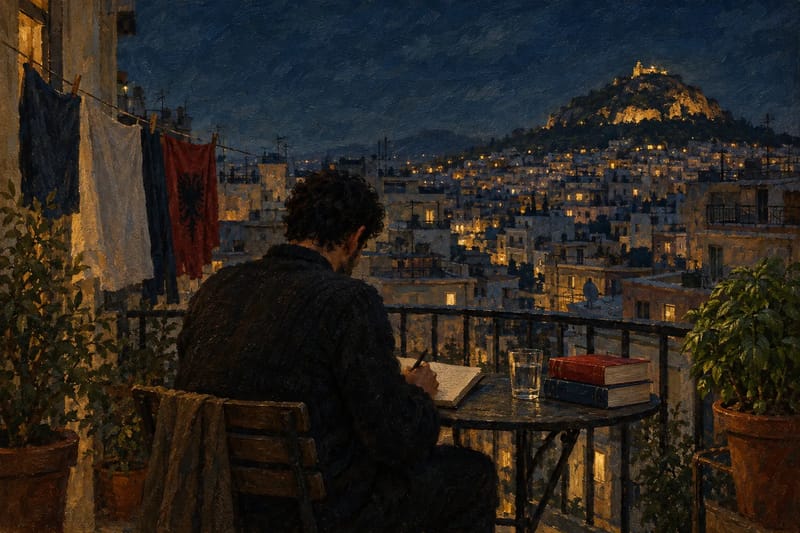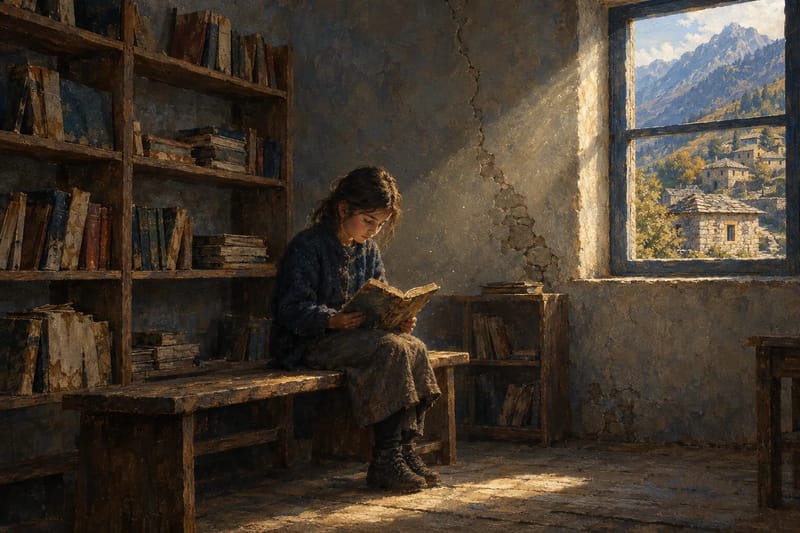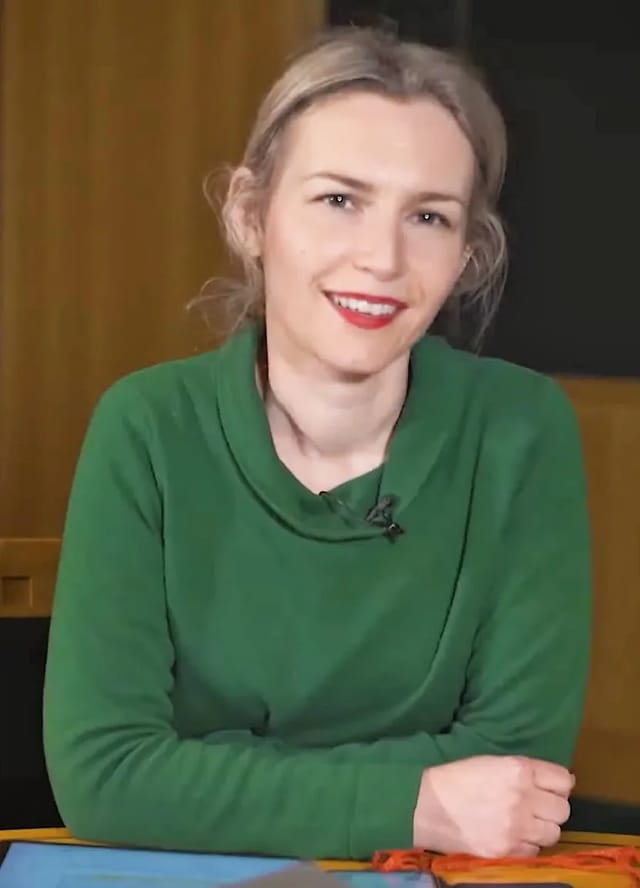
Some books begin with a memory; Lea Ypi's “Indignity” begins with a photograph someone else had kept, and with the hard question of who owns a family's past.
Lea Ypi, born in Tirana on 8 September 1979 and now Ralph Miliband Professor of Politics and Philosophy at the London School of Economics, became known to a wide international public with “Free: Coming of Age at the End of History” (2021). That account of growing up in Albania during the last years of communism and the transition won the Ondaatje Prize and the Slightly Foxed Best First Biography Prize, and was shortlisted for the Baillie Gifford Prize and the Costa Book Award.
Her second book, “Indignity: A Life Reimagined”, published in 2025 by Penguin in Britain and Farrar, Straus and Giroux in the United States, was longlisted in 2026 for the Women's Prize for Non-Fiction. One of the judges, the writer Nina Stibbe, described it as a genre-defying work between family history and political inquiry.
The honeymoon photograph
In an interview for the prize's website, Ypi has explained how it all began. She came across, on social media, a photograph of her grandmother, Leman, honeymooning in the Alps in 1941, posted by a stranger and followed by a stream of derogatory comments. In the picture, Leman and her husband, Asllan Ypi, appear as a glamorous young couple while the Second World War raged around them. The photograph contradicted everything the family had told her:
“Growing up, I had been told that all records of my grandmother’s youth were destroyed in the early days of communism in Albania.” — Lea Ypi, Women's Prize, 2026
From this crack the book is born. Ypi reconstructs Leman's life from a privileged childhood in cosmopolitan Ottoman Salonica to her struggles for dignity and autonomy in communist Albania, a life marked by fascism, war and political repression. The book's structure mirrors the problem of memory itself: a first-person search through secret police archives is woven together with a third-person narrative that fills the gaps left by incomplete records.
When the archive is in other hands
There is something deeply contemporary in this starting point. For many Albanian families, the memory of the twentieth century is fragmented: photographs burned out of fear, hidden letters, biographies rewritten to survive the regime. What Ypi discovered is that parts of this memory can survive elsewhere, in strangers' hands, and resurface online without context, sometimes as an object of ridicule.
This turns a family search into an ethical question. Who has the right to tell the life of a woman who can no longer speak for herself? The secret police archive, which saw her as a suspect? The anonymous commenter, who judges her from a photograph? Or the granddaughter, who knows her only through the family's silences? Ypi's answer is not to hide the doubt: she states openly where the document ends and imagination begins.
Dignity as a political theme
In the same interview, Ypi describes the book as partly a family saga, partly a political history of Europe from the collapse of empires to the rise of communism in the Balkans, and partly a philosophical text on the moral and political meanings of dignity. She says she wrote it at a time when, with everything happening in the world, it sometimes felt pointless to write about freedom and dignity. In a conversation with Elif Shafak, published by The Guardian and translated into Albanian by Telegrafi, she contrasted the richness of literature and thought with the simplifications of contemporary political discourse.
For Albanian readers, “Indignity” raises another, quieter question. The story of a family from Tirana, with roots in Salonica, is told today first of all to an English-speaking public. This is not the author's fault; it is the result of a publishing culture in which books by Albanian writers of the diaspora often travel faster towards London and New York than towards Tirana and Prishtina. The sooner the book has a full life in Albanian too, the more it can become what the author seems to intend: not only a story told to the world, but also a conversation with the place where the story began.
Sources
- In conversation with Lea Ypi, Women's Prize Trust (2026-02-26)
- Lea Ypi, Wikipedia
- Lea Ypi dhe Elif Shafak mbi shkrimin në epokën e demagogëve: Letërsia mund të jetë një formë rezistence, Telegrafi / The Guardian (2025-09-01)