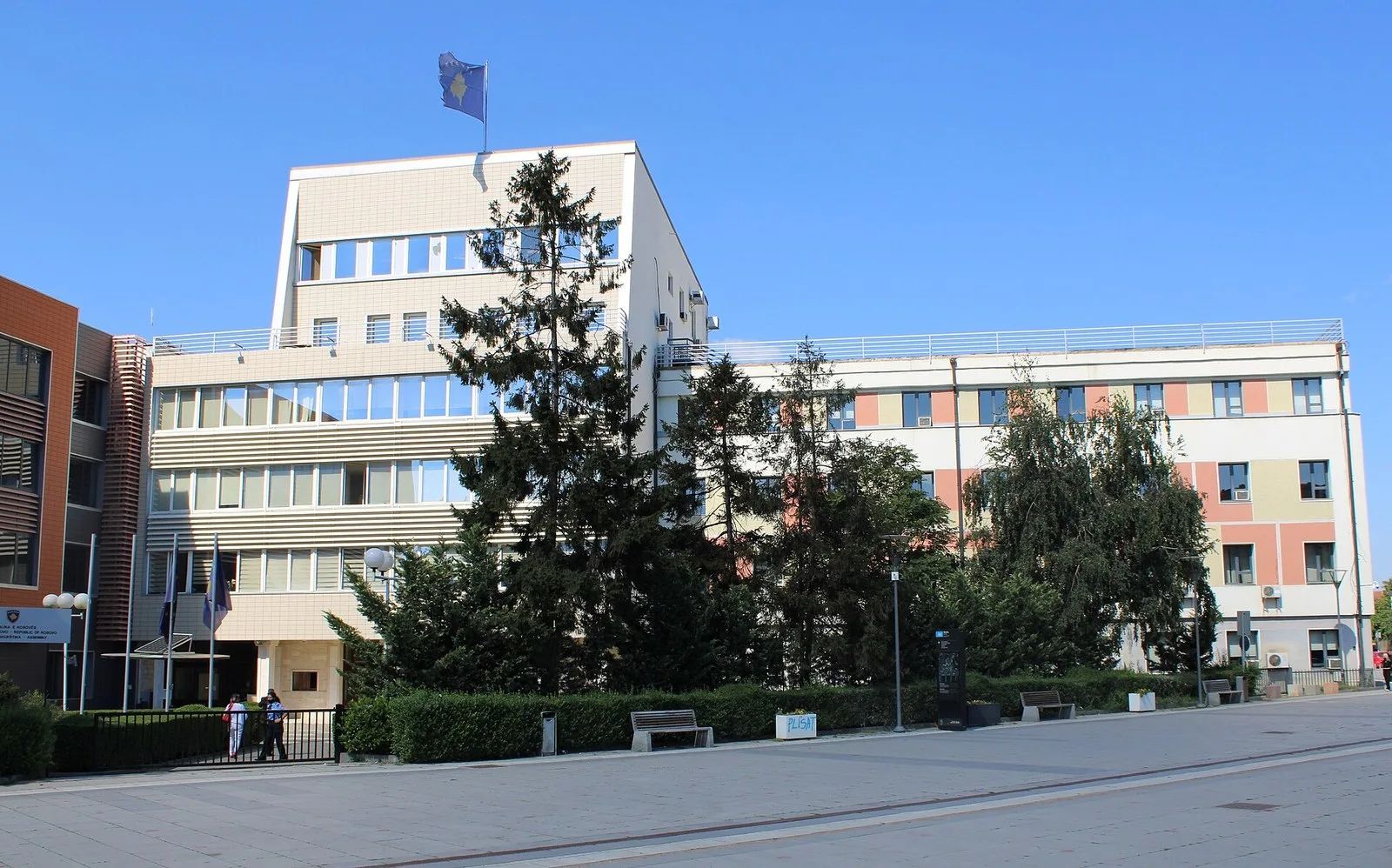
In the first minutes of 7 October, at the end of a session that began on 6 October, the Assembly of Kosovo elected Justina Shiroka-Pula as president and avoided a fourth snap election in under two years. Now that the political noise is fading, I believe a question that is rarely heard in the chamber deserves to be asked: what did this long wait cost Kosovo’s culture?
A chronology of fatigue
The election of 9 February 2025 put Vetëvendosje first, but without a governing majority. The Assembly went months without a speaker, and in the autumn two attempts to vote in a government failed. The snap election in December gave Albin Kurti’s party, according to Al Jazeera, more than 51 per cent of the vote, and on 11 February 2026 the new government was approved with 66 votes. The calm did not last. The Assembly failed to elect a president within the deadlines, Vjosa Osmani’s term ended on 4 April, and the speaker, Albulena Haxhiu, became acting president.
The vote of 7 June, the third in sixteen months, again put Vetëvendosje first, with about 43 per cent according to preliminary results, but turnout, according to BIRN, fell to around 37 per cent. On 13 September the Assembly approved Kurti’s fourth government with 62 votes, while the opposition boycotted the session. Only a last-minute deal between Vetëvendosje and the Democratic Party of Kosovo gave Shiroka-Pula 81 votes, one more than the Constitution requires.
The cinema still waiting in Prizren
The cultural cost of this period does not appear in any single budget line, but it has concrete names. In December 2025 the AFP news agency reported from Prizren that Lumbardhi, Kosovo’s oldest cinema, remained closed and dilapidated: an EU-funded renovation had been withdrawn after seven years of waiting, while the repairs promised by the state had stalled along with parliament. Its director, Ares Shporta, described the cinema as collateral damage in a geopolitical game far bigger than the town.
According to an analysis by the GAP Institute, cited by AFP, the measures the EU had imposed on Kosovo since June 2023, after tensions in the north, had suspended or paused about 613 million euros, of which roughly 15 million concerned the cultural sector. The parliamentary deadlock made matters worse, because the international agreements unlocking funds could not be ratified, and officials warned that more than 200 million euros risked being lost for good. Even DokuFest, the festival that put Prizren on Europe’s documentary map, had to cut staff, according to its artistic director, Veton Nurkollari.
This story has another side, and it should be stated just as clearly. Kurti’s government called the EU measures unfair from the outset, and when the European Commission lifted all of them in March 2026, Deputy Prime Minister Glauk Konjufca spoke of the opening of a new phase of constructive engagement. The opposition has read the crisis differently: the PDK’s secretary general, Vlora Çitaku, attributed June’s low turnout to disappointment with the government and constant crisis, while the MP Përparim Gruda warned in September that “the constitution cannot be adapted to the interests of the moment”. Each side has blamed the other, and it is not this review’s task to apportion fault. But for a closed cinema or a festival cutting staff, the result has been the same.
An academic at the head of the state
There is something symbolic in how this period ended. Shiroka-Pula, an economist, university professor and former energy minister, had been elected in December 2025, according to Al Jazeera, as the first woman to lead the Kosovo Academy of Sciences and Arts. In her first remarks she pledged to be “president of all citizens”. Kurti, for his part, called on the parties to come together in the face of the state’s remaining challenges. It remains to be seen whether this spirit will survive new disagreements, including the heated debate over the amendments to the law on the Specialist Chambers, adopted that same day.
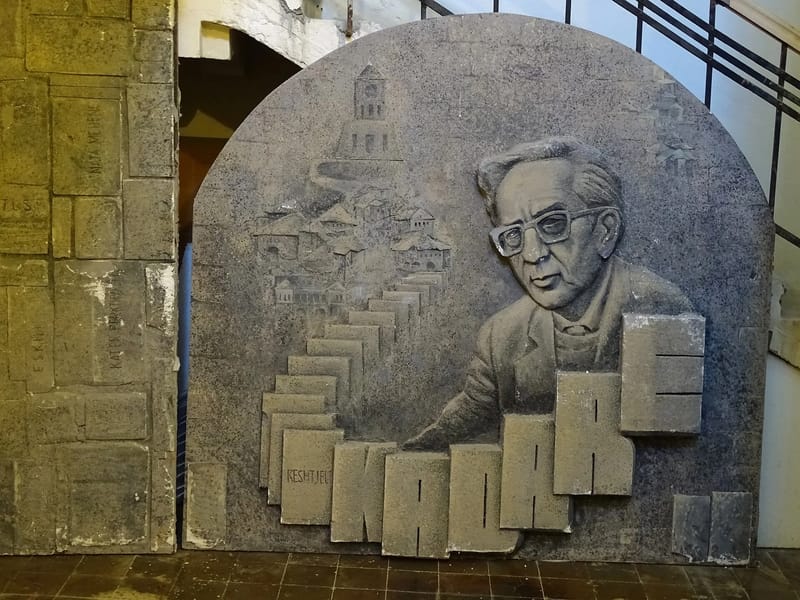
During this period Kosovo also lost one of its weightiest intellectual voices. Rexhep Qosja died on 23 April 2026, aged 89, and was buried the same day, in line with his family’s wishes, in the presence of close relatives only. It happened in a month when the country had no elected president. There is no causal link between the two facts, but their coincidence reminds us that the time of culture and the time of politics move at different speeds.
What should be shielded from the political cycle
I think the main lesson of this year and a half is not about one party or another. It is about the fragility of a system in which culture funding depends on the rhythm of ratifications, budgets and last-minute deals. When Kurti presented his government in February, among his first tasks he listed approving the 2026 budget: the country had entered the year without one. Multi-year grants for institutions and festivals, legally protected deadlines for public calls and a minimum fund that does not freeze when parliament freezes would give culture a basic stability, whatever the majority.
This is not a luxury. For many Kosovars, including those who live abroad and return every summer, a festival in Prizren, a book fair in Prishtina or a play at the town theatre are among the few places where citizens meet without splitting into camps. June’s low turnout signals fatigue. Culture alone cannot cure political fatigue, but it can remain the space where people keep talking to each other when institutions cannot. For exactly that reason, I believe it should be shielded from the electoral cycle rather than held hostage by it.
Sources
- Justina Shiroka-Pula elected President of Kosovo by Parliament, European Western Balkans (2026-10-07)
- Justina Shiroka Pula: Kosovo’s new president, elected during a crisis, Al Jazeera (2026-10-07)
- Backlog of Unresolved Issues Puts Kosovo’s New President to the Test, Prishtina Insight (2026-10-12)
- Kosovo approves new government after months of political deadlock, Al Jazeera (2026-09-13)
- Kosovo Court Orders MPs to Elect President by October 6, Balkan Insight (BIRN) (2026-09-23)
- Kurti’s Vetevendosje Set to Win Kosovo Election on Low Turnout, Balkan Insight (BIRN) (2026-06-07)
- Kosovo’s parliament approves new govt, ending yearlong political deadlock, Al Jazeera (2026-02-12)
- Culture being strangled by Kosovo’s political crisis, France 24 / AFP (2025-12-26)
- Kosovo leaders welcome lifting of all EU punitive measures, European Western Balkans (2026-03-18)
- Renowned Academic Rexhep Qosja Dies, Aged 89, Albanian Daily News (2026-04-23)
- 2025–2026 Kosovo political deadlock, Wikipedia (2026-10-09)