A Silent Language of National Identity
Architecture is not merely building. It is a narrative made solid, a memory shaped from stone, wood and concrete. Every wall, window or dome is a silent phrase in the collective history of the Albanian people.
Traditional Architecture
The Tower Houses of the North
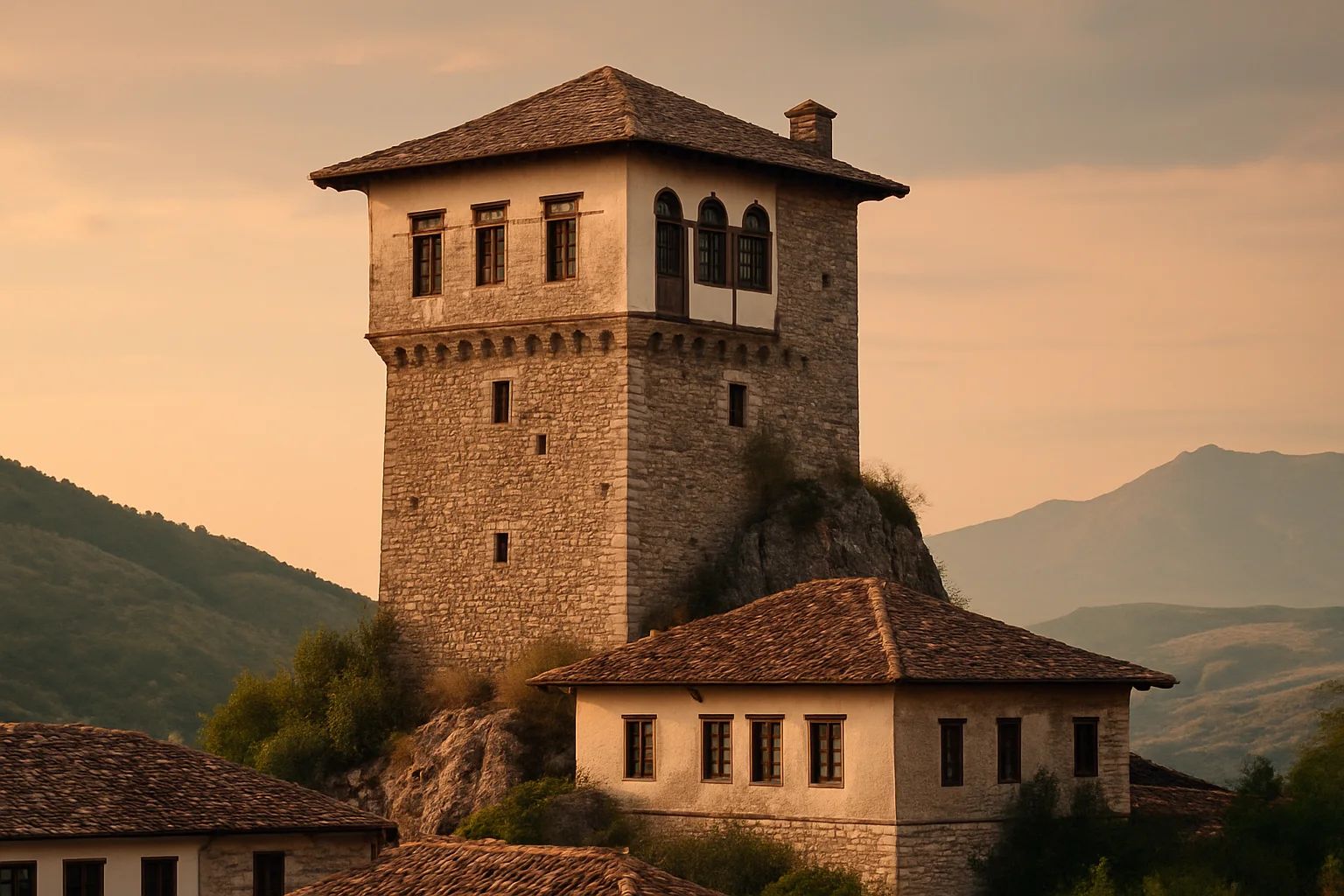
The Albanian kullas were never simply shelters: they were structure, a system of values, a code of honor. Raised in mountain country, they spoke without words: of endurance, of autonomy, of a hospitality tempered by the loopholes beneath the roof.
The Houses of the South
With open windows, decorative carving and Mediterranean rhythms, the architecture of the south converses with the light and with the world. Every courtyard in Berat or Gjirokastër is a theater where memory clings to reality.
From the Illyrians to Modernity
Butrint, Apollonia, Byllis: names that ring like myth yet stand carved in stone. From Roman ruins to medieval citadels, Albania holds a singular palimpsest, in which the eras do not erase one another but lie sleeping one upon the other.
The Architecture of Power and Upheaval
Monarchy and Independence
The capital began to clothe itself in buildings that resembled Europe: symmetrical boulevards, villas with neoclassical elements. It was an age designed in stone and illusion.
Socialism as Style
From the Pyramid to the national museums, communist architecture spoke in a raised voice. Propaganda made concrete: monumental, and merciless in its scale.
After Communism
The 1990s were a decade of building without rules. And yet, somewhere between the ruins and the hope, restoration began. Skanderbeg Square and the Tirana Bazaar are beginning to breathe a European air, with local roots.
The Architecture of the Diaspora
The houses of emigrants, with their glass, concrete and imported styles, are often criticized. But they are also the story of a hybrid identity: Albanian, but not only.
Buildings of Faith
Mosques and churches, from Ottoman and Byzantine examples to modern cathedrals, show that Albania has buildings that do not merely house faith but give form to coexistence.
The Future
Young architects, attentive to the environment and to cultural context, are translating the inheritance anew. A new style is being born: minimalist, ecological, local in its materials, global in its vision.
Architecture as Collective Autobiography
The way we build, restore and design reveals who we are, what we value and where we wish to go. Our architecture is our collective story, silent but clear, carved to endure.