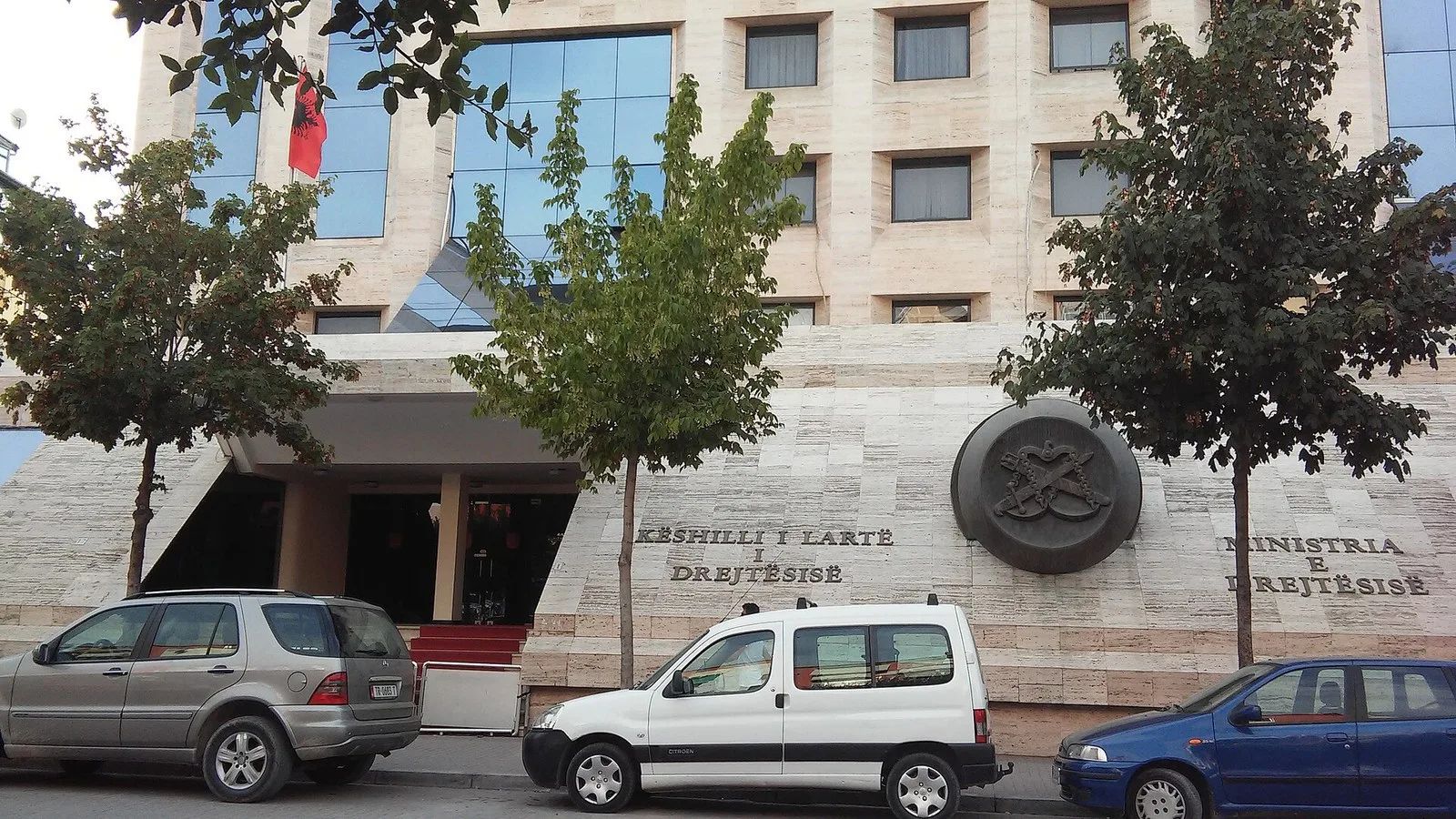
On 17 June 2026 in Tirana, the Special Appeal Chamber held the closing ceremony of the transitional re-evaluation of judges and prosecutors, within the mandate set by the Constitution. After ten years, the process Albanians know simply as “vetting” is over. We can now ask, more calmly than before: what did it leave behind, in institutions and in language?
A process with heavy numbers
The 2016 constitutional amendments were adopted unanimously by parliament, and Law no. 84/2016 “On the transitional re-evaluation of judges and prosecutors in the Republic of Albania” created an extraordinary system: the Independent Qualification Commission at first instance, the Special Appeal Chamber at second instance, and international observers from the International Monitoring Operation. Every judge and prosecutor was checked on three counts: assets, background and professional competence.
According to BIRN, the Commission examined some 800 justice officials over seven years, and more than half of the country’s judges and prosecutors were dismissed or resigned. The Commission wound up its work in December 2024. The Chamber, according to Albanian Daily News, completed its review of 417 cases in March 2026 and continued until June with written reasoning and requests for reconsideration. After its closure, its remaining powers passed to the Constitutional Court.
Two readings of the same reform
For its supporters, the reform was a necessary clean-up. Prime Minister Edi Rama, in February 2025, listed among the decade’s achievements what he called “the radical cleansing of the system of the most corrupt” (our translation), along with the creation of new justice institutions. International partners supported the process to the end. In March 2025, according to the Chamber’s own announcement, the EU ambassador in Tirana, Silvio Gonzato, told its judges:
“You have our support, we will stand beside you until the conclusion of the Vetting process.” (our translation)
— Silvio Gonzato, EU ambassador to Albania, as reported by the Special Appeal Chamber, 12 March 2025
The opposition has seen things differently, less vetting itself than the institutions born from it. In February 2025, during the election campaign, the leader of the Democratic Party, Sali Berisha, promised that if he won he would restore the “independence” of the judiciary with the help of the Venice Commission and dismantle the Special Structure Against Corruption and Organised Crime (SPAK), which he accused of serving the ruling party. Rama responded by guaranteeing that the reform would continue; Berisha’s stance nonetheless remains that of the main opposition force, and as such it deserves a hearing.
There is also a third criticism, quieter but no less serious, that comes from the courts themselves. In June 2026, according to Albanian Daily News, the European Court of Human Rights found that Albania had violated Article 8 of the Convention in the case of a former prosecutor dismissed in 2019, describing the sanction as disproportionate to the irregularities identified. In October, at least nine dismissed former magistrates asked the Constitutional Court to review their decisions; four of them hold Strasbourg rulings that found violations. This does not invalidate vetting, but it is a reminder that even an extraordinary process must meet the standards it demands of others.
The vocabulary of a decade
Beyond institutions, the reform also left its mark on language, and that is what interests me most as the editor of a cultural review. The official term was “rivlerësim kalimtar” (transitional re-evaluation), but Albanians chose the foreign word “veting”, which they now decline like any other Albanian noun: vetingu, vetingut, në veting. Even on the Chamber’s website the two registers coexist. The acronym “SPAK” has become an everyday noun, with articles and cases, while expressions such as “unjustified assets”, “background check” and “asset declaration” have moved from legal files into café conversation.
I believe this linguistic shift has a deeper meaning. For decades, corruption in the judiciary was discussed in the vocabulary of morality and rumour: “sold”, “bought”, “connected”. Vetting brought another vocabulary, more technical and colder, in which the question is no longer whether a judge seems honest but whether they can justify their assets with documents. This vocabulary has its own risk, because technical words wear out quickly in political debate and turn into slogans. But it also has a value: it taught the public to ask for evidence, not only to voice suspicion.
What remains
The extraordinary institutions have closed; the ordinary ones remain: the High Judicial Council, the High Prosecutorial Council, the High Inspector of Justice, SPAK and the Constitutional Court, which now also inherits the outstanding cases. In May 2026 Albania received the report confirming that it had met the interim benchmarks in the “Fundamentals” cluster of its EU negotiations, in which the rule of law is central. That is significant recognition, but not a permanent certificate.
The real test begins now, when there is no longer a special commission or foreign observers at every hearing. Whether vetting’s standards will survive in the regular evaluation system, whether citizens will find quicker justice, and whether the new words will remain working tools rather than slogans, the coming years will show. A new public language is not enough to change an institutional culture. But without it, the change cannot even be named.
Sources
- Kolegji i Posaçëm i Apelimit (faqja kryesore: ceremonia përmbyllëse, 17 qershor 2026; takimi me ambasadorin e BE-së, 12 mars 2025), Kolegji i Posaçëm i Apelimit (2026-06-17)
- Albania’s Vetting Process Nears Completion as Appeals Chamber Issues Final Decisions, Albanian Daily News (2026-03-05)
- As Justice Vetting Ends, Albania Urged to Maintain New Anti-Graft Standards, Balkan Insight (BIRN) (2024-12-23)
- Vetting law, Wikipedia (2025-12-04)
- Berisha premton çmontimin e SPAK nëse fiton zgjedhjet, Rama garanton vijimin e reformës në drejtësi, Shqiptarja.com (2025-02-08)
- European Court Rules Albania's Vetting Dismissal of Former Prosecutor Violated Human Rights, Albanian Daily News (2026-06-23)
- Nine Dismissed Magistrates Seek Return to Albania’s Justice System, Albanian Daily News (2026-10-04)
- EU membership in sight for Albania, but ending negotiations by 2027 remains a challenge, European Western Balkans (2026-06-01)