I do not know if nineteen years of life among their movements, songs, way of life, hospitality or death can be called enough to give you the chance to set down the sounds on paper and raise to its feet from the ruins a culture that travelled through the centuries. It travelled amidst the axe and the merciless scissors in the fight to protect its language and national dress. On the one hand they wanted to cut off its tongue, “the form of communication and expression of feelings,” and on the other, to change its costume, which had to do with its appearance in the outside world and beyond. How could it turn green when spring never entered its branches, shoots and buds? How could it keep its “green costume” to carry it forward through the eras, its life and survival? And yet it survived, elevating its values beyond belief.
Yes… yes! This is the truth! I hear this proof like sweet music even in a single word heard on an evening, at a christening or in the street.
Dear readers, you must live for a while alongside the Arvanites to understand the whole, the galloping of their being through the centuries…
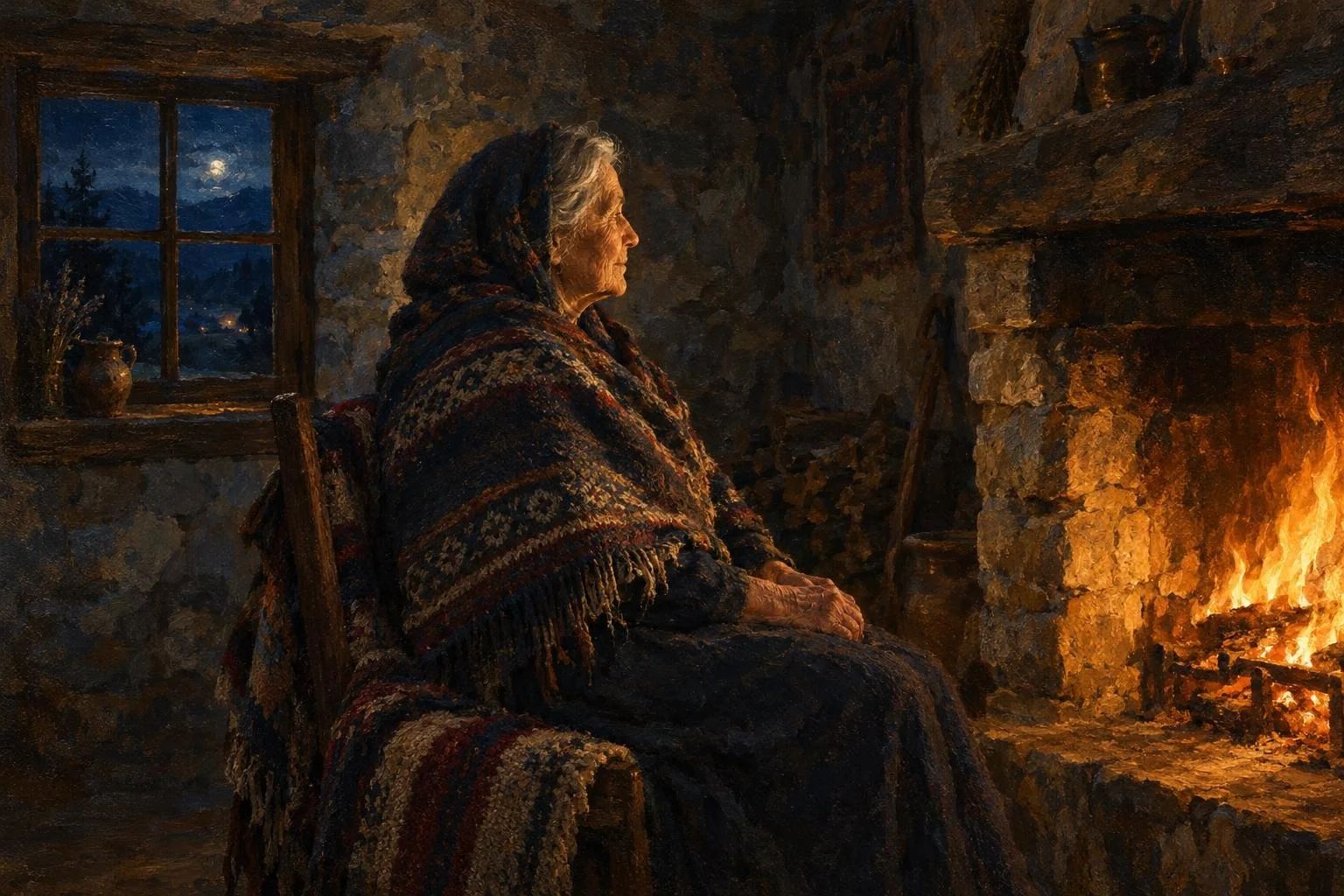
In those years of the 1990s, I would hear even a single, halved word, and I would shut myself in my little room and talk to myself. I would take those angelic words, “natënë e mirë”, from that old woman upon whom age had scattered the white flour of kindness, while the years had carved the ditches and streams of wrinkles from which you could read the course of her entire life.
THE ARVANITE SONG
With all my culture, nature and writing talent, shut in my room, I would talk to myself. The weight of the pencil seemed so heavy that I found it hard to cast the seed of thought onto the white field of the paper, to speak of their inner world: the SONG. It took a full nineteen years grinding in the mill of my talent to bring forth for you the pure flour of their soul, to feed your curiosity and love for them.
We are tired and exhausted by the history of where the Arvanites came from, when they came, why they came, and so on. Are they Arvanites or Greeks, Italians or Arbëreshë? What have the historians written!?
Well, I have no need for any of them. I have history unfolded completely before me. Starting from a different perspective, I will try to convince all those who cast the mud of oblivion over them. To do this, I will use the two pillars of a great bridge across which the life of the Arvanites passed, to escape the flowing rivers of slander, the waves of insults, the fog of oblivion. And these two pillars on which it reached our days are the song and the traditional dress. The first, born and inherited by word of mouth. The second, the weight of tradition that clothed the nation in a unique costume distinguishing it from all others.
I think these two windows are enough to see the long journey of this nation that triumphed over the catacombs. And the other window, the one that showed its uniqueness, its history without speaking, merely by its presence.
Before I begin to tell you about the spiritual depth they nourished with love, christenings, weddings and deaths, I will express a dissatisfaction that hinders my train of thought. The Arvanite songs I am writing about are numerous. But first, we will dwell on what is unique.
During my travels through Greece, I have collected love songs, wedding songs and various lullabies, but I have found no songs of bravery and war,
Or they are so few they can be counted on the fingers of one hand. Why?
Did the Arvanites who fought the war in Greece not sing of this deed they built with blood? There are only three or four songs, for three or four Arvanites, like the one for Osman Taka. And this for specific reasons (not that they do not deserve it). But what of the others? Here I think care and attention must be exercised.
From the year 1900 they began to be banned. They were not allowed to be sung. As time passed they were forgotten or Hellenised, which is even worse. What the Greeks wanted came to pass. They stripped the Arvanites of a powerful weapon, so they could later say: “Here are the Arvanites, but is there bravery and are there brave men without songs?” Those who fought were Greeks and they have their songs in Greek! It does not matter how many times they pledge their word, saying “besa-besë”, or “levend”, leave room for the strongest, the brave—this in the language of the Arvanites. They followed this same path for the language and customs too, but there they met with difficulties, as that was the final hurdle towards extermination and oblivion. They did not succeed, because when the mother sang a lullaby over the cradle, they were not there to hear and stop her.
The language was kneaded together with the song, and the two sustained each other. When the language was wounded, the song fought on, and where they tried to kill the song, the language released the medicine of healing and survival. And so, hand in hand, they reached our time. Wounded in places, maimed in others, they speak and remind us of the journey taken. Not to dwell any longer on my analyses, I will quote its own words to you. Whether of the song or of the soul, you can figure out for yourselves. They are so numerous and intertwined that they seem as one.
Here is one of them:
Arvanites, sing your songs,
Do not forget your mother tongue.
I think there is no need for analysis or explanation. The spring of the song has such pure water at its source that it is superfluous to express it in words and analyses.
After this, another song says:
If I only knew how to sing,
All the beautiful things I would awaken.
Who could speak more simply and beautifully? If I knew how to sing, I would awaken the beautiful sounds and words of the ancient language, of the grandfathers and great-grandfathers… Are these two songs not linked, just like the very soul of the Arvanites with their language? In the first, sing the song so as not to forget the language. In the second, cultivate the language to keep the song alive. What is the use of analyses, conjectures and long, fruitless histories?
Who can resist the temptation of the song “Gjon… Gjon”, of this bird wandering in search of its abandoned nest in the heart of Illyria! Allow me to make a clarification. The Gjon bird is Gjon Kastrioti, who lost his kingdom and his children. He turned into a bird to fly and see his lands of Arbëria, the fledglings that were snatched from him and scattered far, very far away. This bird would sing at Skanderbeg’s window in Istanbul. It reminded him of his homeland, his land, his parents, until one day he, Skanderbeg, abandoned everything for the dying wish of the Gjon bird, his father (this is the opinion of the author of this piece; he has also adapted it into a written legend).
Here are the lyrics of the song:
Gjon, Gjon, what do you seek,
The snow is covering everything!
Well, the people are not talking about the snow on the mountains, but the snow of captivity that was surrounding them. The war being waged against their language and the denial of their freedom-loving merits. Besides the lyrics and the singing, it is accompanied by a clarinet that pierces the darkness of the night like a knife, where its spirit and deed seek to survive. It is a call to awaken. At first melancholic, and then a piercing sword in the chest of the silent and insidious enemy.
BROTHER READERS,
The Arvanites have fought a twofold war for survival… They fought two enemies simultaneously for many centuries on end. Against Turkey and against Greece at the same time. Here it is worth mentioning the war of our Kosovar brothers against Serbia and Turkey, which was in the same circumstances and equally difficult. They fought a fourfold war, fighting two invaders simultaneously and two religions. This has not happened in any other country in the world, nor against any other people, but only against the Albanians. Why? This requires a separate analysis in a proper article, carefully analysed, interwoven and filled with facts.
It is not without purpose that I mentioned these songs, and not the simpler ones like “Moj e bukura gjitone”, “Kur vajta në krua”, “Do ta pres gërshetin”, etc.
They sing of that fragile feeling, love. Not that an analysis of them would be uninteresting, but this piece has a broader purpose. Not simply that of expressing the intimate inner world.
Byron
THE ARVANITE DRESS
As for the second part, that of the NATIONAL DRESS (how beautifully the people say it), the National dress, the dress that represents the Nation. Our scholars have always christened it with the foreign word “Ethnography”. I had decided to write a separate piece on the National dress, but, seen from the previous perspective, as one of the pillars that held up the bridge of their journey, I saw that it could not be detached from the body and the goal I had set myself. So, they will be analysed just as they are truly linked.
I once wrote about such a dress that I saw up close. Right at the start of this analysis I can tell you that our dress (Arvanite in our case) is astonishing. It stands out in three ways:
– It is very rich in its colouring, in the striking contrast of its colours and visual form.
– The combination of the embroidery, its method and harmony, have a power that sometimes leaves you open-mouthed at the craftsmanship and expressive force. This little-studied dress is entirely unique in its shape, design and cut.
Such a dress commands your attention at first glance. Its creators, as is rare in the world of clothing, use a colouring that dazzles the eyes. If you look closely, there is a combination of red with white and gold all at once.
A person wearing such a dress goes so far as to seem ethereal to others. He turns into a dream, into a myth. It looks as if a body painted by a master’s hand is moving. Foreign scholars express this too, and go on to say: “In battle they look like legendary birds.”
Special attention is paid to the combination of the dress with the weapons he carries (one of the rare cases in the world). The Illyrians, the Arvanites in our case, adorn their weapons with such care and love that they amaze you with the way the hilts, stocks, etc., are carved. The place where they are tucked into the belt, left or right, is wherever it is easiest for quick and accurate use.
The shape of the cut makes a man more noble, more serious, and above all gives him the look of a hero, before whom you are awestruck and feel inferior.
Through the striking power of its colours, posture and movement, this dress lends colour to the environment in motion and makes you live in a dream world. I do not know how much our scholars have noticed, but in all the battlefields (painted by world-renowned painters) a feature of the environment stands out, even in the stones. Under the striking rays of the sun, the whole battlefield takes on the colour of a roaring fire, and the flames constantly create astonishing figures. I have in mind that when They threw themselves into the attack with the momentum that characterised them, their powerful shouts ignited the battlefield, and with the presence of colours that frighten you, they remind you of flames, fire and blood.
The Death of Marko Boçari
All the painters of these canvases have a particular nuance that is the same
for all of them: red in contrast with white, with the shouts and movements. All together, without realising it, they have rendered the same picture. In that picture that the Arvanites held in the manner and desire of how they went to war.
Strange! What people in the world goes to war dressed in white as if to a wedding? Only the Arvanites!
The fact that weapons are also found in Illyrian graves, as is rare anywhere else in the world, shows that they considered life and war a “wedding” that was part of their lives. So much so that they created the unique myth that a weapon must be taken into the grave too, since even there a man cannot sleep peacefully. Pouqueville is right when he states: “By their presence alone they win you over,” or “On the battlefield, the fluttering of their sleeves and clothes frightens you.”
I look with great attention at the painting of the fall of Marko Boçari. The red horse, and red too the flag fluttering in the background (why is it not Greek?).
His brothers are present, the whiteness of their fustanellas swaying in the wind, the sky ablaze. Even the stones express their grief for him. Above this endless sea of fustanellas, Marko is cradled, guided by the hands of all who lift him high above their heads, to the place where the captain, the brave hero, belonged.
Do not think, dear readers, that these paintings were created by chance. The Arvanites of that time imposed themselves upon the world and captured its attention, so it could do nothing else but raise them onto the pedestal of world culture.
I look at these canvases and reflect, here in the heart of the Arvanites in the Peloponnese.
I look at the sea and the waves that wash over my feet, crashing against the rocky shores and rising like dozens of fustanellas in a massive dance or even on the battlefield. I pause for a moment and ask myself: “Why did the Greeks shorten and shorten the fustanella, until they made it look like the tutus of Tchaikovsky’s ballerinas in ‘Swan Lake’?” Why, you might ask too? It is simple! They did not want to mock the dress, but those who wore it. A miniskirt fustanella would make them look ridiculous in the eyes of the world. But what happened? World-renowned painters saw the battles of Missolonghi, Tripolitsa, and Nafplio up close, and captured them in minute detail in their paintings. So the Greeks, instead of achieving their goal, discredited themselves.
Foreign scholars, mostly Italian and French, say that this dress was very expensive. There is nothing surprising or astonishing about this. It is common knowledge that those who wore it were hardworking, creative people who looked fondly to the future. We can see this from the Illyrians, Skanderbeg, and Ali Pasha. In their times, economic development reached its peak. Mehmet Pasha, with his reforms, created modern-day Egypt.
Although they were constantly under the pressure of war and their greatest expenses went towards it, they knew how to fight, but also how to live and create.
So far, I have not spoken at all about women’s dress. Just as with the men’s, they too are incredibly rich in their form and expressive power. In the museums of Greece, there is a strange fact that has escaped their malicious gaze.
In the museums, there are several paintings or photographs of Arvanite dress with captions that read: “Arvanite dress from Souli (Ioannina), Boeotia (near Athens), Corinth, Salamis (near Athens), Hydra (Peloponnese), Argos (Peloponnese),
Athens, Arta, etc.” Looking at them, I pose the question: “If their dress was worn in all these settlements (these areas are not shown with any other dress), it implies that the Arvanites made up three-quarters of all Greece, and, to no one’s surprise, its entire coastal region.”
Here is another little-known but stubborn fact.
This painting of Bouboulina was made in 1827 by Adam de Friedel. This painting features the exact same dress as that of Zadrima (near Shkodër). I have lived in those areas and seen it with my own eyes. (Nevertheless, let the analysts give their opinion). There in Zadrima lay the very heart of Illyria.
Are more words needed?
Here is yet another fact from the Greek historian Engonopoulos. When analysing the history of Crete, he says: “The lyre (the musical instrument) comes from the word Illyria. The song is a free bird.” He analyses the blood feud, comparing Crete with the North of Albania, and draws out the similarities. With the only difference being the one that suits him: “The Illyrians set out from Crete.” Ridiculous, when it is a known fact that the Illyrians migrated southwards during the Illyrian-Roman War (168 BC, the Battle of Shkodër).
The rest needs no comment, nor is it the purpose of this piece.
From what we have seen and analysed, the Arvanites, with the two pillars I mentioned, moved, worked, fought, and created their own culture. A culture that is distinct not only from the Greek one, but perhaps unique in world culture and dress as well.
Does this culture of song and dress not show that they survived as a distinct nation deep within other nations and outside their own homeland (this last point requires analysis, as I believe they are indigenous)?
I say, yes!
Are the things I have mentioned not facts that lead to the source of their culture’s stream and the purity of its waters?
There is no doubt!
History, therefore, has many windows through which the traces of culture can be read, from the past right up to the present day. History is a road with dozens of ways to be read, all leading you to the pure flow of the source.
By Pilo Zyba