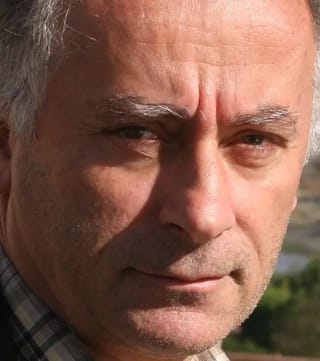
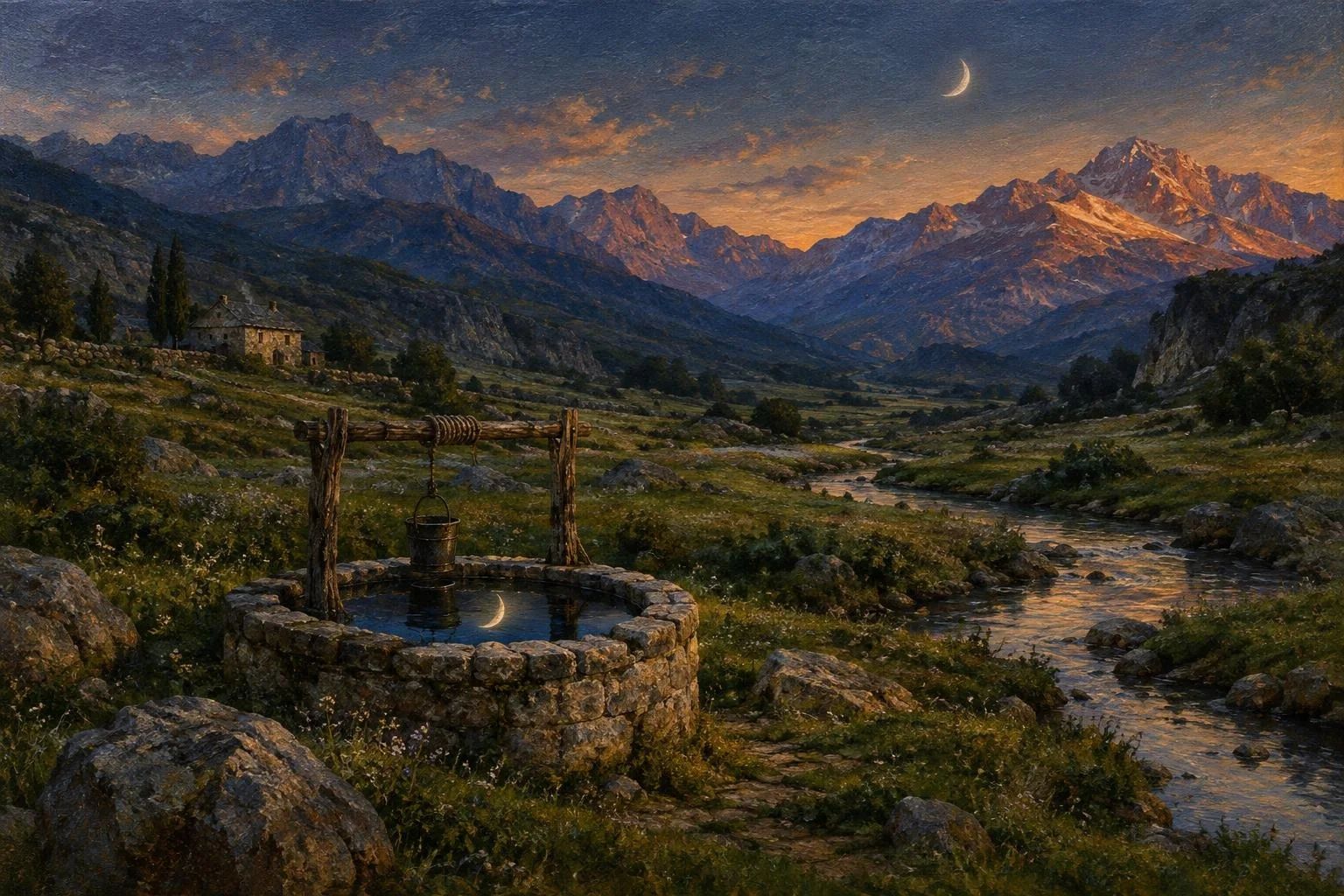
It is a great responsibility to string words together when writing about a great poet, about a fully formed personality, about a figure whose head is full and you never know what he will tell us the next moment, or about a mind where rivers of thought flow and you wonder which thirsty land will be refreshed. Poetry is magical, it is the queen of literature, it dances wherever the imagination wanders, it is a flower garden, a pleasant fragrance that lures you and wins you over. When poetry touches your soul, it travels alongside you, becomes your friend, and opens paths for you. Sometimes it brings the moon down to drink water from the well, and sometimes it pours wine into your bosom; therefore, it is life, it is love. It thirsts to cling to the human soul, and humanity needs it. The verse captures many spheres of the globe, many fields, be it love, longing, suffering, pride, history, culture, tradition... all of these are watered by the master’s pen, and if he has penetrated deep into the reader’s soul, he has taken the step into eternity, just as the poet Pilo Zyba does. Poets are somewhat unique; I read somewhere that in their heads there is also “a little madness,” but mostly love, life, joy, and merriment... But poets know best how to express longing, suffering, pain, and sorrow, perhaps because they feel it more, it hurts them more, it wounds them more, it kills them more. The poet is a special construct, made of love, humanism, and compassion. The creator is troubled by the bad and the ugly, so his word beautifies the verse, the thought, the idea. He is always in search of happiness, not for himself but for his loved ones, for those of the same language, of the same blood, as the author of these verses says. The word comes first, the verse second, following it to deliver tidings, tidings that will convey a message. Stone by stone a wall is built, but word by word there is no end. Once, over our morning coffee, we would leaf through newspapers and magazines, finding the verses of our poets and taking pleasure in reading them. We could hardly wait to go out somewhere, meet friends of the written word, and share our impressions. Today, over your morning coffee, you open the window of mass communication and find what you are looking for. While drinking my coffee, the words of the poet Pilo Zyba, arranged in a poem titled “FORGIVE ME, GRANDMA,” suddenly came to me. I had no one to discuss it with, to express my thoughts to, or to tell someone that “it ruined my day,” but believe me, it took me back many years, and to tell the truth, it illuminated my mind. I remembered a meeting with my favorite poet, Dritëro Agolli, a few years ago at the Arabati Baba-Teqe in Tetovë, when, in the midst of our conversation, he told me: “Women loved me not because I had a big nose, but because I filled the table where we sat with many words, with much laughter, and I said these things in a folksy way, because that is where every word and verse of mine springs from. If you don’t touch the soul of the people, you won’t be remembered.” Often in this window of mass communication I find verses where I want to leave my thoughts, but time seems lacking; yet this time, Pilo seemingly pinned me to my chair and told me: “Write what you think before it slips away, takes to the sky, and makes a bed of the fog.” But this time I decided I would leave everything else for tomorrow, whereas “FORGIVE ME, GRANDMA,” I feel it, perhaps she was also “My Grandma,” when she closed her eyes longing for her grandson, emigrated somewhere far away. To state your opinion out of emotion does not mean you have analyzed a poem or a work, but to write something about what created that emotion, to pose a dilemma, to paint a desire, and ultimately a pain full of sorrow, is very important. I mentioned the conversation with Dritëro for only one reason: this Pilo Zyba, with his pencil (his pen), has decided to draw all his magical power from the pain, suffering, joy, and pride of his own people, to give it back to them in a different way, as noble as it is meaningful, as valuable as it is useful. With his verse, he unfolds ideas, he raises major issues. The word demands power; if the verse doesn’t enter your bosom (your chest, your heart), if it doesn’t touch your soul, it will not live, it will not make you great. I read a few weeks ago that Pilo Zyba carried a stone from the Homeland in his shoe, and even there among the palaces and skyscrapers of London, that stone scratched not only his foot but also his soul. Even though it scratched him so much, Pilo seems to tell us: “I did not weigh as much as that stone weighed in its own place there on the banks of the Vjosa,” and so he endures the pain in his Achilles’ heel. To write about the longing, pain, joy, and pride of your people, you must first become one with the Primer of the Homeland. The Primer of the Homeland encapsulates history, culture, tradition, beautiful words, songs, the besa, psychology... all those accompanying elements that make a people. To feel them is not difficult, but to express them and weave them into verse like Pilo Zyba is not only difficult but also unattainable. Poetry is a dream, the dream is an idea realized by civilized peoples. Perhaps I have said too much, but I dare not leave unsaid that many think this is a poem for children, and right here lies the mastery of the great Pilo Zyba. The author of the verses “FORGIVE ME, GRANDMA” is not worried about a child who will not know where he came from, how he came, how he melted into another culture and language, but he is worried about us adults who do not know what fate we serve them, what path we give them. The verses:
“Forgive me, grandma, I am growing up without your tales,
Without your kiss, your caresses, your warm voice.
The fruits of your blessing spill, and then wander amazed
Down the roads of longing, scattered across the world.”
Through these verses with poetic figures, featuring a child as a character, and with abundant art, the poet uses longing to tell of Albanian culture, of tradition, of love for a grandmother—a mutual love between generations that has coexisted in Albanian customs and traditions and is now endangered. Emigration from the homeland has become a great evil, an ugly phenomenon that has reduced us Albanians from every part of the Homeland—for the Homeland is not the state but something much greater—to spilling our longing on the roads of the world until we are forgotten. The beautifully embroidered second stanza best proves the loss of language by the new generation. Through his art, the poet makes us aware that the child does not know how to write a letter, because the letters have been left behind there in the Homeland of his parents, who have inherited an old wound.
“Forgive me, grandma, that I cannot write you a letter,
When I speak to you on the phone, I suffer even more.
My parents’ exile, this very old wound,
Did not give me the chance to write to you well.”
The third stanza clarifies best that greed takes the most precious thing; the kisses that are almost frozen there are missing because the grandmother’s lap is missing, the lap of the Homeland, of Albania. There is no way a person can find comfort in a foreign land, even if they have everything. Here I will be allowed to say that the poet Pilo Zyba is of one mind with the ancient philosopher Lucian, who says: “There is nothing sweeter than the homeland” (The Odyssey). And, truly, is there anything else that is not only more pleasant, but also more sacred, higher than the homeland? Everything that people call sacred and high, the homeland has taught them, because it gives birth to them, raises them, and educates them. Many may be amazed by the grandeur and power of foreign cities (states), by the beauty and splendor of their buildings, but when it comes to love, everyone loves their homeland. Many may be satisfied—perhaps even beyond measure—contemplating countless wonders in foreign lands, but no one is so blinded by their prosperity as to forget their own homeland.” (Lucian) From this writing of the renowned ancient philosopher, I am permitted to say that the immense beauties of London could not entice the poet Pilo Zyba away from his great love for the Homeland.
“I lack nothing, I have toys and fruit,
With a computer in my hand I fall asleep every evening.
Only your soft-lipped tales are missing,
And the lap that rocks the lullaby of a dream...
In the fourth stanza, the poet is willing to give up all that he has to reach the ancient love once more, which he experiences as an idyll. This is done by personalities who have a national makeup, who know the philosophy of their people very well, and who have nurtured a love for the homeland.
“Close the doors, grandma, the cracks, close the windows too,
So my childhood and memories don’t escape the house.
When I return one day like a pet lamb,
To find them, touch them, and kiss them there at my house...”
Here, through the instruction the child gives to the grandmother, the poet creates a very powerful duality, identifying himself with the homeland. It is as if he is asking the homeland not to allow others who have just as many memories as Zyba himself to take such a path, because one day there will be a substitution of cultures, memories, and loves. And the last two verses:
“Answer me, wait for me, I am thirsting for you!
The answer never came! Grandma had died!”
They are extremely painful, but they deliver a powerful message that we must not wait if we truly have love for the homeland (the motherland), because only there can we be together with happiness, because only there is there great love, because only there do our lungs fill with breath, because only there do we have what we love, what we adore, because only there do we encounter our customs, tradition, culture, language, word, and besa. The homeland is above all, just as Lucian says: “In the works of the poets we see that even the gods themselves love their homeland...” This beautiful poetic pearl, with its preserved meter and rhyme, with its many poetic figures, built with art and many metaphors and comparisons, gives us the right to say that Pilo Zyba is a national poet who ranks among the best and most accomplished of artistic verse.
@s.h.