MY GIOCONDA
A Story
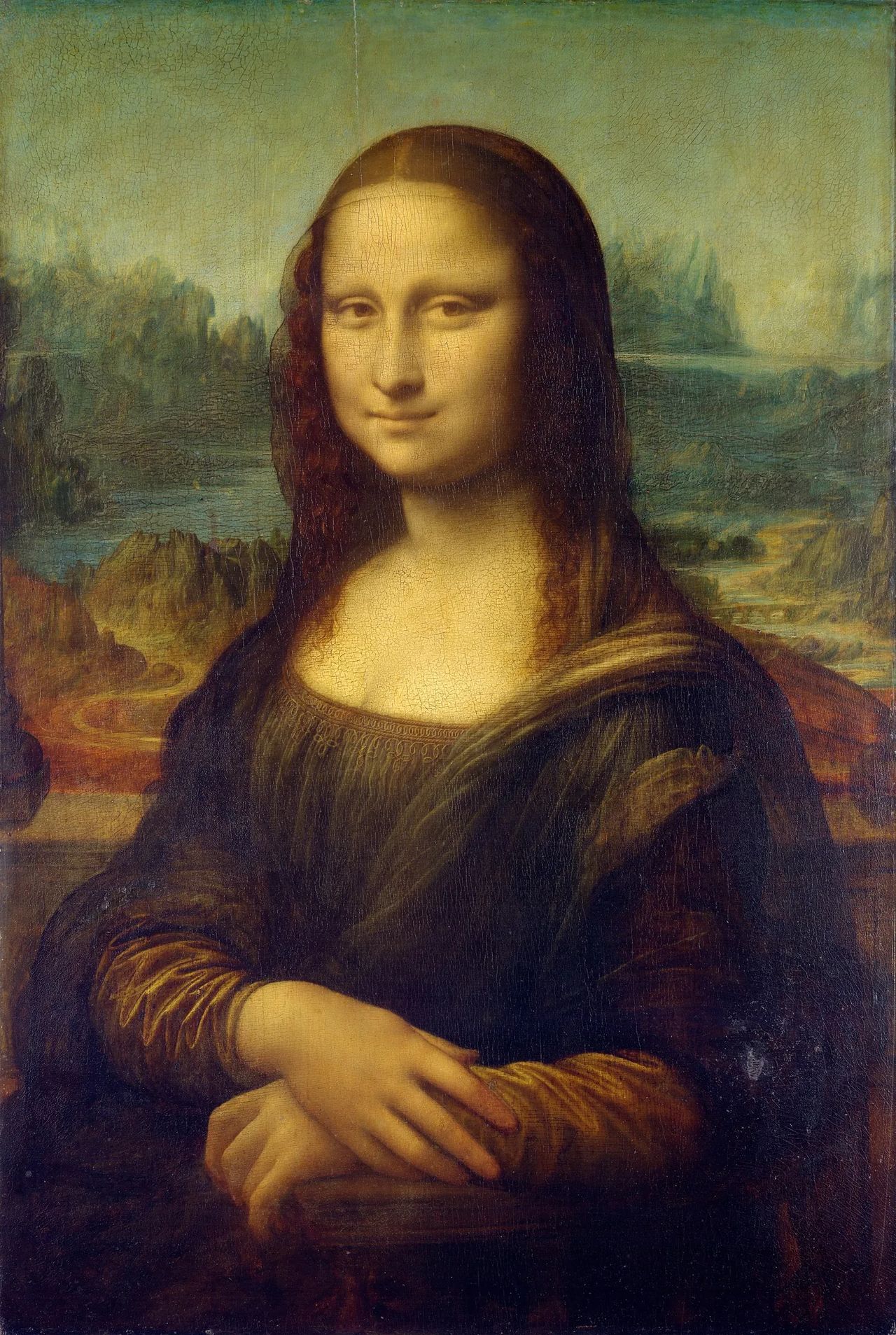
Leonardo laid the final brushstroke on his canvas and paused. A ray of the setting sun entered through the large second-floor window and fell upon the Gioconda’s face. He observed it carefully and realized that this ray of light resembled a fine brushstroke, one that the Gioconda had been missing in the portrait he had been working on for more than a whole lifetime. Within himself, he held a great question: were his inspiration, his work, and his soul poured onto the canvas in complete harmony? Was it visible, and would what he sought to draw from himself to convey to others be visible? Would this be a work ahead of the masses, or a centuries-old question mark in the pursuit of truth? He picked up his brush, applied a little yellow, a little white, a little pink, and mixed them together. The combined paints, blended together like his soul, his inspiration, and his desire, took on the colors that the beautiful sunbeam cast over the eyes of the painting, although he never called what he was doing a painting; rather, he called it himself and his love poured onto the eternal canvas of art. Often, what he created took on different appearances in his imagination, and he would put it on the canvas the next day exactly as he saw and felt it during the night. That was why, having spent so long on it, it looked completely different depending on the angle from which he viewed it; it seemed as though there was not just one woman in the picture, but several, and with every step the viewer took, it looked like a short film.
The author looked sometimes at his own portrait in the mirror, and sometimes at the painting he was creating; they resembled each other greatly, and he understood that the Gioconda was himself… that beautiful, inspiring dream that made him work with inexhaustible inspiration, urging him to draw the beauty of the soul from the deep well of feeling and unfold it for others… He himself did not understand what was happening to him with this creation of his; he kept it hidden inside himself like a mother her child, caressed it in silence, and never had his fill of the beauty he gave it… often he was inspired even by what he created and took it into his soul, only to bring it out days later and cast it anew, three or five times more beautiful in form, expression, and thought. Such is the artist: he never gets enough of his art and the messages he gives; he wants the creation of his soul, from which his inspiration comes, to be perfect, even though for hours, for years, he sings to it ceaselessly with colors, with letters, or with notes. Whenever he left his magnificent studio, in his mind he would add a small signature that symbolized the completion of his work, but when he returned in the morning, on another day, with a different breeze, with a different desire, he found within himself plenty of art to complete what he had not seen days before. He often asked himself, but received no answer; only a light breeze carrying the scent of flowers hanging around the large windows of the studio would take it and carry it away, toward where the rustle of the stream’s current came from, falling and singing over the stones and over the droplets that scattered onto the leaves of the trees in pearly buds. He would look out the window when they took on perfect hues under the sun’s rays, and immediately realize that he had put nothing of what he saw onto his canvas. Outside, the sunset was being covered by clouds racing to
deliver rain, or a storm somewhere; the sky tore open and a great lightning bolt cast its light into the gray of the sky. In that single second, Da Vinci saw his Gioconda appear and vanish again, not to be seen anymore, but that lightning bolt left in his eyes her beauty, the colors, the sky of her eyes, the whole world with the rustle of a thought for a new detail in the painting, which had sat on the canvas for years and was never finished. He smiled to himself and cast his eyes toward the corner where his finished sculptures stood, waiting to be taken and placed in beautiful parks. This one, he thought, will have a place neither in parks, nor in the galleries of my works… Will everyone who looks at it understand that here I am pouring out what is my other half? Leonardo was in love with his creation; he did not want to know whether this creature truly lived or not, but every time he approached it, he added new details, new colors, new expressions to it. Outside the wind was blowing, and the gale snapped a branch full of newly blossomed white flowers. Spring had arrived, but from time to time the storm, like a merciless hand, opposed its coming… The master smiled. Everything needs its own time, he thought, and so does my work; it requires other seasons from the blossoming of my soul to be poured onto the canvas. He reached out the window, plucked a mimosa branch, and placed it near the painting in a flower vase. From the mouth of his work he felt someone speak to him, he heard a rustle, a greeting… ‘Thank you,’ master! The yellow of the mimosas with the light of the gray color coming from the windows convinced him that more work was still needed to make his work a masterpiece… The Mona Lisa… stood silent in waiting. The master closed the large curtains and threw a cover over the Mona Lisa. He did this every evening when he left; he wanted to keep her from getting cold, but also when he arrived in the morning he wanted to uncover her himself, to be the first to see her eyes before she gazed into the eyes of her creator. He closed the large door of the studio, but he understood and felt that every time he went out, he took her with him… The Mona Lisa was his inseparable part, the true love of his soul, of his inspiration, but also of his artistic creation, which was dedicated to her, yet served everyone. He bid good night to all his works, and left to leave them in their nighttime peace and silence, only to return again the next day with a renewed desire to create…