For the poet... Jani Rico
A Poem
The road is longto the gates of your thought,but I had to come without fail.
I ran singing Beethoven,accompaniedby the currents of the poetic riversof our ancestors,by the quartetsand the harps and violins of poet singers.
The song has swept me away.The rush of its currenthas amazed and shaken me.It has made me thinkthat the river of life has no banks.
The song,this expression of feeling,deciphered into sound.
For me,this untrodden path,under waves of pain,in unsettled weather,under the snowfalls of bitter insults,from the yields of fruitless trees,made the walking harder,the reaching of the goal further away.
My friend!The song is not alwaysa joy for the singers,but for the wedding guests,who have lost all sense of time.
Theythrow themselves into the arms of fleeting happiness,to snatch from the flower of lifethe few buds it has left.
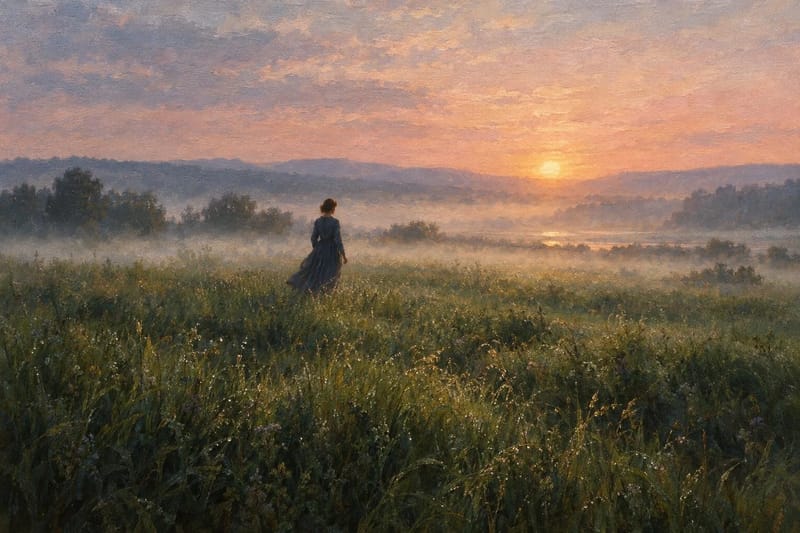
I know,the sun sets,gilding the leaves with its golden glow,under whose armpits the fruits hide,but it does not die.It leaves,to reappear again,on silvery mornings,playing with the dewdropsand turning them into rubies.
The sunemerges from the sheet of a silken cloud,like a child in its mother’s hands,washed with care,wrapped in the love of her soul.
The treesshrug their shoulders in winter.The leaves,drops of sorrow,fall from the arms of the branches,tears with the taste of silence,but they do not die.Inside them,the symphonies of blooming are played in silence.
In the yellowof the leaf’s palm,in its lined veins,the worldsees the long road to spring,sees the new bloom.
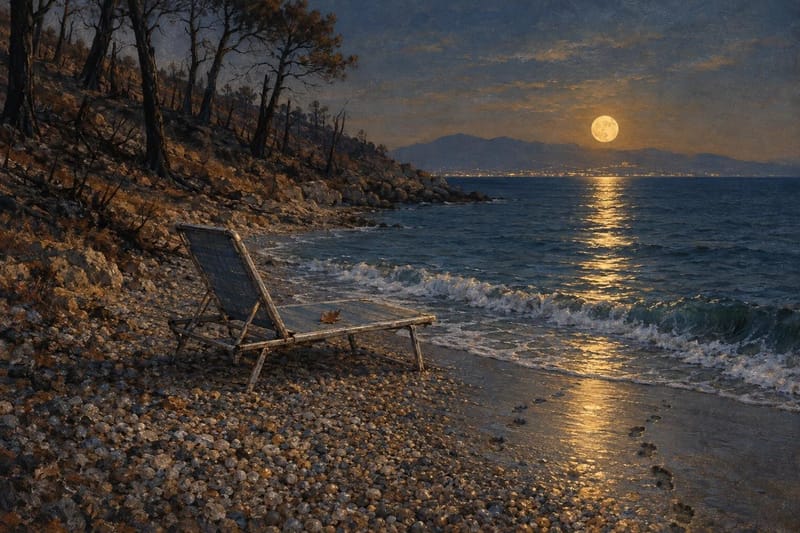
The moonsheds light on the sheet music of songs,prepared by the flutes of the breezes, in April, in May,for the great weddingthat is organized in autumn.
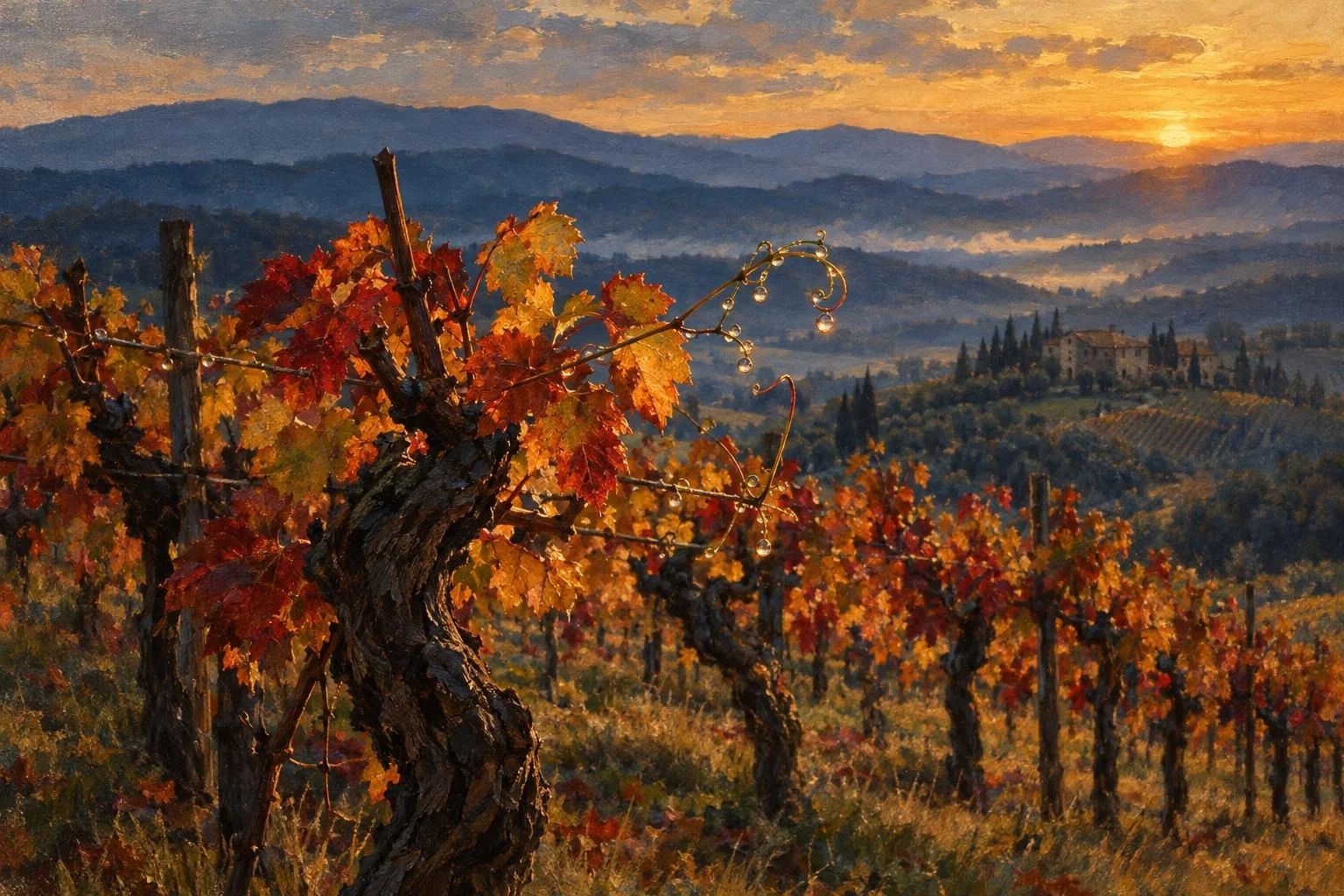
The vine growersprune the dry shoots,so that in autumn,the poems of the vineyardsmay have beautiful grapesand sweet must,for the delicious wine,be it white, red, or rosé.
The poet vine growersdo not separate the colors.Their paintingsare equally beloved,in the bosom of nature,in their exhibition of tastes and feelings.
My friend Jani!Youdid not plow the vineyards,did not hoe them,did not prune the versesto gain a name and glory.You pruned themso the sun could enter the branches, the roots,the soft earth,the life of the ancient forest.
So that the childrenmight sleep under the umbrella... of the leaves.In the morning,in the great sky of dreams,they might flya kite with open wings,where their childhoodmight soar free and light.
Westayed awake,under the lantern of the moon,counting the stars of hope,so that othersmight sleep in crimson, red dreams,from innocent morning dawns,covered by the blanket of human care,rocked beneath the shine of a distant starthat only we could see.
Did we see it or did we dream it?And if we dreamed it,were we not right to do so?Poets do not dream for themselves!Their dreamsare lit lanternsfor the passersby of all times.Their lightis immortal in the pantheon of eternity!
All of thiswe watched to the rhythm of a symphony,played by the flutteringof the leaves of our fragile soulsand the tree of desires,which we watered and continue to water.
I do not know,can hope die?I watch its stature rise.Its branches beat their wings toward the sunlight.The birds, on its shoulders,have not ruined their nests.Theygo in and out, they fly,broadcasting the concert of their song.Hope dies last, the soul never dies.
The soulholds the sea and the spring inside it.I read the eyes of the future just as you do.
You and Iwere born when the colors are born.When nature breathesand fills with scents.The lips and kisses of the breezeswe feel in the depths of our souls.We feel itwhen spring rocks and caressesthe shoots of our noble flower.Butwhy did we adore the poppies more,could it be because they sprout and grow among the wheat?Could it be our love,amidst the bread that tells us: I am here!?
I hear the rustle of the petal eyelashes,their red flutterings,they are the love of the earthand the fatherly care of the farmer.
We loved them equally,both the vineyards and the verses.Why?Could it be that poetsare the vine growers of feeling?Feeling is the expression of joy and pain.Then,are poetsthe vine growers of the feelings of the time they live in?
I do not know!You have plowed more, you know better.
I rode the dream today,loaded the yield of your vineyards onto my shouldersand came to stay as a guest.This desireI kept,I raised within the gardens of my life for so many years,so much so, it feels like I was born with it.
MONEVASIA
Monevasia,a simple name,stepped out of your poems,a poetic metaphor,or a pearltossed carelessly into the bosom of the sea?
Ah..! No!It is a centuries-old poem,built by calloused hands......Is it a field,where was planted and grownyour talent for carving thought?
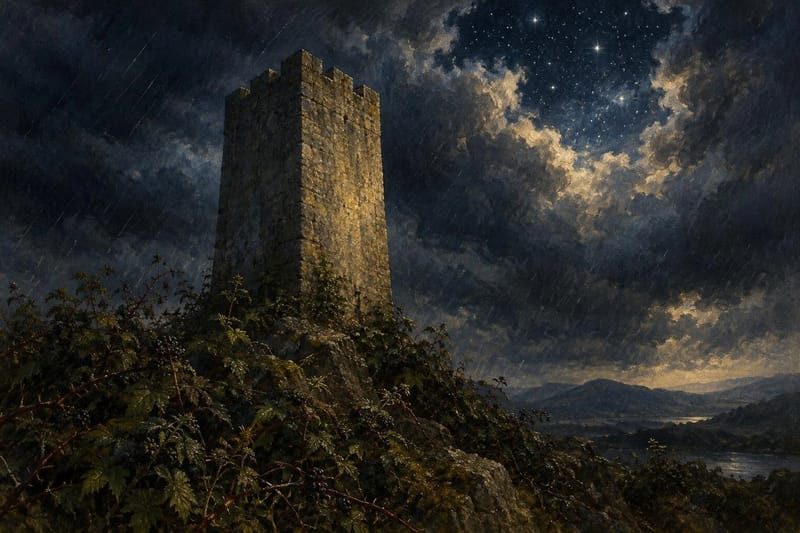
Was this castle not enough for you,that you built the castle of your poems?For three thousand years, it rides,carrying on its shouldersthe clash of metal, the smell of gunpowder.
On its chest of stone,lives were cut short,generations came to life.A long relay, this,to bring into the book of immortalitylife and love.
Someonewould come to kill the lovesso that over them might bloomthe tree of their own love.
The castlekilled its own loves,to waterthe rosy loveof the generations to come.
And so,loves fought,loves were killed,loves were born.The times wateredother loves so they could grow.
Together, under one stone,grew both the child and freedomand the weeping and the song.They were kneaded and survivedin the great kneading trough of survival.Freedom took wounds;over it,like silver bandages,the clouds settled down.The caresses of mothers,prayers and care from the skies.
The belltolled for one death,tolled again for two baptisms.Births and deaths in battles.And so,through the centuries it traveled,loaded with dreams,loaded with wounds.Freedom as its crown.The books of history,woundsthat speak through chests.
Freedom,surrounded by stone walls,to be guarded from the hordes.In a centuries-old war,loves and betrayals.Every small stone in the high wall,a heart walled in for the golden ideal,a warrior sacrificed on the battlement.Which poet has seen and felt them,has brought them down into a poem?
The moon,a girl in love,goes in and out of niches, of gates,to silver the cobblestones with light.The stone houses, shoulder to shoulder,converse in low voices.Lest anyone hear them,are they ashamed?A window—an open eye,a tulle curtain rocked by the breeze.
The house,a young bride covered in grace,welcomes and sees off tourists,has it missed them?
You speak,you write, poet, of the “neighborhoods of the world”,troubled, shaken,and you forget the neighborhoods and cobblestoneswhere you were born and raised.
These stones smoothed by the years,like the unkissed cheeks of girls,stand shyly,under the gaze of passing tourists,splashed by the pearls of their glances.The skin of their cheekshas worn thin,from the caresses of shoe soles,it has turned rosy.Theyhave taken on the posture, the beautyof the statues of antiquity.Their carver and sculptor,the hand and caress of history.And the stones love caresses,they are sensitive,like the fragile souls of children,sons of the mountains, of the rocks,part of the life of the gods.
They do not walk,they do not speak,but they always stand on guard.That is why we used them for centuries,as pillows, as beds, and named them our lands.When a stoneleaves its post,tumbling and crashing downhill,it shouts for the “pashas” to hear.For the living to wake from their sleepand the slain to be respected.
Do you hear the voice of the bell,swinging in the high niche?Its voice is sorrowfuland sweet, like a golden bird.Do you hear what it says?Its voice—the most eloquent of the times.It does not speak hour by hour,like some emperors,through palaces and through courtyards.
Itdraws from its deep chestthe joys and sorrows of the time.It is eaten away from the inside,and has been left a cave.The sorrows and the joyshave hollowed it deep.Its clapper,the most accurate diary.The bridgethat keeps antiquity tied to our time.
The moonlistens while wandering the roofs,trembles, thins out and remains faded.
The waveslisten,but they do not stop.They do not fall silent and they laugh,they take history upon their shoulders,to scatter it across the shores of the world,they do not cease.
The breezecreates a symphony with orchestra and violin,to be played in the great concerts to come.
Through cobblestones, alleys, and stone benches,the snow-haired historians,the mothers of your songs.The women of Monevasia,Maria, Eleni, Evridhiqi,the honey-mouthed speakers of inherited Greek.They are hunched by the weight of age,by the worries and troubles that burden the world.They have a voice as sweet as a lullaby,like my grandmother, like my mother in Sarandë,the mothers of the whole world are the same,they have the same sorrows and joys.I see them in the great museumof your poetic galleries,and my love for your songdoubles, triples, multiplies.
IN THE POET’S HOUSE
I knockKnock, knock, knock,at the gate of your thought.It is I, your student,I come from afar.I traveled the “Neighborhoods of the world”.*
In my saddlebag,mixed with the poems,I bring you a gray cloud,taken from the smoke-filled sky of Iraq.A stabbing painin the ribs of Ancient Palestine.
I bringa salty sea of tears,over the bruised pupils of peace.
I bring youa diary of terror,written, carved into the hemispheresof the life of this little Kosovar girl.
I knockKnock, knock, knock.Open it, please!Open it so I may enter!
They open,the great wings of the gate,where youcarve the true face of the world.Your house is as wideas the endless chest of feeling.
In the middle,a large fireplace.In it stays lit and roarsthe flame of love for mankind.
Nearby,small glasses,clean as the verses,so visitors may toast to friendships.
Knivesto operate on wicked thoughts.Forksto catch and pin downthe heavy pain of hunger.
Clean napkinsto wipe the pollution of the soulfrom the microbe of violence.
A table,a round low dining board.To harvest the thoughtsfrom the burnt tree of divisionand the virus of envy and spite.
On the right,a virgin sheet of paper.Upon it,a penwaits to draw the true portrait of man.Without colors, in black and white.
Nearby,a lighter, to ignitethe fire of love at any moment.
Light white curtains,like mothers’ milk,so the children may grow up pureon the great stage of the drama “Betrayal”.
Overhead!?Beams,crossed beams, tied together.Beams dried outby the fiery desire of the hearth.Like silent, elderly men,they hold on their shoulders,the arched skyof the great world and the dreams of the house.
Further on,the “Lady of the vineyards”*.With the cup of autumn’s joy,with painted lips,with the sweetness of her wordand the blessing of the toast.
On the right,“The Window”.*A screen,to see the infinity of the sea.The endless depthof Mrs. Eleni’s soul.
Of the motherof the “Neighborhoods of the world”,who left taking with herin the deep pockets of her apron,the seeds, mixed with breadcrumbs,for the doves,that were frightened by the noise of the rifle.
The gaze,creates a “Bridge”*,between the window and the sea.A gaze,that rocks,to the rhythm of the labë song of the waves,and of a boat,sailing toward a new dawn.
The wind of desires,beats against its chest.The sails breatheand fill with air and hope.The new wind helps it,to sail swiftly,toward the port of dreams.
Far,far from the fields,comes the monotonous music of a “Tractor”.*It comes,rocked in the swing of the breeze.To rest,upon the eyelashes of the children.So they may fall asleep,without the fear of hungerand the painful crack of war.
It announces:“Soon we will sowthe seed of desires,to harvest later,the fruit of love and unity”.
In the great fireplace of art,the flame,paints fairytale figures on the walls.The moon leans her head into the window.Her eye,gazes into my eyes,then she wanders off, dreaming,helped by the wind of the poets’ inspiration.“What a wonderful moon tonight,
Take me with you”,*to the endless shores,of your song and your gaze.There,where the world sleeps without the fear of tomorrow.